Wuhan Wang’s Spring 2027 runway reshaped what viewers expect from nightwear, sending models from a stack of mattresses into a series of garments that treated intimate clothing as the site of surreal theatricality. The collection leaned on the hazy interval before sleep, a motif Wang described in her notes as the “strangeness to the moments before sleep,” and translated that mood into sartorial dislocations and domestic props pinned to dressing-room staples.
The Story in Pictures
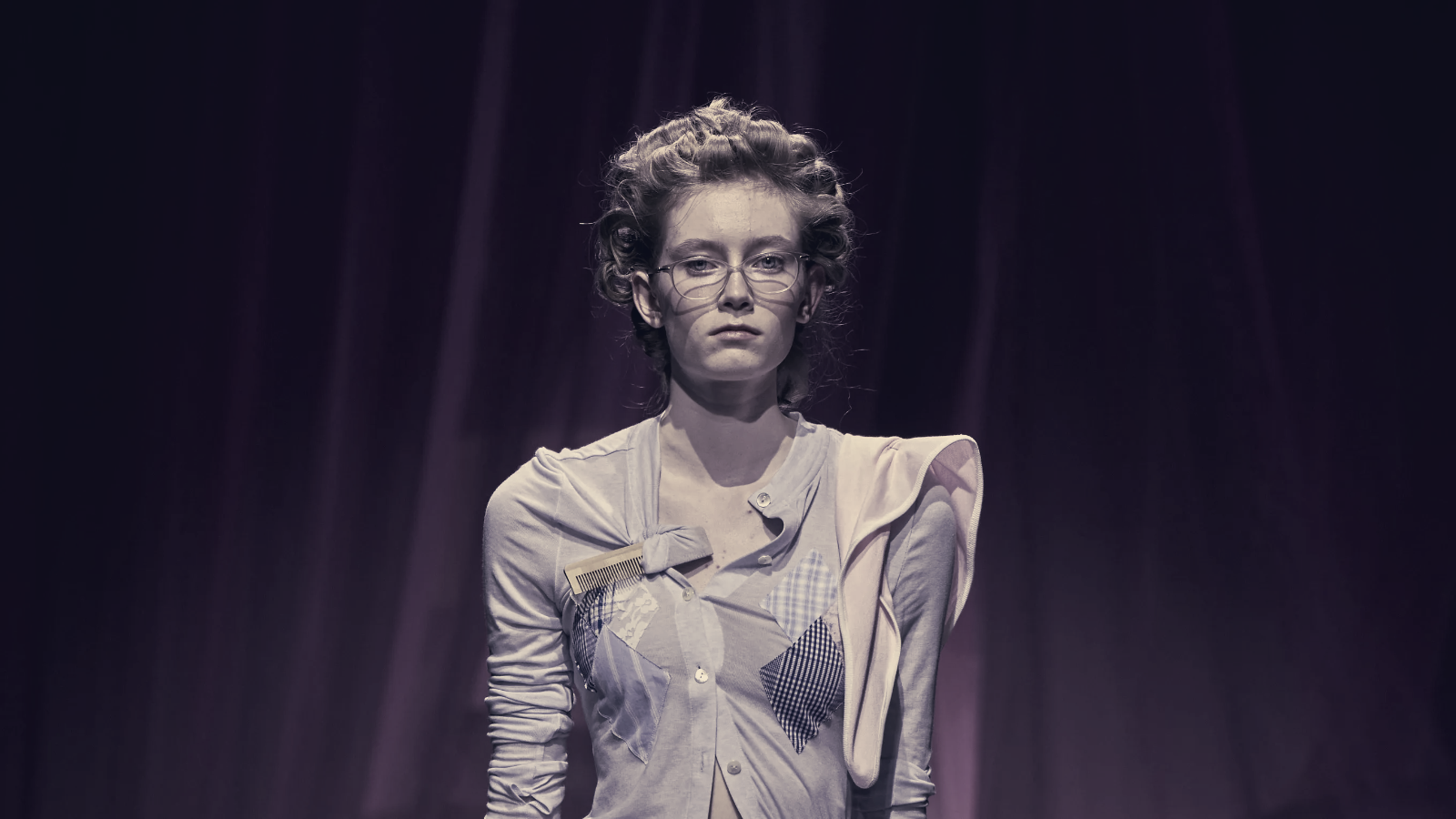
Instead of straightforward slips and camisoles, Wang’s looks registered as staged half-dreams. A model began the walk by popping down from piled mattresses, setting the show’s lethargic tone. Dresses were built to read like open drawers, with undergarments appearing to spill free. One model in a cherry-print mini slip drifted past the audience, studying her reflection in a hand mirror as if caught between self-awareness and sleep. Corsetry sat at an odd angle above French knickers, and small nightstand items migrated onto bodies, compacts, combs and other bedroom essentials became accoutrements rather than mere accessories.
The designer amplified discomfort with deliberate asymmetry. A black lace slip featured padded wadding at the right shoulder and the left hip, creating a decorative imbalance. Another look, a baby blue lace nightgown, was shaped with panniers offset to one hip, producing a subtly jarring silhouette. Playful, literal touches punctuated the line: a cup and saucer were fastened to the belted waist of a puff-sleeve, lace-yoked satin blouse and matching skirt, the crockery clinking with each step.
Staging and sound reinforced the dream logic. A woozy narration prompted one of the clearer moments of the show when an off-kilter passage was introduced with the line, “Don’t look at me,” isolating the collection’s uneasy, intimate tone. As the run progressed toward a figurative bedtime, Wang balanced crowd-pleasing boudoir references with small, disquieting disturbances, producing a presentation that read as a hazily skewed reverie on dressing for sleep and wakefulness.
The collection refused tidy categorisation, proposing nightwear as a field for theatrical invention rather than private utility, and left the audience with images of garments that look pulled from a bedroom and set adrift on a slow, somnolent runway.