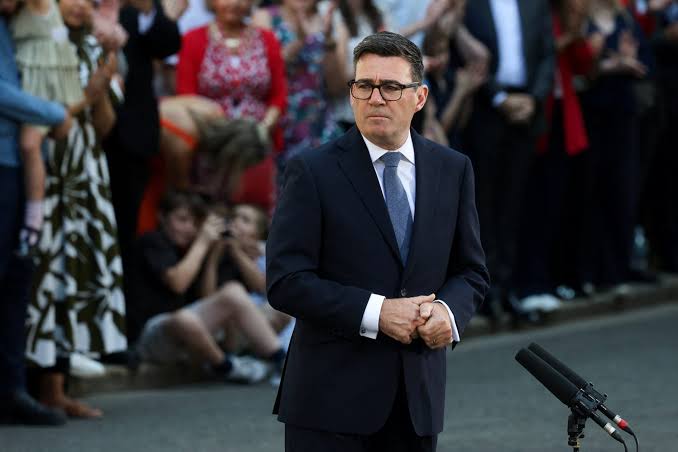
Andy Burnham gains a tested regional playbook he must now prove can work across the UK as he prepares to become prime minister.
Five months ago he retreated to his mayoral office in Manchester after Labour’s ruling executive blocked him from standing for parliament. A few weeks later he sketched ambitious civic projects: an appeal to Fifa to stage the 2035 women’s World Cup final in Manchester instead of Wembley, a cross-northern Olympic bid and a plan to bring the Ryder Cup to Bolton. Burnham argued sports bodies needed "re-educating" about the rest of the country.
Those gestures reflect a deeper strategy that helped make Manchester the fastest-growing city economy in Britain and enabled Burnham’s rise from Greater Manchester mayor, a post he held from 2017 to 2026, back into national politics when he returned to parliament in June.
Manchester’s contemporary story traces to 1996, when the IRA bomb destroyed much of the city centre. Local leaders chose to rebuild by replacing damaged structures rather than repairing them. Architects such as Ian Simpson and civic figures including council leader Sir Richard Leese and senior civil servant Sir Howard Bernstein pursued centrally driven plans that relied on private capital and significant international investment to reshape brownfield industrial land.
The city council repeatedly used public money to de-risk projects and to support developments through financial shocks, and it adopted a flexible approach to affordable housing obligations. NatWest chief executive Paul Thwaite says Manchester’s success over two decades stems from "there being a clear plan the private sector can get behind." That approach coaxed private financiers and developers into projects others had avoided.
The payoff has been demographic and economic clustering. Manchester retained over half its graduates, second only to London, according to the Centre for Cities. Internal migration figures show a net inflow from London, with 13,000 people moving to Manchester and 11,800 leaving for the capital. Burnham says that shift means "no-one here has to leave to get on in life." Tom Beahon, CEO of sports brand Castore, credits the mayor with helping to "attract inbound investment, making it a place that students want to stay".
As prime minister, Burnham inherits a model rooted in a critique of an over-centralised British state and built on targeted public intervention to unlock private investment. The central question is whether the combination of bold civic planning, public de-risking and student retention that revitalised one city can be replicated across a nation with widely varying local conditions.