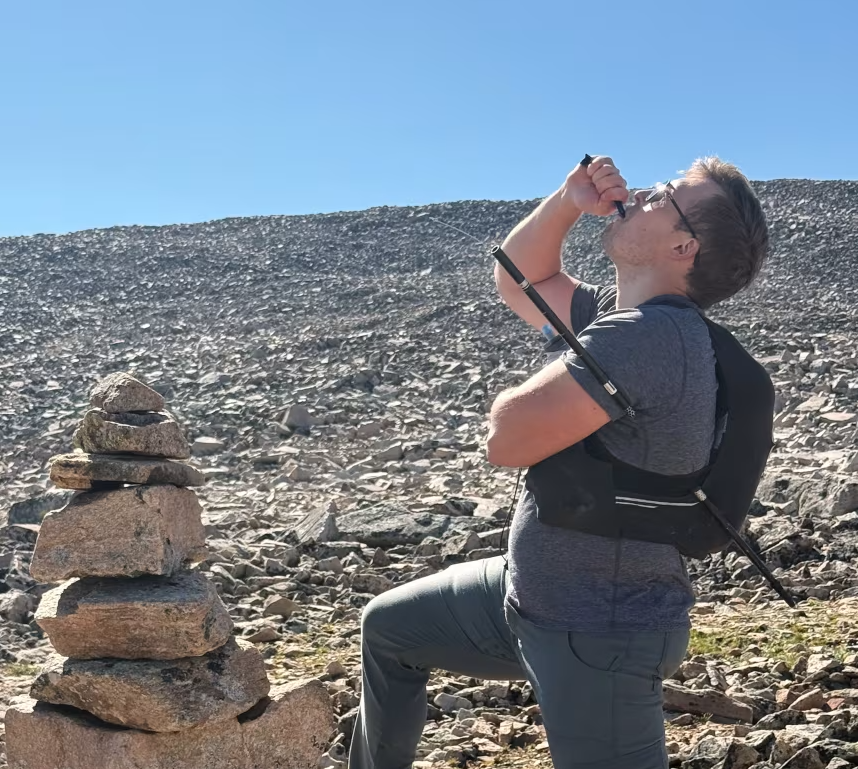
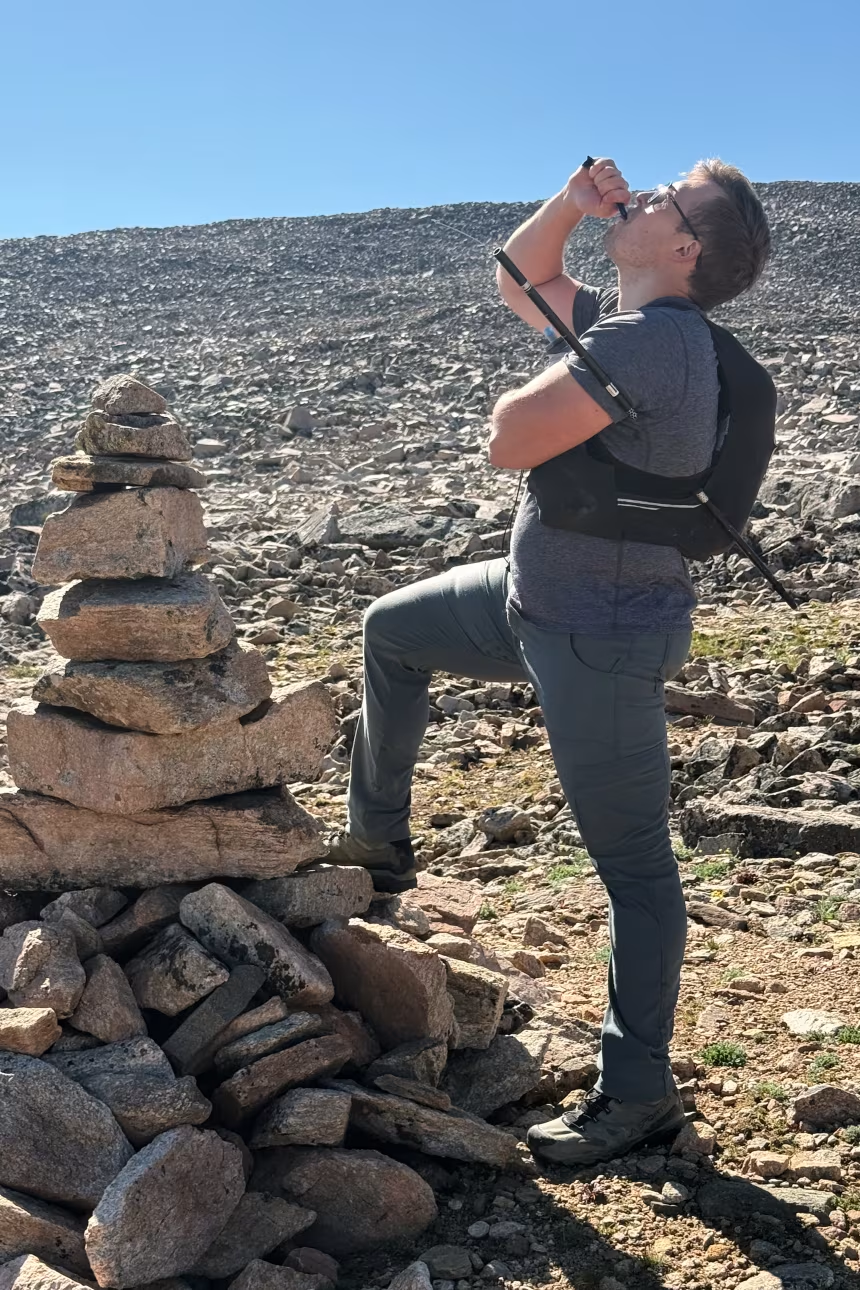
A helicopter rescue was declined after David Cifaldi impaled himself near the summit of Montana’s Granite Peak, then elected to hike out with a trekking pole protruding from his side. The decision removed the need for an airlift, and shifted responsibility for the response to Cifaldi and his two companions.
The group had been crossing the Froze-to-Death Plateau when Cifaldi slipped and the 44-inch steel-tipped pole passed beneath his left arm and out his back, missing vital organs. Cifaldi, a 32-year-old wound care nurse at St. Vincent Regional Hospital in Billings, performed a rapid self-assessment, finding himself alert, with little pain or bleeding, and the pole stable. “I was like, ‘We’ve got to get off this mountain.’ And they’re both like, ‘I don’t know about that,’” he said. “I’m pretty confident this is outside my chest wall. ‘Tis but a flesh wound.”
Before moving, the hikers used a Garmin inReach satellite communicator to alert local authorities and explain their plan to self-rescue. Stillwater County Search and Rescue began receiving calls at 9:44 a.m. on July 20 and monitored the trio’s progress through a dispatcher. At 1:30 p.m. the group reported they were getting closer to the trailhead and asked that the nearest hospital be notified, commander's Ty Williams said. “There was no danger to anybody else. He didn’t want our help and so we’re not going to essentially violate his rights or go against his wishes by forcing our help on him,” Williams said.
They descended along an unmarked route, picking their way through boulders and snowfields, then bushwhacked back to an established trail. Over more than six hours they covered about 10 miles and lost roughly 5,000 feet of elevation, arriving at a trailhead where friend Jesse Ross had left a vehicle. “The only reason it was possible at all was his confidence,” Ross recalled. “Who are we to say anything? He’s the medical person. Our job is just to support at that point.”
By about 3:30 p.m. the hikers were in Ross’s truck headed to a local clinic, where staff told them Cifaldi needed more advanced care. They drove on to St. Vincent Regional Hospital in Billings, where doctors removed the pole, bandaged him, and cleared him to return to work later that week. Cifaldi said the cost of a helicopter flight was a factor in choosing to self-rescue, but he emphasized that having two experienced companions and the ability to contact search and rescue made the choice easier. “I think 99 times out of a hundred I would make the same decision,” he said.
Granite Peak, at 12,800 feet, is notorious for unpredictable weather and hazardous conditions; hundreds attempt the summit each year and some fail. Authorities noted a fatal fall in 2019, when a 65-year-old Minnesota climber died after falling about 150 feet near the top. In this case, search and rescue personnel remained available and monitored the hikers, but did not intervene after Cifaldi declined assistance. The incident ended with hospital treatment and the hiker returning to his job in Billings.