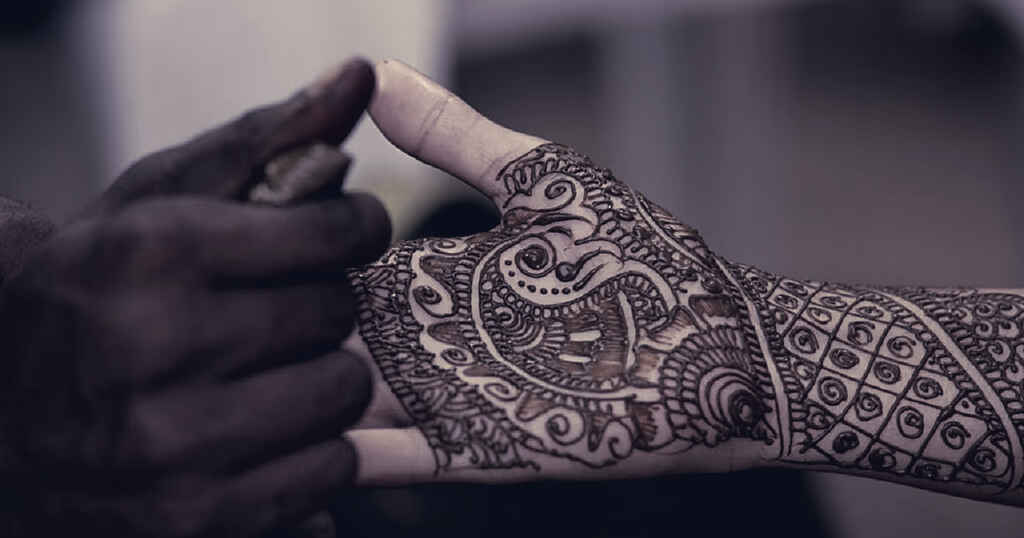
Keeping bridal henna practices alive is a deliberate act with cultural consequence, Sudanese women say, as conflict and a water crisis press on daily life. The ritual work of applying henna for brides endures not only as decoration but as a practical means of preserving patterns of belonging, memory and meaning that might otherwise fray under prolonged upheaval.
Henna for weddings is a long-standing element of social life across communities in Sudan, and women’s decision to continue the practice signals an intention to carry forward specific skills and symbolism. In environments where public institutions and services are under strain, private and communal rituals like bridal henna take on heightened importance, offering continuity when other social weaken.
The choice to sustain this artistry touches more than aesthetics. It keeps alive techniques, designs and the interpersonal moments in which that knowledge is taught and transmitted. Those interactions bind generations and reinforce the ceremonies that mark major life changes, even as broader conditions make gatherings and preparations harder to manage.
Preserving a ritual amid conflict and a water crisis also reframes the act of celebration. What might once have been seen as routine preparation can become an explicit effort to protect cultural inheritance. That dynamic places additional weight on women as custodians of intangible cultural property, a role that carries social significance beyond individual households.
How long the tradition can be sustained will depend on developments in the conflict and the availability of water and other resources that support communal life. For now, the continuation of bridal henna stands as a visible example of how people use customary practices to hold together identity and community when the circumstances that shaped those practices are under strain.