
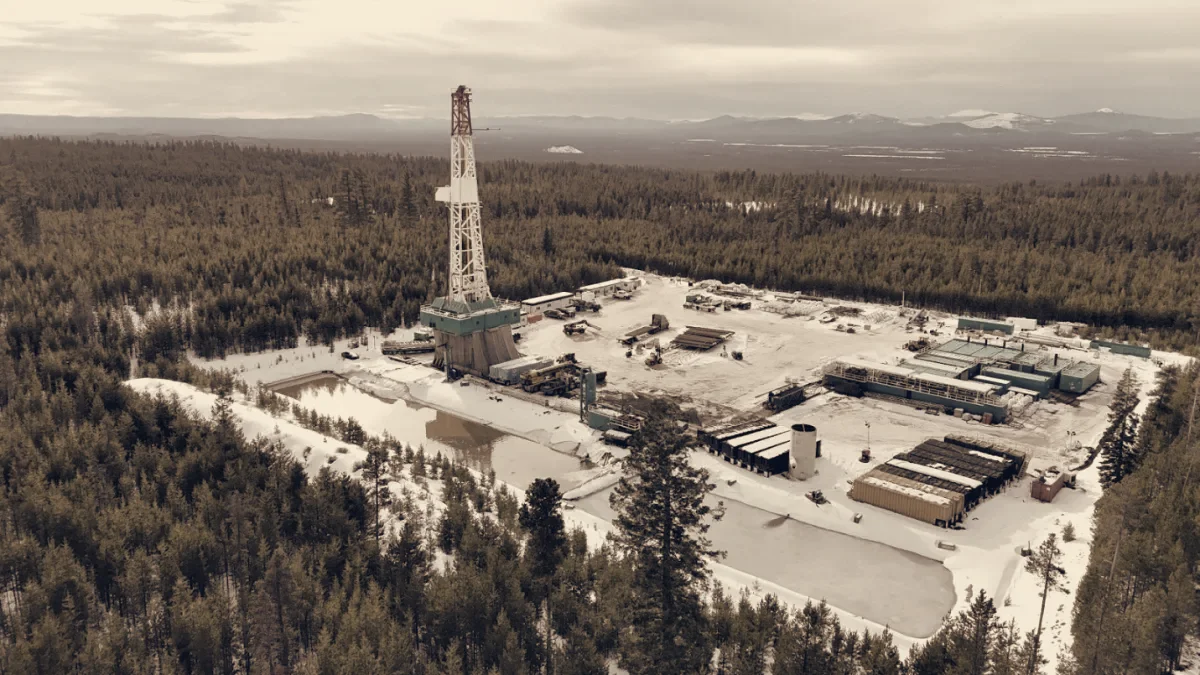
Mazama Energy will use $135 million in new funding to push deeper into superhot rock and develop horizontal wells it says can deliver continuous baseload power of roughly 15 megawatts per well. The oversubscribed Series B funds are earmarked for drilling and site development as the company moves toward initial power production next year.
The startup has revised its output estimate for its first Oregon site sharply upward, saying the location is capable of producing 10 gigawatts of electricity, up from a 5 gigawatt estimate a year earlier attributed to investor Vinod Khosla. Mazama also says the project should reach 200 megawatts of operational capacity by 2030, and it has secured land for a second development while work at the Oregon site remains in early stages.
Technical details underline why Mazama is targeting much greater output per borehole than traditional geothermal. The company has drilled past 10,000 feet in 15 days on its way to a target near 15,000 feet, where temperatures approach 750°F, or 400°C. At those conditions water becomes a supercritical fluid that can carry far more heat than ordinary steam, and Mazama says a well in that regime can produce up to ten times the power of conventional geothermal wells.
Investors backing the round include Centaurus Capital and Doerr Capital as leads, with participation from ConocoPhillips and Shell Ventures. Returning backers include Khosla Ventures and Gates Frontier, and new entrants include SiteGround Capital, H. Barton Asset Management, and the Jeffrey and Marieke Rothschild Foundation.
Industry observers have started to view enhanced geothermal startups as potential suppliers of steady, large-scale power for heavy grid loads such as AI data centers. Outside estimates cited by Mazama suggest that, at scale, a small fraction of the world’s superhot rock resource could yield very large amounts of electricity. For Mazama the immediate next steps are deepening wells to reach supercritical conditions, bringing the first turbines online next year, and advancing construction toward the company’s 2030 output target.