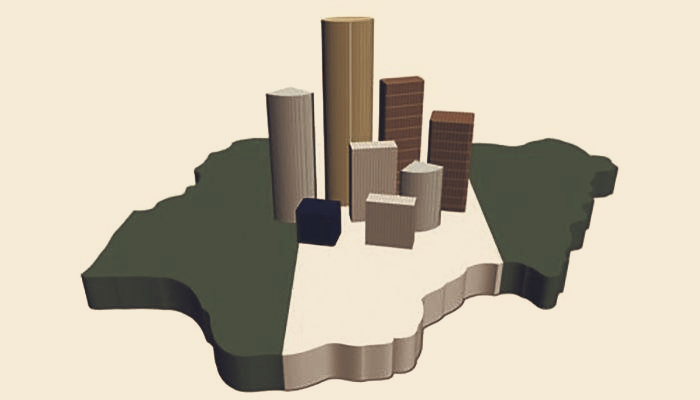

Nigeria’s headline expansion has widened the gap between macroeconomic statistics and daily life, leaving 31.8 million people unable to reliably afford food.
In the same week in July 2026 newspapers carried two truths. One reported that Nigeria’s GDP had reached $420 billion, driven by technology, services and oil and with the economy growing by 4.1 percent. The other said the March 2026 Cadre Harmonisé assessment placed 31.8 million Nigerians at Crisis-level food insecurity or worse, while rice prices jumped by about 140 percent in two years.
The figures expose two parallel realities. Aggregate output has risen, with growth averaging roughly 3.2 percent between 2021 and 2025 and strong gains in telecommunications, financial technology, services and entertainment. Agricultural GDP also grew in nominal terms, from ₦19 trillion in 2019 to ₦28 trillion in 2025. Government dollar revenues have improved, helped by higher oil prices and changes to the foreign exchange regime.
Yet inflation and access have eroded living standards. National Bureau of Statistics data put food inflation at 40.9 percent in August 2026, and staples such as rice, beans and yam have increased by well over 100 percent compared with 2023. The consequences reach beyond today’s meals, threatening childhood development, education, productivity and the health of the next generation.
The crisis is not simply a matter of production. Food exists in many parts of the country, but moving it to where demand is concentrated has become costly and risky. A bag of maize bought in Benue for ₦45,000 can sell for ₦95,000 in Lagos after diesel, transport, spoilage, informal charges and middlemen margins are added. Diesel trading around ₦1,250 per litre amplifies those costs. Nigeria’s landmass of about 923,000 square kilometres and weak transport infrastructure make internal distribution expensive, and in some cases it is cheaper to import rice into Lagos than to move it from Northern farms.
Insecurity has compounded the problem. Much of the country’s grain comes from the North-Central and North-West, where banditry, farmer‑herder violence and displacement have reduced planting and increased costs. IOM figures cited in recent assessments show millions displaced across conflict-affected areas, raising the price consumers ultimately pay.
The naira’s devaluation after the June 2023 foreign exchange reforms has also fed higher costs. Nigeria’s food system relies on imported inputs and commodities, including wheat, milk, fish, fertiliser, chemicals, machinery and diesel. When import costs jump, food prices follow, while wages lag. Even nominal minimum wage increases, for example from ₦30,000 to ₦70,000, do not restore purchasing power if food prices rise faster.
Unless growth is recalibrated so that it lowers transport costs, secures food-producing regions and restores household purchasing power, headline GDP gains will continue to coexist with widespread hunger. The immediate risk is a generation whose health and productivity are permanently impaired by rising food costs that outpace incomes.