Remote pastoralist families, refugee settlements and other marginal households risk remaining off-grid unless governments and development financiers accept subsidising customers up front, practitioners say.
As Kenya has extended its national grid through programmes such as Last Mile Connectivity and rural electrification, the easiest connections were taken first. Those early customers live close to existing infrastructure, use enough power to justify investment, and often have predictable incomes that let suppliers recover costs. The households left behind tend to be different, they may live hundreds of kilometres from transmission lines, move with livestock, or earn incomes too irregular for traditional financing.
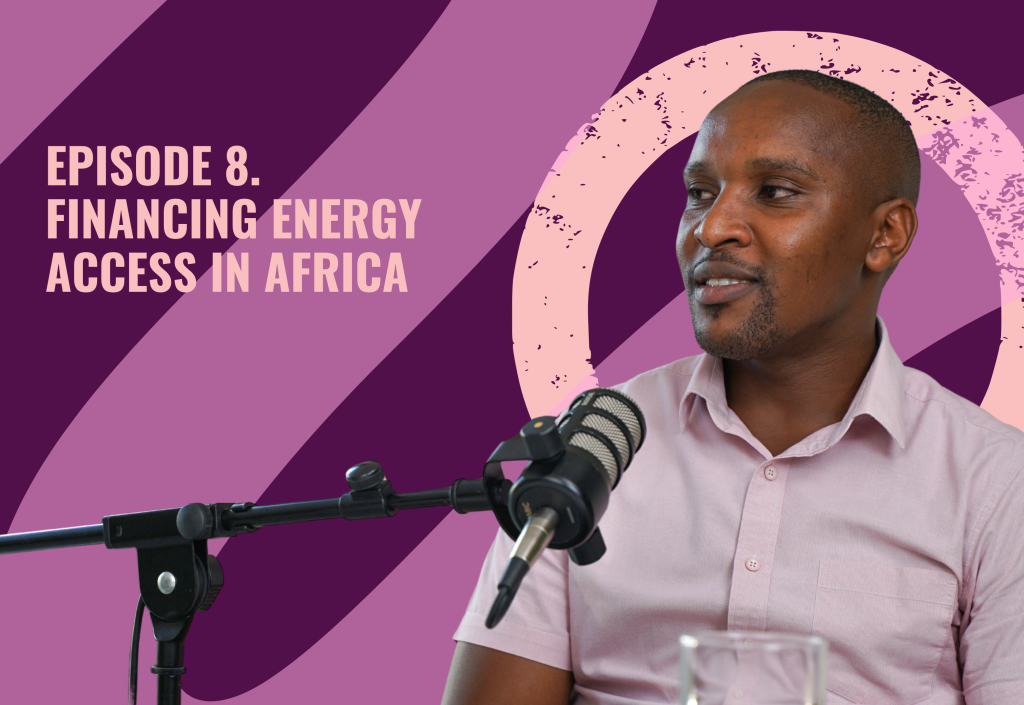
Benjamin Gitonga, a director at climate finance platform Nithio, argues the consequence is structural, not accidental. “There has to be concessional funding for these projects to actually be successful,” he said on the podcast Voices & Visions. The problem is circular: energy companies expect paying customers before they build supply, while households often need electricity to generate the income that would make them bankable.
The economics are illustrated by Kenya’s experience. A grid extension can reach a trading centre such as Lokichar but miss pastoralist families who subsequently move with their livestock. In those contexts, solar panels, batteries and portable systems offer a sensible technical alternative to running poles long distances. Yet decentralised technology does not erase the financing gap: pay-as-you-go, or PAYGo, models rely on customers being able to make steady small payments over months or years.
Gitonga noted how mobile money makes PAYGo feasible in Kenya. “Pay a deposit, then pay maybe small daily, weekly, or monthly instalments to whoever is the asset financier,” he said. He added, “This is very successful in Kenya because of the mobile money, M-Pesa.” Still, the approach assumes the customer can reliably find the small amounts required. Even a daily KES 10, or $0.077, can be impossible for the poorest households to guarantee.
Mini-grids sharpen the dilemma. Building generation and distribution requires substantial upfront spending, while an initially electrified community may only use a bulb or a few phone chargers. From a conventional investor’s view those low early consumption levels make the project hard to justify. But without someone building initial supply, shops, refrigeration businesses and other productive uses that create demand may never appear.
That tension frames the practical choice ahead: either accept concessional finance that subsidises first customers so demand can grow, or risk leaving the most marginal communities without the infrastructure that could unlock future economic activity. Gitonga’s argument places the burden on public and development capital to break the loop between income and electricity access if last-mile electrification is to reach the hardest cases.