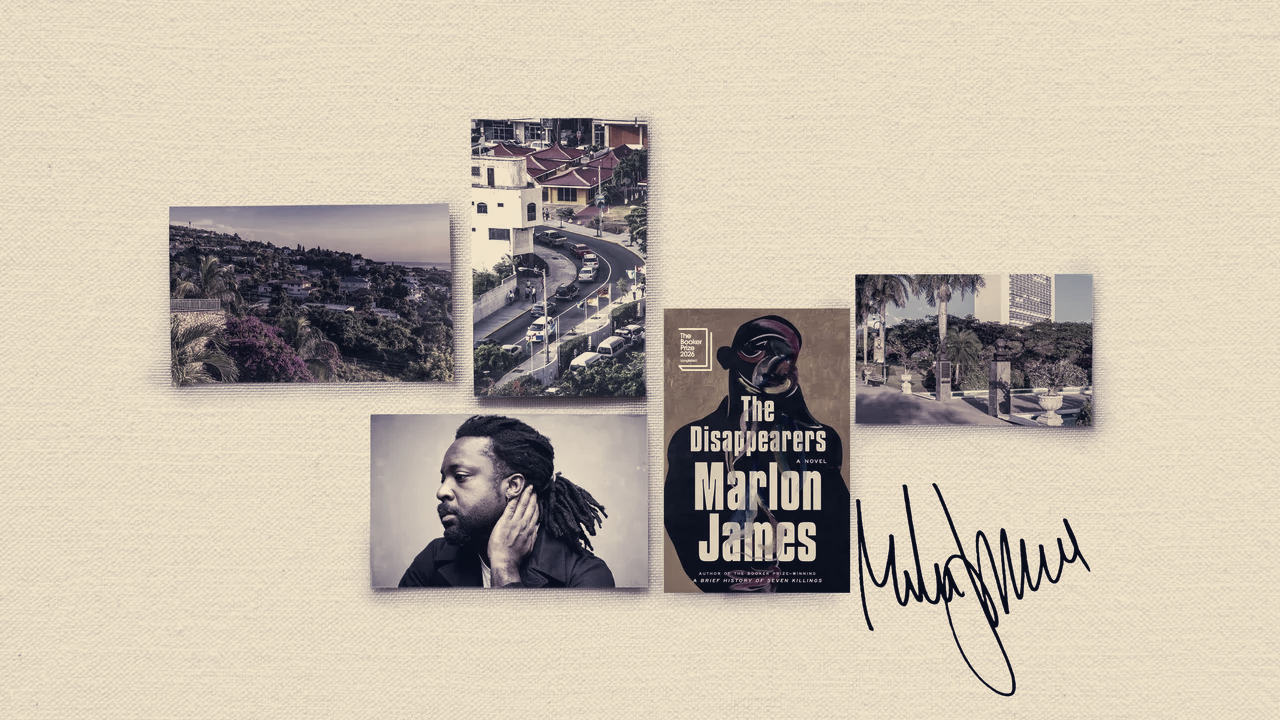
Marlon James returned to Kingston in 2023 and 2024 to turn oral memory into fiction, shaping The Disappearers into what he calls the most personal book he has written and an effort to preserve Jamaica’s overlooked queer history.
The Story in Pictures
For the novel James interviewed dozens of people, speaking with local queer friends and Jamaicans in the diaspora in New Orleans, Toronto, and Montreal to fill gaps he had long left unexamined. "I went to Kingston in 2023 and 2024 to do research for The Disappearers," he says, explaining that he traces characters’ lives back decades, from the early 2000s to the 1940s, so he understands their worlds even when those details never appear directly in the text.
His reporting uncovered a more complex past for Kingston nightlife than the country’s reputation suggests. At one point the city supported five gay bars with names like Fanny Hill, Marshall’s, The Closet, The Interim Closet, and Andante, a jazz bar where drag performances drew celebrities and even the brother of the prime minister. By the late 1980s and 1990s those venues had vanished, an outcome James links to the AIDS crisis and moral condemnation, noting, "As a religious country, we believe what preachers tell us, and they said AIDS was God’s punishment." Nightlife persisted underground, but the public scene collapsed.
James also traced living threads of queer life. He visited Mountambrin, an artists’ retreat near Montego Bay started as a queer hotel and still showing overt queer iconography, and he says the presence of gays staying in Jamaica signals "a sort of hopefulness." He returned to the University of the West Indies and found an active queer students’ association, a discovery that surprised him and that produced blunt responses to older reassurances: students told him, "We don’t want to hear that shit. Do you know Beyoncé?"
At the same time James heard of ongoing dangers. Some lesbians told him men threaten to rape them every week, and he noted the continuing uphill battle that groups such as Equality for All represent. He refuses to flatten the present into progress, even as he registers signs of change among younger people who can focus on culture rather than daily survival.
Part of his project involved chasing material evidence that is scarce. He has sought footage of Jamaican drag balls and suspects past generations destroyed records to stay safe, though he says a private collector at Mountambrin might hold treasures. The Disappearers is loosely based on a gay bashing he remembered from the late 1980s; lacking documentary proof, he kept asking interviewees until someone corroborated the event. "I haven't given up," he says of the search for artifacts.
The 640-page novel, described by James as a door stopper and one that has been Booker Prize nominated, engages homophobia, colonial legacies, the AIDS crisis, and structures of power. James argues fiction can act as a kind of archive, filling blanks that formal histories often leave out. "This is the most personal book I’ve written. I do want it to serve as a record," he says, positioning the novel as both art and witness.