
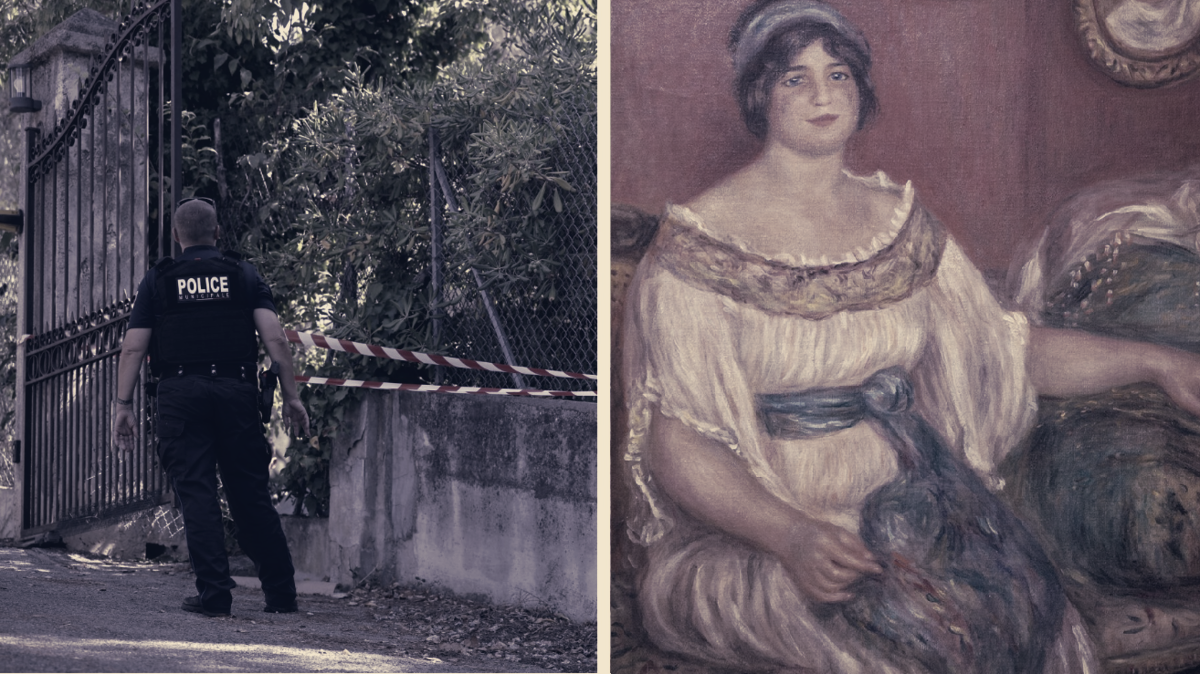
European museums now confront a sharper risk of fast, high-value burglaries after thieves forced their way into the Renoir museum in Cagnes-sur-Mer and took four paintings worth millions of euros. Detectives recovered two canvases when they were apparently dropped in the museum garden, while officers continue to search for the remaining works.
The raid at the Musée Renoir followed a string of high-profile thefts that security experts say are emboldening copycats. Europol has reported that museum thefts across Europe began to rise about two years ago and that recent incidents show both tougher tactics and a shift in targets toward precious metals and gemstones.
Art detective Arthur Brand warned more big robberies were likely after the burglary at the Louvre last October, which remains unresolved and involved jewellery valued at €88m. "We will see more of this," Brand said, "because if you are able to hit the Louvre, thieves all around the world are watching that, thinking, 'Wow' - and then they think, 'Don't we have a local museum with gold and silver?'" Brand and Ibrahim Bulut, a museum security specialist at a Belgian consulting firm, describe many subsequent thefts as imitations of that attack.
The recent Renoir theft was executed quickly and with basic tools, with thieves cutting through a fence using an electric knife and a hacksaw, underlining the preference for small, portable items that can be removed in minutes. The Association for Research into Crimes against Art says the pattern shows "a repeated preference for small, portable, immediately accessible objects and for attacks designed to be completed in minutes." Since the Louvre case, criminals have also taken a diamond necklace in Vienna, Bronze Age artefacts in Spain, coins from a smaller French museum, and works from two Italian museums.
Data provided to investigators and ARCA show recorded museum thefts in France spiked in 2024 and rose slightly in 2025, though totals have fluctuated over the last decade. Security specialists point to deeper structural problems: many museums operate on tight budgets and are housed in historic buildings that are hard to secure while respecting heritage rules. "Directors historically never have enough money for security," Brand says, and institutions now face urgent decisions about how to reconcile preservation with modern protection needs.
Immediate responses have included emergency security reviews. Brand added, "Every museum in the world is stressing now. In every museum there have been meetings with the security officer or with the police." For now, investigators are focused on recovering the remaining Renoir paintings and on whether recent arrests or leads will disrupt what policing agencies describe as a growing, brazen trend.