A mother who repeatedly brought her toddler on unconventional trips says those journeys changed what she believes is possible for family travel. She points to outings ranging from a five‑week‑old’s first interstate ice‑fishing trip to a 23‑day circuit through Oman, Tanzania and the United Arab Emirates, and an 88‑day stretch that covered 14 countries across six continents, including a much‑loved stop in Varanasi and Delhi.
The Story in Pictures
She delayed having children because she questioned whether parenthood suited her, and the experience altered how she weighs risk. Fear, she writes, should not automatically veto a place or a plan. Instead she learned to distinguish trips that are merely hard from trips that are genuinely bad, and to trust that logistical chaos often becomes a story rather than a disaster.
Not every episode went smoothly. When her son Julian was three they attended the Indy 500 with a police escort, VIP suite and pit access, but no spare clothes. A catastrophic diaper failure soaked him through; her husband searched the merch stands for pants in vain and returned wearing an $80, size XL Indianapolis Motor Speedway sweater that they improvised into an outfit. She hoisted him up to watch the race and says his grin erased the embarrassment. The family now calls the episode “Poopgate 2025,” a moment that aged into affectionate lore.
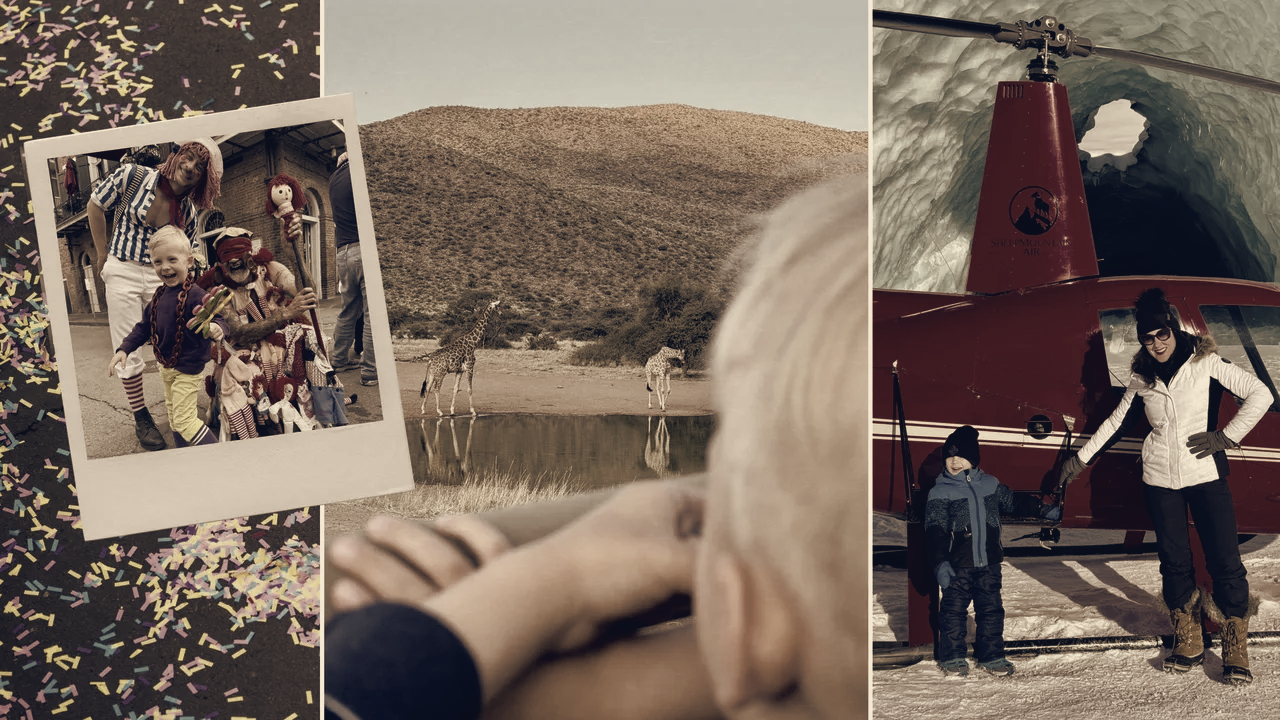
Preschool‑age Mardi Gras also looked reckless on paper, with its crowds and late‑night drinking. In practice she found most pageantry to be family‑friendly. They watched parades from elevated stands at the Sheraton New Orleans, using Club Lounge access for bathrooms and snacks, and Julian treated each float like a rolling toy shop as krewe riders tossed footballs, stuffed animals and light‑up swords. He learned a reach‑and‑duck technique to collect throws and even danced with costumed strangers outside the Toulouse Theatre; the crowd welcomed a single exuberant child into the revelry.
Alaska in winter tested that same conviction. They timed a spring break trip to the ceremonial start of the 54th annual Iditarod Trail Sled Dog Race in downtown Anchorage, staying at The Wildbirch Hotel to be close to the action. Fur Rondy provided carnival rides and a Running of the Reindeer spectacle, but a leg of the trip in Fairbanks brought -38°F temperatures and a bad cough that grounded them indoors for a day. Visits to the World Ice Art Championships often required warming‑tent intermissions.
Still, the extremes produced moments that justified the trouble. At Sheep Mountain Lodge in the Mat‑Su Valley they found operators willing to let a small child ride short snow‑machine loops when others would not, bundling Julian until he shouted, “Faster, Mama!” Later the lodge’s owner and helicopter pilot, Mark Fleenor, flew the family over the Matanuska Glacier, where they spotted Dall sheep and moose and explored an ice cave, though a souvenir iceberg did not survive the trip home.
Her account lands on a clear prescription: parents should prepare and set practical limits, but not allow anticipatory anxiety to rule out demanding destinations. Difficult stretches, she argues, rarely equal failure, and the messy scenes that feel crushing in the moment frequently become the stories families tell. Those episodes, whether a holiday sweater improvised at a racetrack or a child cheering from a French Quarter dance party, reshape what counts as kid‑friendly travel.