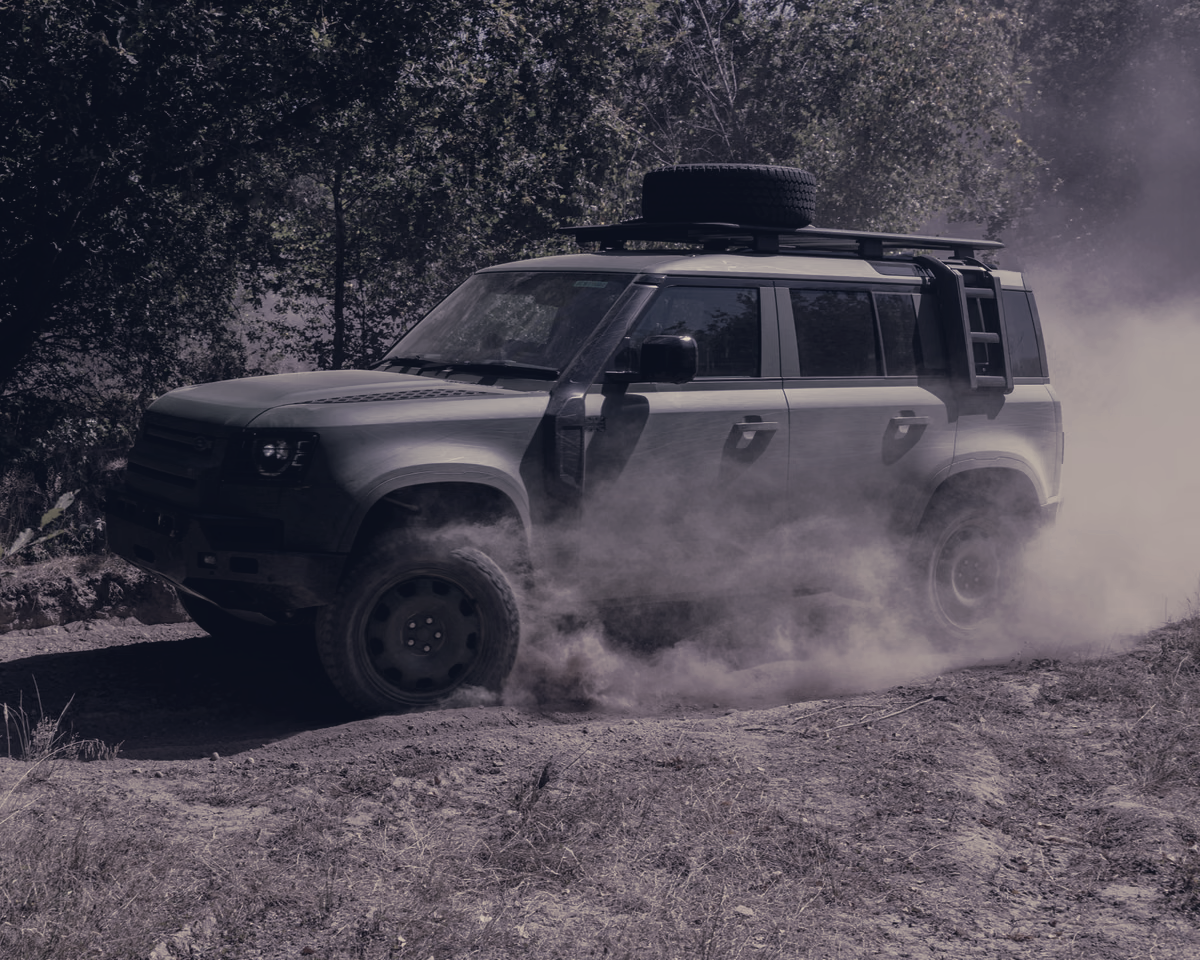
Jaguar Land Rover is seeking to move significant revenue away from consumer car sales and into military contracts by pitching the Defender Wolf Series II to Nato governments and entering the UK Ministry of Defence's £900m light mobility vehicle competition. The company has created a dedicated Defender defence division as the vehicle maker pushes the updated Defender to defence buyers beyond its long-standing relationship with the British armed forces.
Patrick McGillycuddy, managing director for Defender, said, "Through our newly established Defender defence division, we will offer Defender Wolf Series II to defence organisations worldwide, while also bidding for the UK Ministry of Defence light mobility vehicle tender." JLR showed three new Defender Wolf II variants during the campaign, presenting the models as adaptable for multiple military roles.
The company emphasised the vehicles' lightweight aluminium monocoque structure and a stiffer body, features it says make the chassis easier to convert for a wide range of operational requirements. McGillycuddy described the range as "exceptionally robust and versatile," and called the new models a "modern successor to the world-famous Defender Wolf and Land Rovers that have served the British armed forces for more than 70 years."
The defence push forms part of a wider strategy to offset softer civilian demand and higher operating costs. Jaguar Land Rover has announced plans to cut 4,000 jobs as part of measures expected to save £1.7bn, and it says those restructuring steps are not linked to the new defence initiative. JLR remains majority owned by Tata Motors, builds the Defender series in the UK, and produces the engine in Wolverhampton.
For the MoD light mobility tender, JLR will face competition from General Motors and Ineos. The company is also pursuing international opportunities, including a planned US-built Defender pickup through a reported joint venture with Stellantis aimed at the $80bn (£59bn) American pickup market. Automakers across Europe are similarly redirecting capacity, with Volkswagen and Renault adapting plants toward defence and military-related production.
Next steps for Jaguar Land Rover include lodging a formal bid for the UK tender and continuing negotiations with Nato governments over supply deals for the Defender Wolf Series II. A successful campaign would broaden JLR's business mix and deliver a steadier order book; failure would leave the firm more exposed to civilian market weakness as it implements cost reductions.