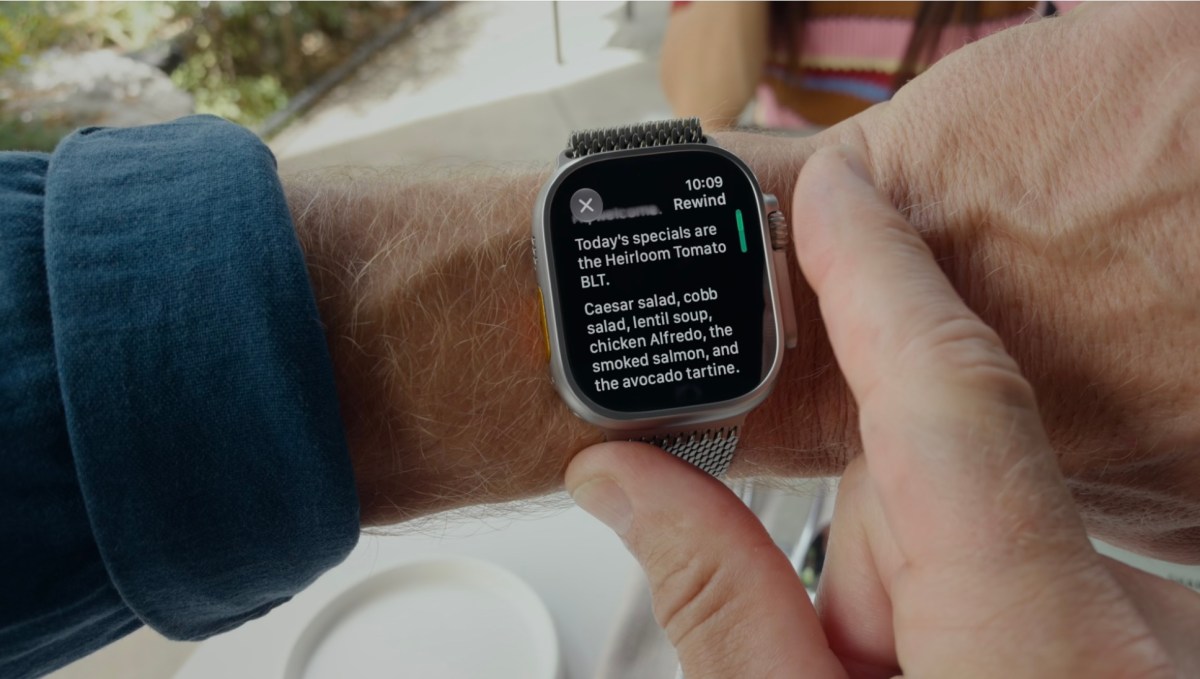
The company unveiled multiple audio features at its iPhone event: Audio Intelligence for on-device sound detection, Live Rewind to go back 15 seconds and produce a transcript, and Siri Recap to generate high-level summaries and key points of ambient conversations. Live Rewind is triggered by a double-press of the digital crown and presents a microphone animation and audible chime while creating text from the recent audio. Siri Recap does not produce verbatim transcripts, instead auto-generating a title, summary, and key points for review in the standalone Siri app.
Apple framed some of the features as assistive. Audio Intelligence can alert wearers to alarms, sirens, doorbells, and babies crying, operating even when an iPhone is not present and potentially offering life-saving notices for events like a fire alarm or carbon monoxide detector. Those accessibility benefits are easy to accept, but Live Rewind and Siri Recap move the product into a less clear space where convenience and surveillance overlap.
Apple has tried to limit the exposure of recorded speech. The company says it does not create or store raw audio, that recordings are not accessible to Apple, and that generated transcripts and recaps are protected with end-to-end encryption. Siri Recap will not be enabled by default, and users can restrict it by context, for example to work hours or daytime, and toggle it from Control Center. Still, text-only captures of conversations carry legal ambiguity: they could be introduced as evidence, but lack of audio may complicate authentication, and admissibility is likely to vary by jurisdiction.
Startups and other device makers are already exploring passive transcription as a consumer use case, from meeting notes to continuous memory tools. Some companies advise users to secure consent before recording, and Amazon’s Bee notes customers bear responsibility for complying with data law for minors. Those existing cautions point to the practical complications users will confront if Apple’s features become widespread.
The broader cultural effect is also at stake. Research has shown that recording technologies and surveillance culture influence how people behave and express themselves. Capturing snippets of speech with a subtle watch gesture, even with visible UI cues, could dampen candid conversation and change social norms around privacy. What happens next will depend on consumer uptake, how courts treat AI-generated transcripts, and whether regulators or civil society press for stricter guardrails around ambient audio capture.