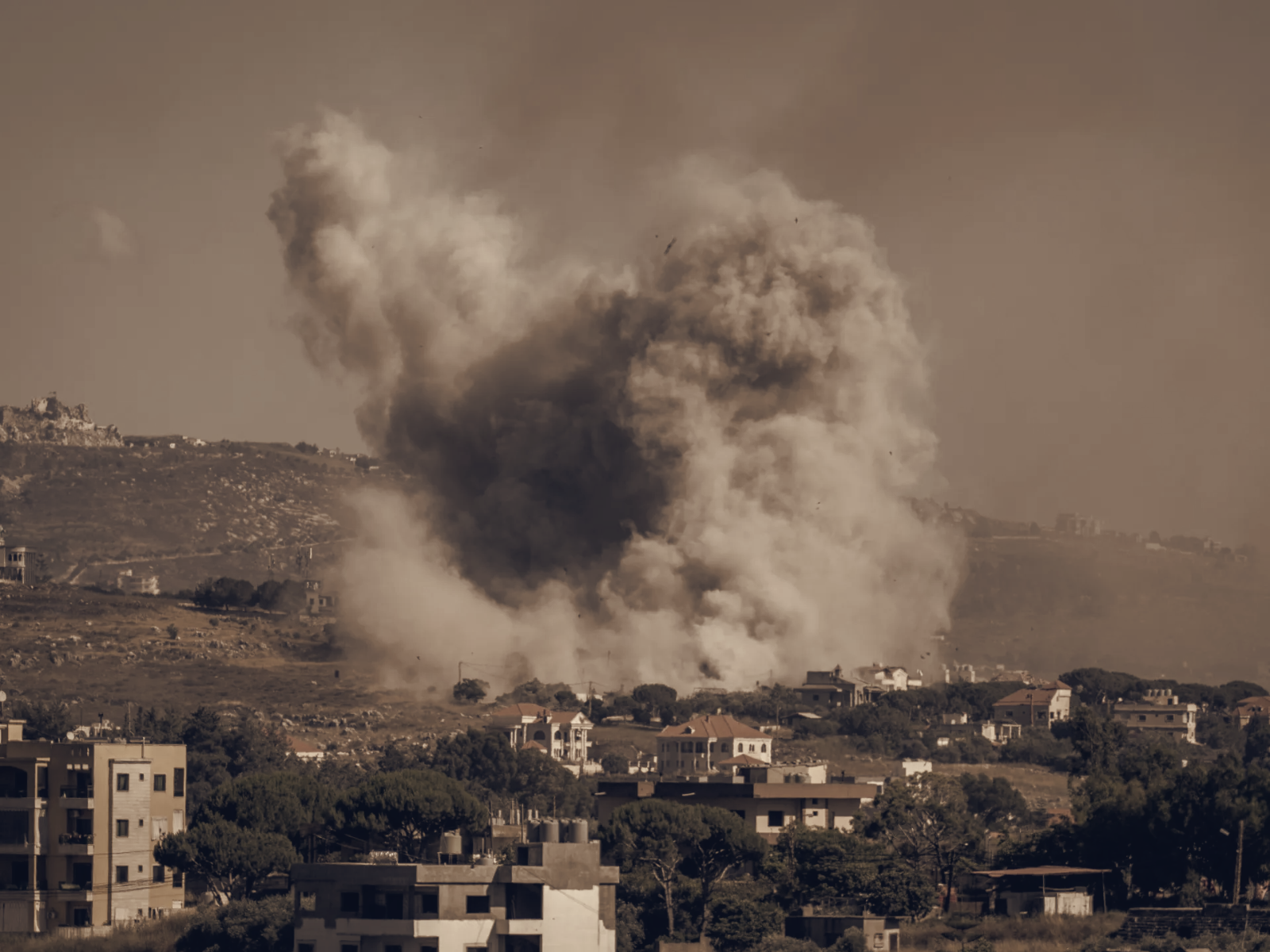

Civilians in southern Lebanon lost life and shelter after an Israeli strike killed a woman who had been married for 48 hours and destroyed her home in the town of Arab Salim, in Nabatieh governorate.
Lebanon’s Ministry of Health said six people were wounded in Thursday’s attacks, including a child, a woman and two elderly people. State news agency NNA reported the dead woman was newlywed, and Lebanese security sources said at least 10 Israeli strikes hit the wider Nabatieh area. NNA added that artillery fire struck the outskirts of Rashaf in the Bint Jbeil district.
Israel’s military said it was striking Hezbollah targets after the Iran-backed group attacked Israeli soldiers overnight, and it described the targets as “weapon storage facilities.” According to the Israeli account, Iran-backed fighters “launched two explosive drones” towards Israeli soldiers operating on the Ali al-Taher ridge, but there were no casualties.
Reporting from Beirut, Al Jazeera’s Zeina Khodr said, “Israel targeted the town of Arab Salim in the Nabatieh governorate. It targeted a residential area.” She added, “The Israeli army says it is hitting infrastructure, and that this is in retaliation for Hezbollah launching armed drones at its forces in the Ali al-Taher ridge overnight.” Khodr noted the ridge “overlooks the city of Nabatieh’s strategic high ground, which really remains contested territory,” and warned the Israeli army was applying mounting military pressure to force Hezbollah out of the area.
The strike is the latest in a recent intensification of cross-border operations. Israel increased raids after an August 15 wave of strikes that Lebanon says killed 11 people, including several children. Khodr said there has been a partial reduction in violence in recent days, but she also warned of “an escalation by the Israeli army” and growing concern that the army might broaden its offensive and make it more intense.
Tensions between Israel and Lebanon have risen since Israel’s genocidal war on Gaza began in 2023, according to the chronology in Beirut. Lebanon was drawn into the wider conflict on March 2, days after what the draft describes as the US and Israel launching their war on Iran, when Hezbollah struck Israel in support of Tehran. That was followed by large Israeli air strikes and a ground invasion that Lebanese authorities say have killed more than 4,300 people.
The continuing strikes have reopened debate in Beirut over the June framework signed with Israel, which foresees a phased Israeli withdrawal in return for deployment of the Lebanese army and the disarmament of armed groups, a reference to Hezbollah. Analysts and officials in Beirut will watch whether the framework and the recent US-Iran memorandum of understanding can keep a fragile calm, or whether attacks like the one in Arab Salim will trigger a wider escalation that further endangers civilians and undermines the agreement.