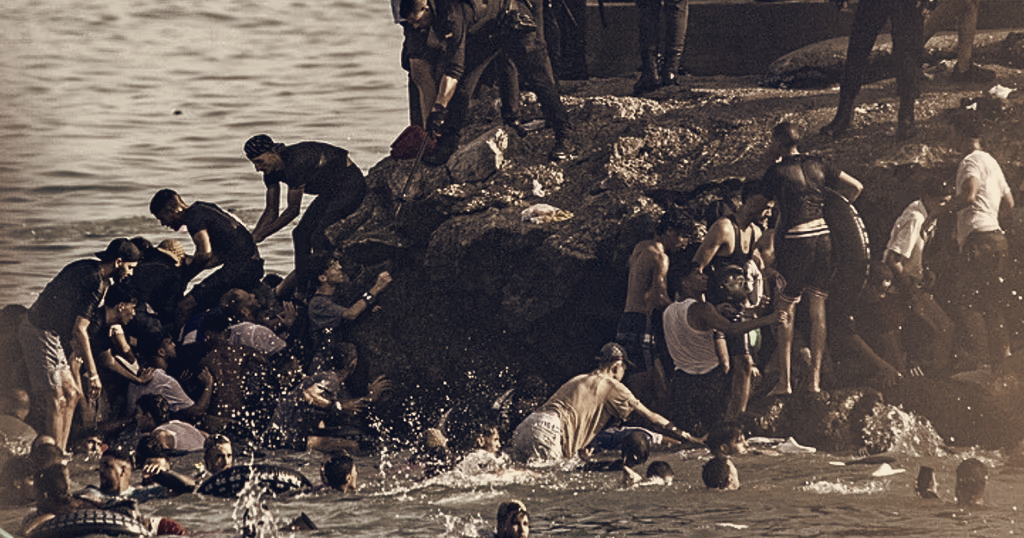
Spain's government faces reputational risk after a mass attempt by migrants to cross into Ceuta exposed gaps in reception capacity, Prime Minister Pedro Sanchez said in a televised interview. Sanchez defended his administration's response to the end-July surge, when some 80,000 people sought to enter the autonomous city, and rejected charges that authorities were unprepared.
Speaking for an hour on state television, Sanchez framed the incident as a form of organised pressure that requires stronger defences. He said the state needs to be better prepared for what he called "hybrid attacks" because the two autonomous cities, Ceuta and Melilla, share borders with Africa and occupy a "very, very important uniqueness."
The prime minister argued that Spain must expand the facilities that receive new arrivals, saying there is a need for "larger reception infrastructures for migrants arriving." He also defended the work of intelligence services in estimating the scale of possible arrivals, while acknowledging that forecasting capacity is one area that needs strengthening.
Sanchez confirmed that King Felipe VI will travel to Ceuta, but would not give a date. The planned royal visit signals increased central government attention to a crisis that has already strained local resources and fuelled public anger. Residents of the compact community have protested for weeks, accusing Madrid of failing to manage the influx and calling for the migrants to be removed.
Humanitarian conditions on the ground remain precarious. For roughly a month, thousands of migrants have been housed in improvised tents along the beach, receiving barely one meal a day supplied by the Red Cross. Those living in the makeshift camp are at the centre of both sustained protest pressure and concern over living conditions.
The immediate policy implications are clear from Sanchez's remarks: authorities must increase reception capacity and improve early-warning and intelligence assessments for future incidents. The government's next steps will include logistical planning for better facilities and the high-profile royal visit, both of which will be watched as tests of Madrid's ability to stabilise Ceuta and contain domestic political fallout.