
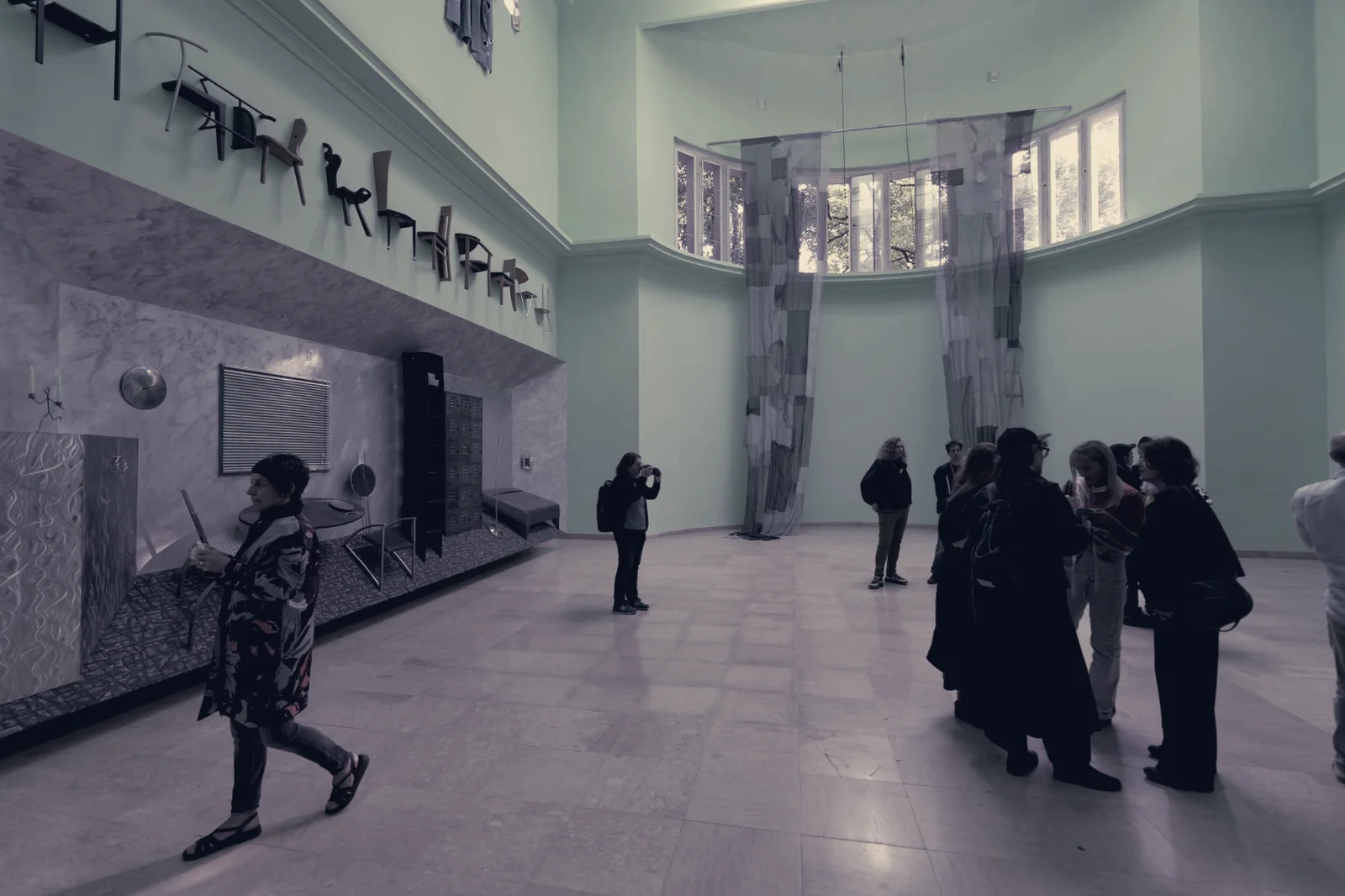
Several national pavilions on display at the 61st Venice Biennale left these reviewers unconvinced, producing a heated split between Hrag Vartanian and Aruna D'Souza over what succeeds and what simply performs. Their second instalment of pavilion assessments singles out Germany, Saudi Arabia, Qatar and Austria as problematic or ambivalent, and underlines how presentation, access and politics shaped visitor experience at the show running through November 22.
On Germany, Vartanian faulted the pavilion for offering what he described as surface-level political commentary and a selective survey of German history that sidesteps contemporary problems that have helped make the country a target of scrutiny. He contrasted that retreat into safe historical tropes with the expectations many bring to national representation, and suggested the exhibition will sit comfortably with commercial tastes.
The Saudi Arabia pavilion prompted sharper disagreement. Vartanian wrote, "I wanted to like this, but couldn't because it fell flat (womp, womp)," arguing the installation resembled a designer showroom more than the project it purported to be about mosaic floors and regional heritage. D'Souza pushed back, finding the work quietly contemplative and reading it as a proxy for violence in the region. She also drew attention to the pavilion's funding choices, noting that "something like 90%" of the money spent to stage the presentation went to the artisans who made the tiles, a detail she called quietly radical.
Qatar's new open-air, red-painted pavilion divided visitors by intention and use. D'Souza criticised its focus on opening-week activations, writing the space felt inert once performances and communal cooking by artists such as Rirkrit Tiravanija concluded, and noting it "will be activated only rarely during the next months." Vartanian said scheduling kept him from seeing Qatar's programme.
Austria provoked frustration and long waits. D'Souza said she declined to join the queues, while Vartanian reported a friend waited three hours on Saturday, the day after the press preview ended. Both acknowledged Austria's conceptual ambition, but disagreed on the payoff: D'Souza found the spectacle exhausting and off-putting, Vartanian admired the idea even as he questioned its reliance on shock and body-based performance.
The exchange frames a broader tension at the Biennale between works built for opening-week buzz and those designed for sustained, reflective viewing. The two critics' disagreements underline how access, production choices and curatorial tone determine whether a national pavilion reads as meaningful critique or comfortable display. The Biennale continues through November 22, leaving time for visiting audiences to judge which pavilions hold up beyond previews and press weekends.