IE University students presented a suite of design proposals that push restoration and care into more mobile, modular and locally rooted forms, including a portable structure made from natural materials that disperses native seed types from horseback. The collection pairs ecological interventions with social and healthcare-oriented interiors, suggesting new ways to work in remote, fragile or flood-prone contexts.
The projects are drawn from the Master in Interior Design at IE School of Architecture and Design, a ten-month programme in Madrid that combines craft, sustainability, technology and business training. The school emphasises hands-on briefs and interdisciplinary collaboration, asking students to respond to concrete site conditions and social needs while developing strategic design skills.
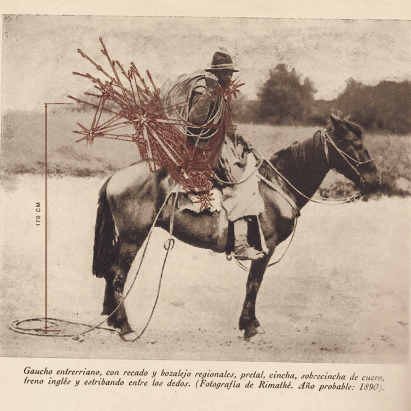
The most literal expression of mobility is a horse-mounted seeding system, a lightweight, portable structure intended to carry and release native seeds while riders move across landscapes. Built from natural materials, the device is presented as a low-impact tool for dispersing plant varieties suited to local ecologies.
Other proposals map a similar logic of repair and adaptability. Healing the Ruin, by Nyah Nassif, reimagines the Renwick Smallpox Hospital as an active hydrological machine, reviving gravity-fed water infrastructure to mist and harvest rain and cultivate seven medicinal and toxic species. The scheme explicitly stages decay and cure together, drawing on the pharmakon concept to let ruin and remediation coexist.
Isabel Dorn’s Territories of Care addresses Lake San Pablo in Otavalo, Ecuador. Dorn proposes a family of modular bays made from local bahareque and typha thatch that stitch the shoreline with treatment ponds, chinampas, drying racks, fish farms and floating algae platforms, aiming to purify water while producing food and supporting local craft and gastronomy.
Arianna Castro’s Edible Commons reframes Lima’s ollas comunes as spatial systems. Her Scaffold Commons is a low-cost, modular platform of reused and local materials working across Adaptation, Co-creation and Fabrication to improve cooking, storage and communal gathering. Vasco Amado’s Above La Paz develops a greenhouse-derived rooftop care typology for Hospital La Paz’s oncology ward, composing four timber modules and a living tree nursery to support patient wellbeing.
Other student work includes Lila Gaffney’s Third House, which inserts modular living and practice spaces into Marseille’s Pavillon du Lac to house unaccompanied migrant minors, Aishwarya Geetharani’s reconfiguration of Dubai Terminal 3’s jet bridge into three sensory waiting modes, and Francesca Torres’s lightweight threshold system that reconnects dispersed textile producers in Lucre. Together the projects prioritise local materials, modular systems and social programmes over architectural spectacle.
Collectively, the designs reflect the programme’s focus on practical, context-driven solutions that blend craft, ecology and user experience, proposing tools and spatial strategies that could be deployed across diverse and vulnerable sites.