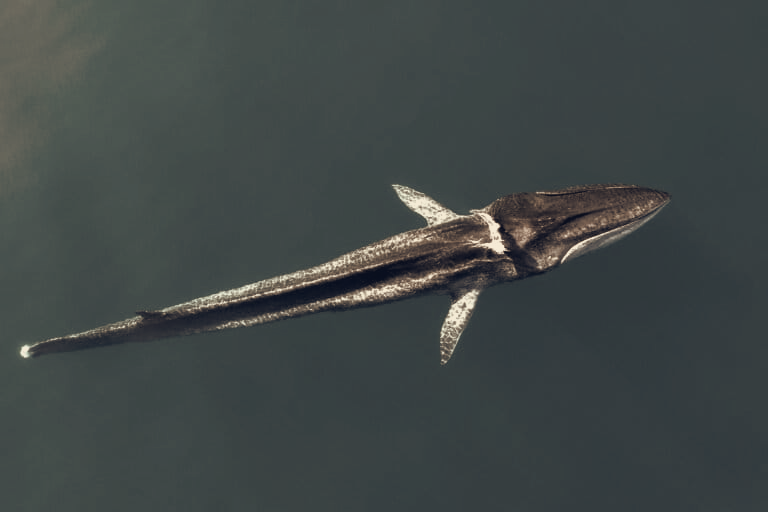
Ship strikes are a leading human cause of death for the Mediterranean’s two endangered large whales, sperm and fin. An analysis by Magma Magazine and Mongabay found that in 2025 thousands of vessels passed through key whale habitats at speeds above 15 knots (28 km/h), a velocity associated with almost certain fatalities when collisions occur.
Mongabay combined vessel and whale telemetry to create a visualization that tracks how shipping density overlaps whale ranges. The picture it paints is continuous exposure: busy shipping lanes run through areas where whales feed and migrate, leaving animals at persistent risk of fatal strikes.
In Ostia, Italy, in 2023 marine biologist Lisa Stanzani encountered the carcass of a sperm whale and concluded the animal had been struck by a propeller. She had seen video of the same injured animal weeks earlier near the island of Ponza, some 100 kilometers (60 miles) away. "This means it died slowly, in agony. As with many collision cases, death isn’t instantaneous," Stanzani, founder of Sotto al Mare, told Mongabay. The animal was young and bore a wound about a meter (3 feet) long consistent with a propeller injury.
Researchers and conservation groups identify several nascent measures to reduce collisions. Proposed options include imposing speed restrictions for vessels, rerouting traffic to avoid known whale habitats, and deploying detection and alert systems that notify ships when whales are present. The Mongabay visualization, which draws on movement data from both vessels and cetaceans, underlines why advocates argue for rapid testing of these approaches in high-risk zones.
The analysis does not resolve which interventions are most effective, but it clarifies the scale and location of the threat by showing how maritime traffic concentrates where whales occur. That overlap helps explain why collisions remain a leading anthropogenic killer of large whales in the Mediterranean and why conservation groups are pressing for targeted measures in the busiest corridors.
For the two endangered species at the centre of the analysis, the continued passage of fast, heavy vessels through their habitats means collision risk will persist unless the listed mitigation measures are adopted and applied in the hotspots the data reveal.