NASA will distribute more than $7 million in grants across 12 investigations that aim to improve off‑planet food production and to clarify how spaceflight conditions affect astronaut health. The awards, administered through the agency’s Space Biology program, split evenly between projects that develop plant-based solutions for life support and projects that probe physiological and molecular responses to space stressors.
The Story in Pictures
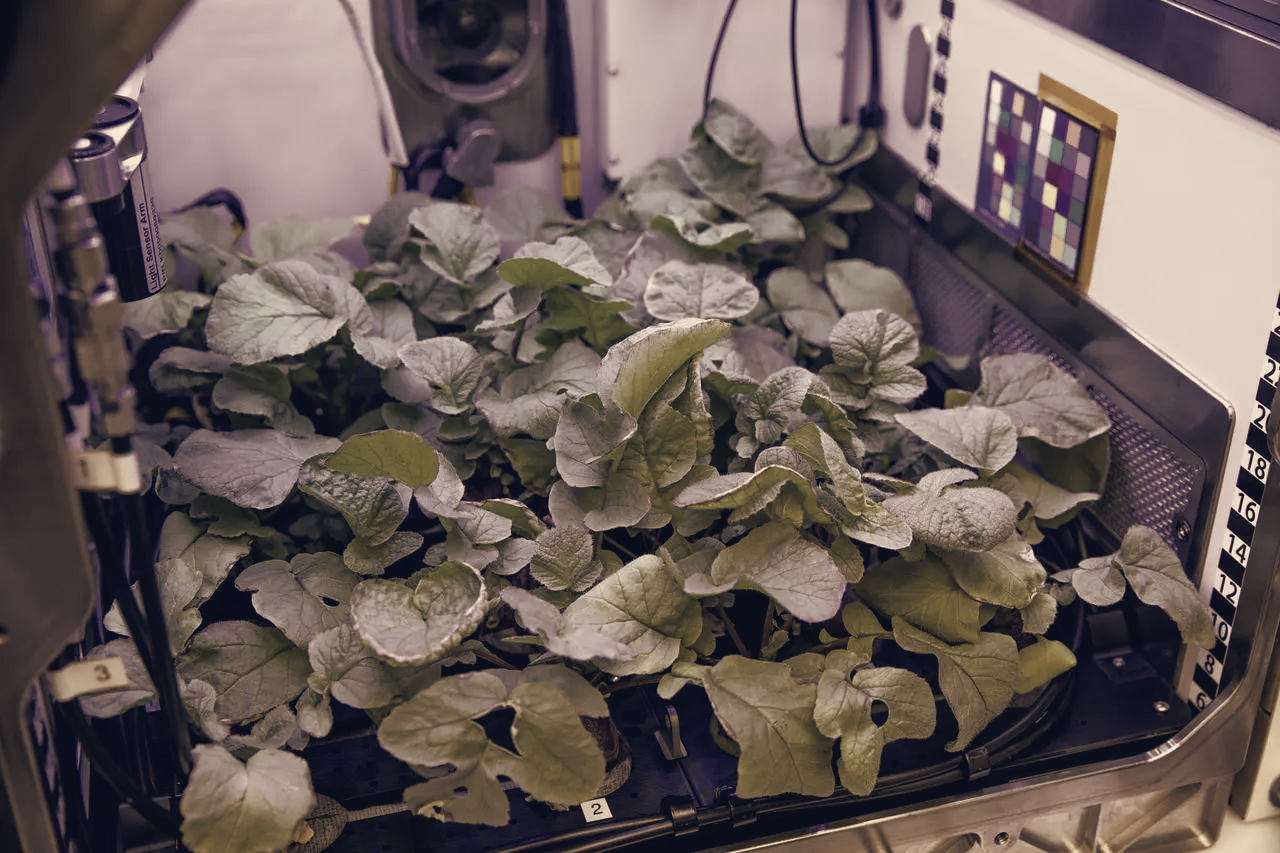
Six Space Crops investigations will test how edible plants, their associated microbes and stress‑tolerant species perform under spaceflight or planetary conditions, with an eye toward integrating biological systems into life‑support for lunar and Mars missions. Jannell Bazurto at the University of Minnesota will examine plant, microbe interactions for sustainable space farming. Miranda Haus at Michigan State University will evaluate legume rotations and microbial dynamics using regolith simulants. Andrew Settles at NASA Ames will pursue genetic approaches to reduce spaceflight stress effects on the green alga Chlamydomonas. Christopher Taylor at Ohio State University will study microbes in hydroponic systems exposed to low carbon and high radiation. Robert VanBuren at Michigan State will investigate the resilience mechanisms of resurrection plants for bioregenerative systems. Shuyang Zhen at Texas A&M AgriLife Research will optimize environments and cultivars to boost dwarf tomato growth and stress tolerance for space agriculture.
The other six awards focus on precision health challenges tied to exploration. Archana Dhasarathy at the University of North Dakota will probe epigenetic memory as an adaptive response to microgravity and radiation. Andrij Holian at the University of Montana will assess how aging contributes to particle‑induced chronic inflammation. Mert Gur at the University of Pittsburgh will use all‑atom molecular dynamics to study pathogenic mutations under spaceflight‑relevant stressors. Grace O’Connell at the University of California will investigate persistent spine health effects after microgravity and radiation exposure and recovery. Satoshi Okawa at the University of Pittsburgh will study a brain‑heart aging axis and screen repurposed drugs as potential mitigations. Sanghee Yun at The Children’s Hospital of Philadelphia will apply systems biology to understand how hypercapnia, radiation and social isolation interact to drive biological aging.
The selected investigators are based at 10 institutions across eight states, and nine of the awards fund researchers receiving Space Biology Program support for the first time. These grants respond to ROSES‑2024: Program Element E.9, Space Biology Research Studies (NNH24ZDA001N‑SBR), and will be implemented over fiscal years 2026-2030. The resulting data are intended to guide incorporation of biological systems into life‑support and to inform strategies for mitigation and early warning of health risks to crew during extended exploration.