Apple pushed into the foldable market on September 9, 2026, and immediately set a premium price point by introducing the iPhone Duo with a $1,999 starting tag. The announcement, delivered at the Steve Jobs Theatre in Ternus’s first product keynote since taking the CEO role on September 1, positions the Duo above competing foldables on price while folding into Apple’s broader device ecosystem.
The Story in Pictures
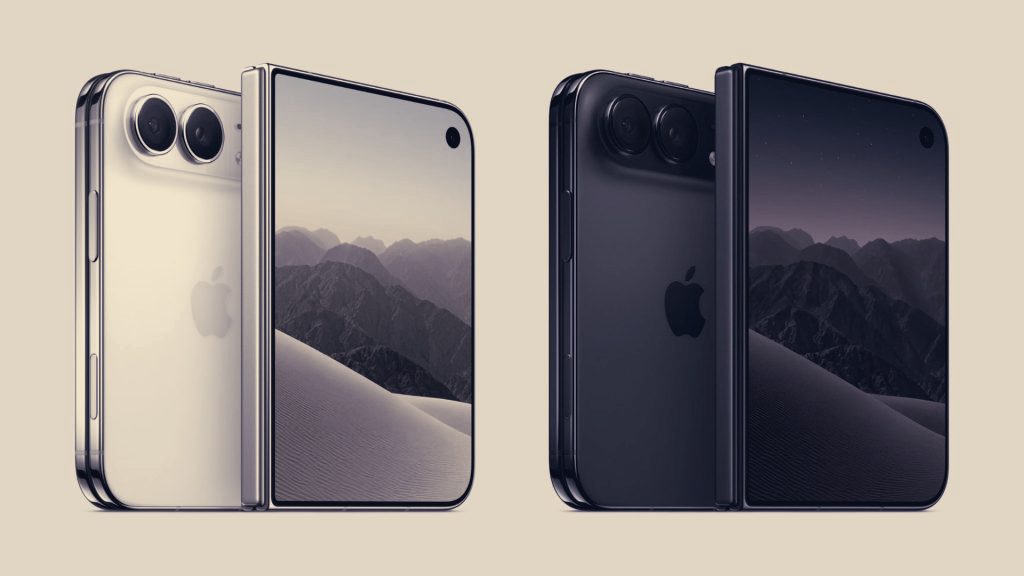
The Duo folds like a book and pairs a 7.6‑inch inner Super Retina XDR display with a 5.4‑inch external screen, both rated to reach up to 3,000 nits. Apple says the inner panel is 50% larger than the screen on the iPhone 18 Pro Max. A nano‑texture finish aims to cut glare and conceal the crease, while the handset’s frame is mirror‑polished titanium and the hinge is covered with a 3D‑printed titanium component. The phone carries an IP68 rating.
Biometrics change on the Duo, with Apple replacing Face ID with Touch ID built into the side button and offering an unlock option via Apple Watch. Inside, the Duo runs on the A20 Pro chip, the same system-on-chip that powers Apple’s new Pro models and which Apple bills as its first 2‑nanometer processor. The A20 Pro couples a 6‑core CPU and a 7‑core GPU with an on‑device Neural Engine and a custom display engine to drive both screens.
Camera hardware on the Duo centers on two 48MP modules, one main lens and one ultra‑wide, and Apple says the handset achieves up to 4x optical zoom without including the variable aperture mechanism introduced on the iPhone 18 Pro. Battery life is rated at up to 24 hours of typical use, with video playback figures of 31 hours on the inner display and 44 hours on the outer panel. Apple Pencil support will arrive later this year, and the inner display supports side‑by‑side app multitasking similar to the iPad.
The Duo ships in Star White and Night Sky and is configurable from 256GB to 2TB. Pre‑orders open October 16 and the phone goes on sale October 23. Apple’s $1,999 entry point places the Duo about $100 above Samsung’s Galaxy Z Fold 8 and Google’s Pixel 11 Pro Fold, while adding Apple Pencil compatibility and access to the full iPad app library as part of its premium pitch.
Alongside the Duo, Apple introduced the iPhone 18 Pro and iPhone 18 Pro Max, both powered by the A20 Pro. The Pro models add a 48MP main camera with a true variable aperture, a smaller Dynamic Island capable of showing up to three Live Activities at once, and a redesigned cooling system with a vapour chamber roughly three times larger than the one in the iPhone 17 Pro. Battery playback is rated at about 30 hours for the Pro and 45 hours for the Pro Max, wired charging reaches 50% in about 15 minutes, and both models gain a new burgundy colour and configurable storage up to 2TB. Pricing starts at $1,199 for the Pro and $1,299 for the Pro Max, with pre‑orders opening September 12 and sales beginning September 18. Apple will not release a standard iPhone 18 this fall.
Bloomberg’s Mark Gurman reports the company plans a spring 2027 release wave that will include a standard iPhone 18, an iPhone 18e and an iPhone Air 2, a shift the reports say will spread launches across the year to help manage component costs and demand. Until that spring refresh, Apple will keep the iPhone