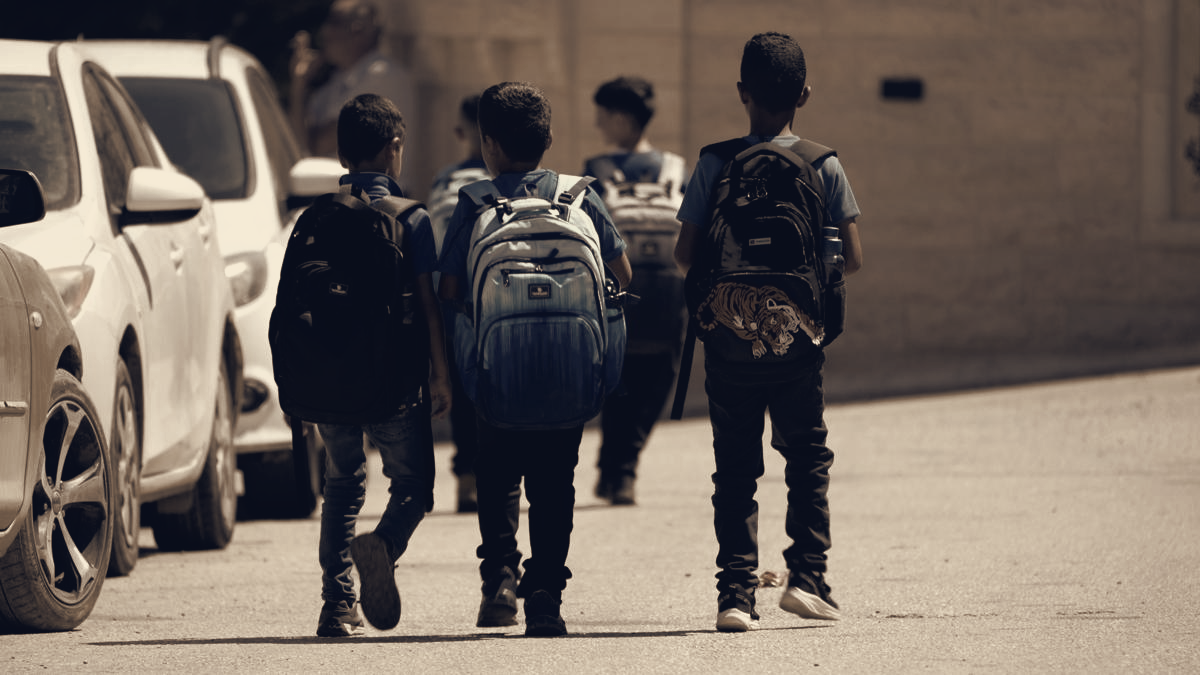

Attendance at al-Mughayyir's boys school has fallen as parents weigh whether to send children back after a string of deadly incidents this year, prompting the headteacher to surround the building with barbed wire and reinforced gates. Ambulance crews have been posted on the road outside and volunteers stand at the entrance in an effort to reassure families and keep pupils in class.
Six people from the village have been killed so far this year, including three pupils. One victim was 14-year-old Aws al-Naasan, who was shot outside the school gates in April. English teacher Waheed Abu Naem, who lost his brother Jihad in the same attack, said, "I was inside my classroom and two little students came rushing to tell me there were settlers close to the school wall." He described moving children to safety when firing began.
Abu Naem said mobile phone footage captured parts of the April incident and described Aws's injuries. "When I turned him onto his back, I saw lots of blood coming from his nose and mouth, and the bullet in his head. We lost him," he said. He added that bullets continued striking the school building while pupils hid behind classroom walls or lay on the floor.
Two more pupils were killed over the summer during clashes described in the report as settler attacks and incursions, and a 19-year-old who had just left school was also killed. The Israeli military said stones were thrown at a vehicle carrying "civilians including a reservist soldier", and that a reservist exited the car and fired. Israeli media reported the reservist was suspended and an investigation launched. The army did not provide a response to wider allegations before publication.
The school sits on the edge of the isolated village, which residents say is increasingly surrounded by small settler outposts and regularly blocked by an ad-hoc Israeli checkpoint at the entrance. Headteacher Bassam al Assaf said, "We are scared," adding, "The students are afraid, and their parents are afraid." His security measures are meant to calm families deciding whether to return children for the new term.
Parents who remained at the first assembly said their presence helped children feel safer. "I came because it makes the children feel their parents are with them, that they are safe, it gives them a kind of security," said Haroon Bishara, whose sons are in first and second grades. Teachers told pupils to avoid shouting or confronting soldiers or settlers if they approach.
Residents and ambulance crews report a shift in behaviour by Israeli forces. Ambulance driver Hadi al-Naasan said, "At the beginning of 2025, settler attacks were few, due to the army's interventions," and that "In 2026, the situation changed completely: the settlers became fully protected by the occupation soldiers. This year, the number of martyrs is higher, the number of injuries is also much higher, and the number of child injuries is higher too." International law classifies Israeli settlements in the occupied West Bank as illegal, and many of the small outposts around al-Mughayyir are illegal under Israeli law as well.