
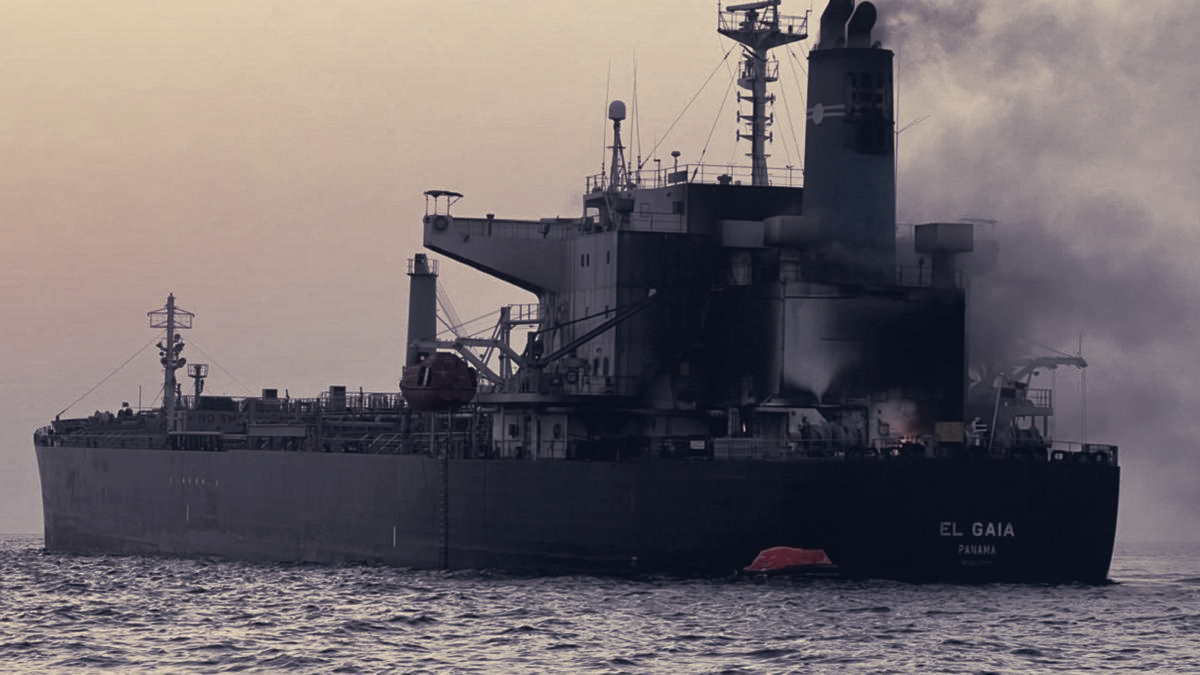
Two crew members have not been found and 23 others were pulled from the water after the Panama-flagged tanker El Gaia was damaged 1.3 nautical miles north of the Musandam peninsula, Oman's Maritime Security Centre said. The vessel suffered a fire in its engine room and has been taken under tow to an Omani port for inspection and salvage work.
Accounts differ over how the ship was hit. Iran's Islamic Revolutionary Guard Corps said El Gaia struck naval mines while using what it described as a restricted and unsafe route, and that the blast caused the blaze. US military officials disputed that account, saying the vessel was struck by an Iranian missile last month and then again this weekend by a drone. The UK Maritime Trade Operations centre also received a report that a vessel suffered a fire after being hit by an unknown projectile while transiting the Strait of Hormuz in the early hours of Sunday.
The incident echoes an earlier attack this month on the Saudi-owned supertanker Sidr, where two Filipino sailors were killed. In that case the Revolutionary Guards likewise said the ship hit a naval mine, while Saudi authorities and maritime security firms reported that the vessel had been struck by projectiles north of Musandam. The International Maritime Organization records at least 22 seafarers killed in 79 confirmed incidents in the Strait of Hormuz and elsewhere in the Middle East since the start of the US and Israel's war with Iran at the end of February.
The waterway has become increasingly hazardous, with Iranian missile and drone strikes on commercial vessels and a US naval blockade of Iranian ports contributing to a near closure of the strait. Around one fifth of global oil and gas shipments normally pass through the channel, a flow that has been disrupted by the recent attacks. A preliminary agreement reached in June between the US and Iran aimed to end the fighting and reopen the sea lanes, but that accord collapsed within weeks after attacks resumed and the US reinstated its blockade.
With El Gaia now in Omani custody, the immediate priorities are salvage and a formal inquiry that could determine liability and the technical cause of the damage. Until investigators complete inspections and any official findings are published, Tehran and Washington will continue to present competing narratives over what hit the tanker, prolonging uncertainty for ship operators and states reliant on the strait for energy exports.