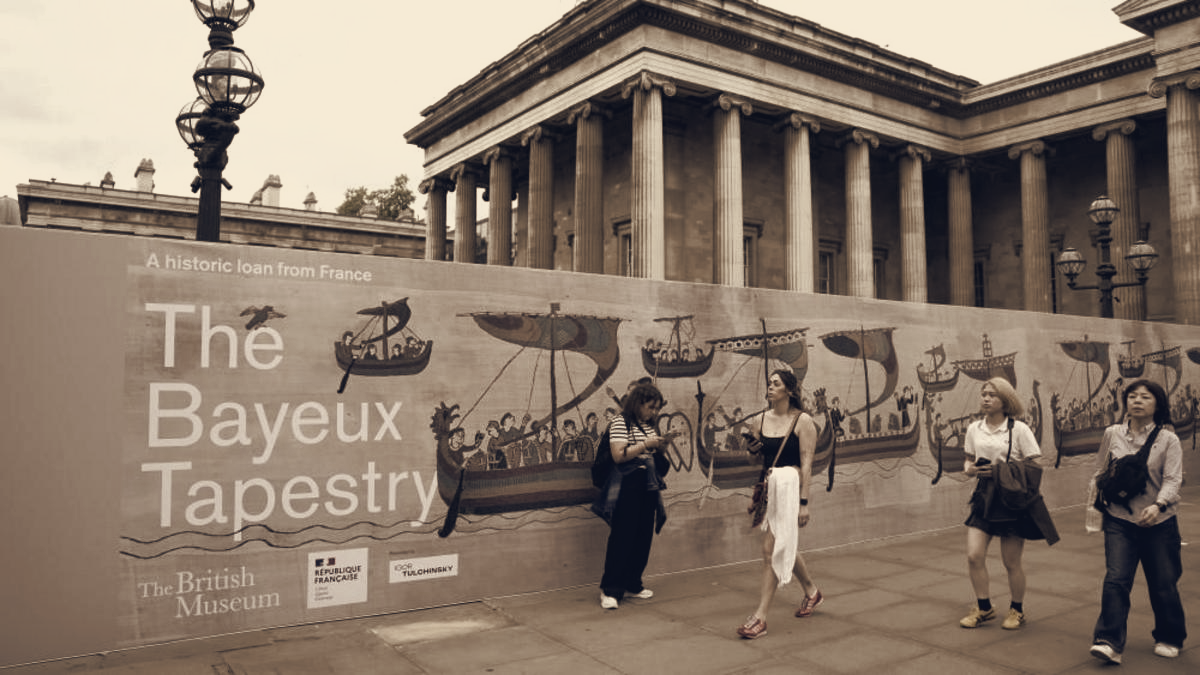
Visitors will no longer be allowed to stop and take pictures of the Bayeux Tapestry as the British Museum has moved to speed visitor flow and protect timed entries. The decision bars photography while people pass along the 68m (230ft) embroidered narrative, after staff concluded that those pausing to photograph the work were holding up groups and creating long queues.
The museum had originally permitted visitors to take photographs, but curators reversed that approach when delays began to affect later ticket-holders. Entry to the exhibition is controlled in cohorts every 40 minutes, and audiences are asked to walk in a single direction beside the full-length display to keep the schedule on track.
A British Museum spokeswoman said the institution had seen very high demand for the loan and that ensuring a good experience for everyone was the priority, which informed the decision to limit photography while visitors move along the embroidery.
The object itself is an 11th Century embroidered cloth, currently in Britain for the first time, which illustrates events before the Norman conquest and the Battle of Hastings in 1066. The piece is on loan from Normandy and will remain on display in London until July 2027. For this exhibition the museum chose to present the work in one straight run rather than the horseshoe-shaped gallery used in Bayeux.
The loan followed a Franco-British summit in 2025 and years of planning. The British Museum covered the costs of transporting the artefact while the UK government provided insurance. Curators moved the cloth in a climate-controlled crate and it travelled under police escort across a 350-mile (560km) route to central London.
Some potential visitors have criticised the price of tickets, which can be as much as three times the cost of seeing the work in France. The exhibition is sold out until 31 December, although organisers expect to release more tickets in October. For those who cannot obtain tickets, full-scale replicas remain freely available at Tewkesbury Abbey and Reading Museum.
The museum said it will monitor visitor flow and the impact of the photography restriction as the run continues toward July 2027.