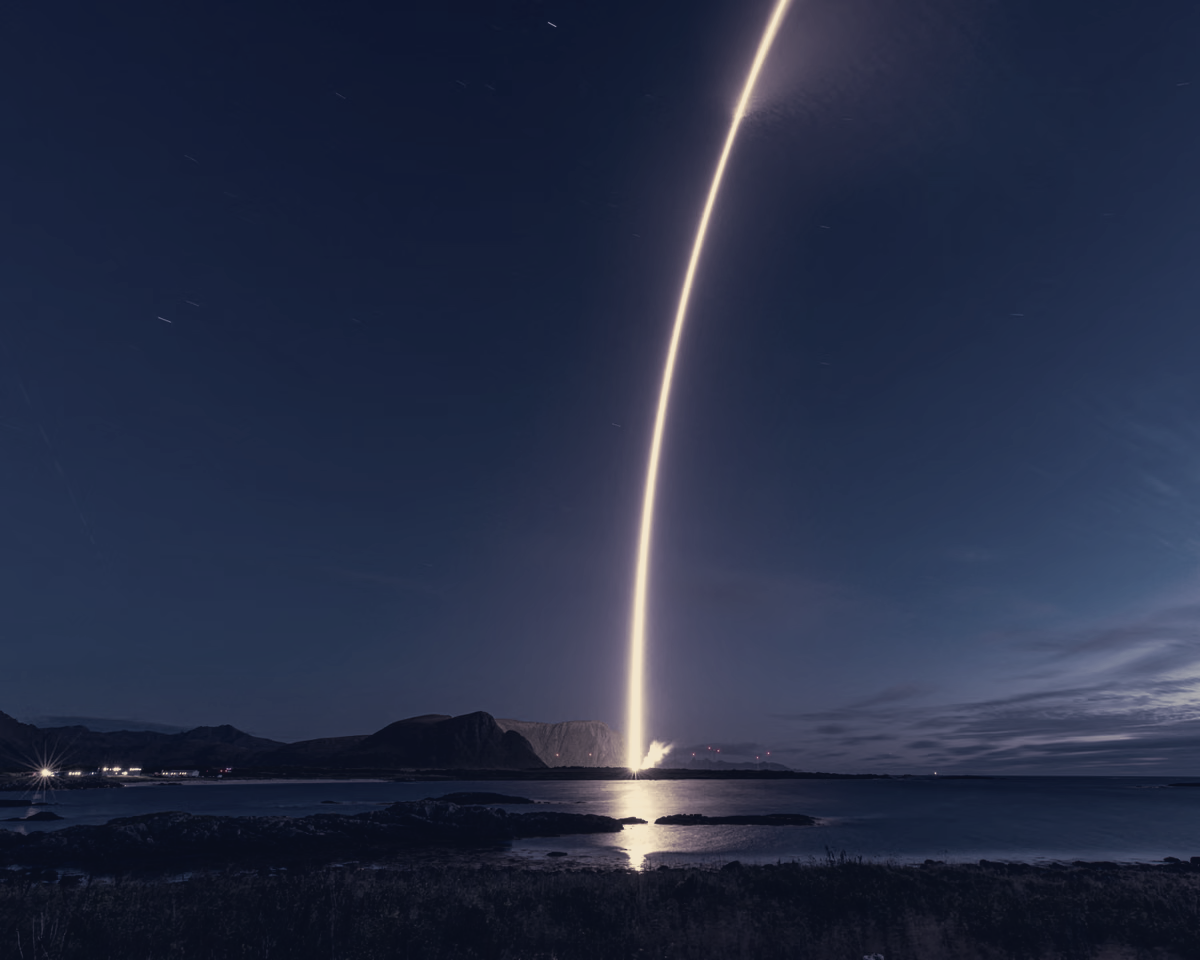

Europe gains a commercial orbital launch capability after German startup Isar Aerospace’s uncrewed Spectrum rocket reached orbit from Andøya Spaceport in Arctic Norway. The successful flight delivered five small satellites and an in-flight technology experiment, marking the first time a commercial rocket has reached orbit from continental Europe.
The mission was Isar’s second attempt from the same site, coming 18 months after the company’s first rocket plunged into the sea shortly after takeoff. Isar says it already has five more rockets in production and intends to scale up operations fast, with a long-term goal of conducting about 40 launches a year.
Isar’s co-founder and chief executive, Daniel Metzler, framed launch capacity as the sector’s urgent problem, telling reporters, "Launch capability is right now the biggest bottleneck in the entire industry." German chancellor Friedrich Merz hailed the flight as "the beginning of a new era" and had visited Isar’s launch site in March, a visit that highlighted Europe’s push for greater autonomy as the global order shifts under US president Donald Trump. The EU defence and space commissioner, Andrius Kubilius, wrote on X, "Europe’s independent access to space just got a major boost."
The flight places Isar among established global players. The satellite launch market already includes Elon Musk’s SpaceX, which operates from the US, and ArianeGroup, the joint venture between Airbus and Safran that uses a spaceport in French Guiana, South America. Isar is also developing a second launch site in Nova Scotia, eastern Canada, as it moves to convert the single demonstration success into regular commercial service.
What comes next for Isar is operational scale and reliability. The company must translate this milestone into a steady cadence of launches to meet demand and to challenge entrenched providers. For European satellite operators, the flight expands options for sending payloads to orbit without relying on non-European spaceports.