
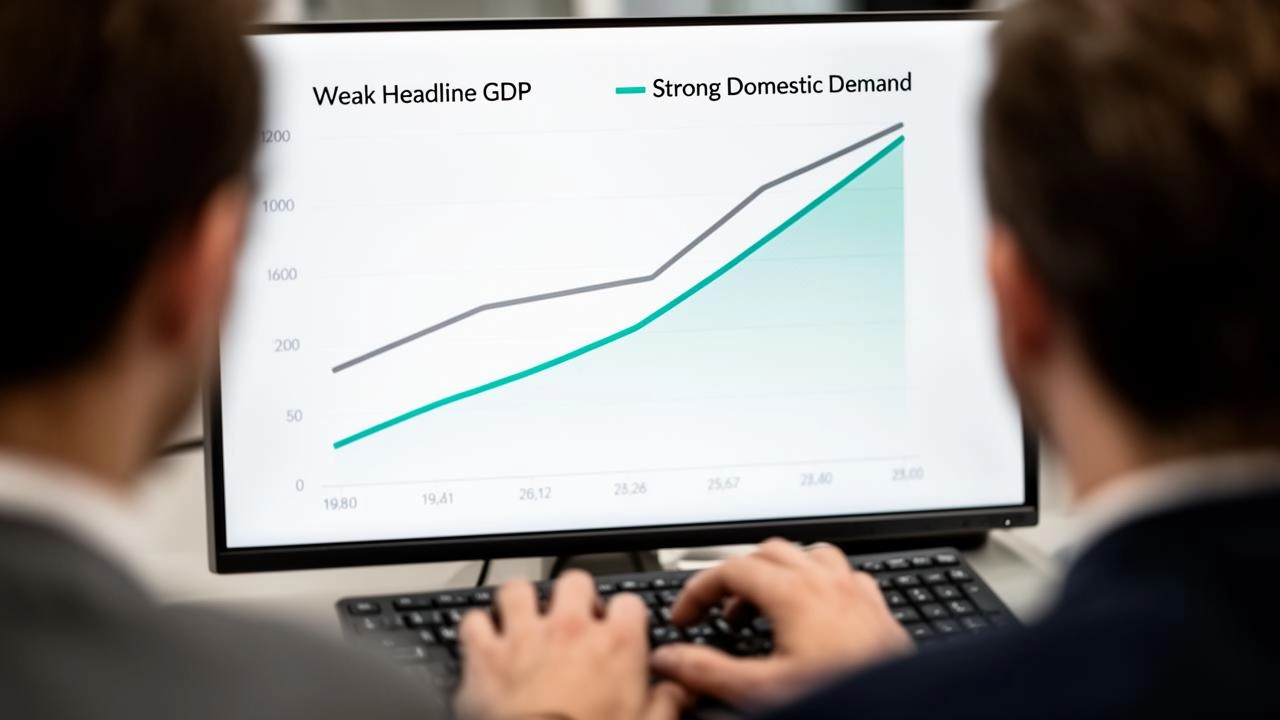
US growth slowed to a 1.5% annualised rate in the three months to June, down from 2.1% in the first quarter, the Commerce Department said. The surprise deceleration missed analyst expectations that growth would hold near 2%, and reflected a pullback in government spending, business investment and exports that erased some of the gains from household demand.
Consumer spending, which makes up more than two-thirds of US economic activity, expanded at a 3.2% annual pace in the quarter after easing to 0.5% earlier this year. Surveys cited continued outlays on motor vehicles, notably light-duty trucks, as well as on furniture and prescription drugs, even as prices rose at a 3.5% clip in the year to June.
Economists interpreted the data as mixed rather than weak. Michael Pearce, chief US economist at Oxford Economics, said the slowdown underplayed the "strength" of the US economy and predicted the growth rate would return to above 2% later this year. He added there were signs investment outside the AI sector was reviving, while stressing that "surging AI-related investment is still the biggest game in town" and that rising imports of microchips mean AI's contribution to growth remains "modest".
The wider backdrop has complicated the outlook. The report noted the economy continues to feel the financial impact of the war with Iran and the drag from tariffs, and the Federal Reserve said activity was expanding at a "solid pace despite uncertainty caused by the conflict in the Middle East." Higher oil prices are the main economic concern tied to the conflict, with Brent crude near $90 a barrel and average gasoline prices back above $4 a gallon.
The Fed chose to hold interest rates for a fifth consecutive meeting this week, and new chairman Kevin Warsh warned there was no "magic wand" to tackle rising prices. A separate inflation release showed the Personal Consumption Expenditures Price Index, the Fed's preferred gauge, rose by 3.7% year on year in June.
Analysts emphasised resilience in household spending. Bradley Saunders, North America economist for Capital Economics, said the Q2 figure "seriously undersells a healthy economy," and that households had "shrugged off" the pressure of higher fuel costs. For now the data leave policymakers balancing persistent inflation against a still-vigorous consumer sector, while economists watch for the growth rebound Pearce expects later in the year.