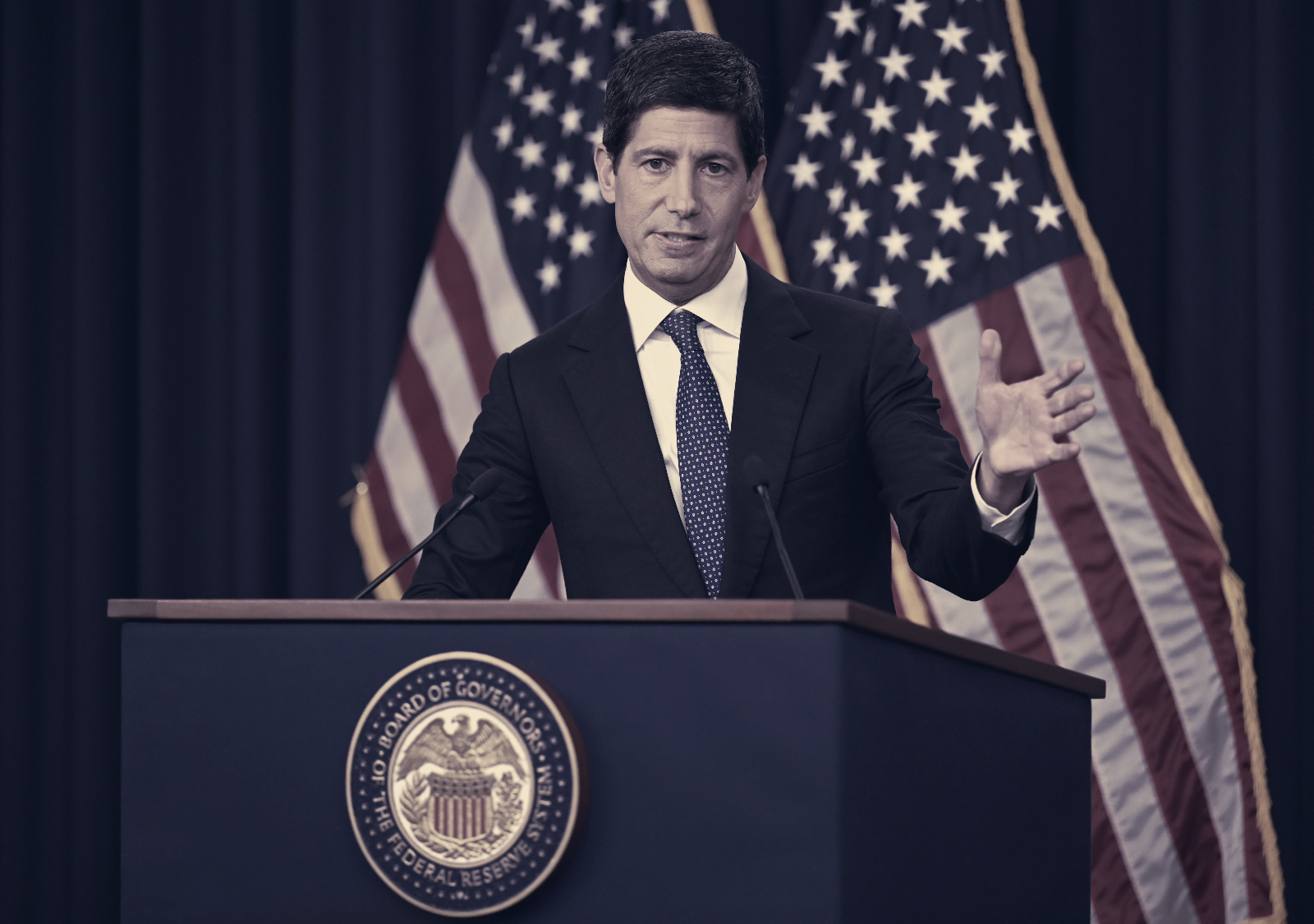
Markets increased the odds of further Federal Reserve rate increases after Chairman Kevin Warsh described Wednesday's quarter-point hike as removing "a dose of accommodation." Traders and major banks reacted quickly, pushing the market-implied probability of an October increase toward 58% and prompting firms including Goldman Sachs and Bank of America to add an October move to their forecasts.
Warsh justified the decision by pointing to an economy that has "strengthened" and to financial conditions that have become less restrictive, language that repositioned the policy debate away from a straight measurement against a so-called neutral rate. When asked how far the current target range of 3.75% to 4% sits above neutral, Warsh said such comparisons are "useful academically," but added, "Do I think it has any operational effect of decisions that we make today? No, I don't."
The chairman's phrasing prompted immediate commentary from market strategists. Krishna Guha of Evercore ISI called the "dose of accommodation" line "the one stand-out hawkish element," arguing the repeated wording seemed deliberate and could allow for a more open-ended sequence of increases. James Egelhof at BNP Paribas Securities wrote that if "accommodation" is read as stimulus, policy may start from a meaningfully stimulative stance, increasing the chance that "significant rate increases" beyond current expectations could be needed.
Markets are now pricing a fed funds rate near 4.635% by late 2027, an implication that would correspond to roughly three or four additional hikes from today’s level. Some portfolio managers cautioned that the move may simply reverse the insurance cuts from the fall of 2025, rather than signal a new aggressive tightening cycle. Jack Janasiewicz of Natixis Investment Managers Solutions said the remarks "seemingly helped to underscore this hawkish tone," while also noting his team remains unconvinced the Fed has embarked on a sustained new tightening campaign.
The immediate consequence is clearer market betting on more rate increases at upcoming meetings, with October attention intensifying. The longer run effect depends on which operational benchmarks the Fed adopts, and whether committee members treat "removing accommodation" as a series of discrete steps or as an open-ended campaign until inflation pressures ease toward the 2% target.