
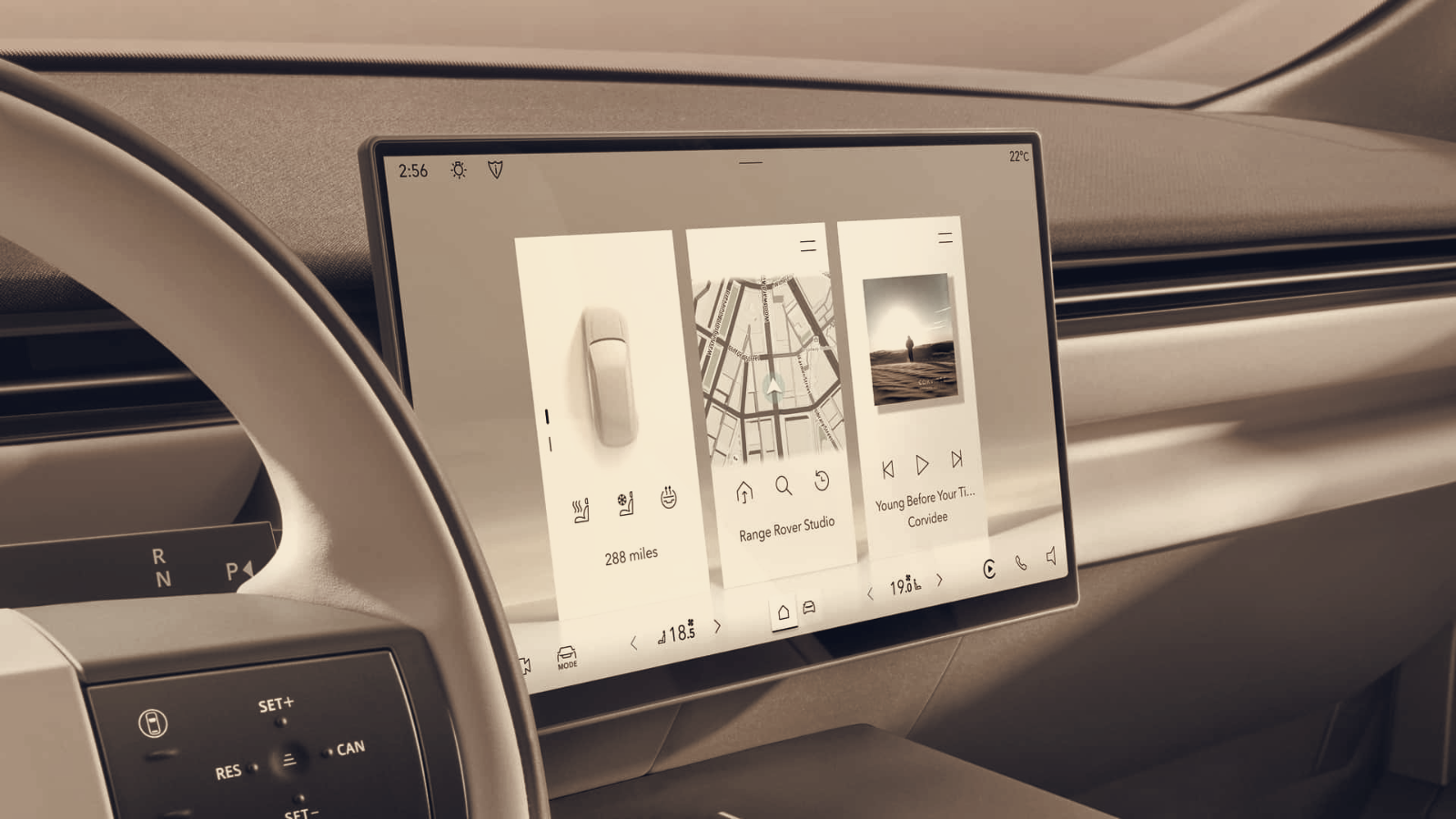
Range Rover will reduce the number and prominence of in‑cabin displays, arguing the change will cut what it calls 'visual and acoustic noise' and put attention back on the vehicle itself rather than on surrounding technology.
The shift was outlined as part of the brand's interior strategy for the new Range Rover GT and future models. The GT, which Range Rover says pairs a massive battery pack with substantial range, will lead the change but still operates as a modern luxury SUV with digital controls. The company says it will avoid piling screens into the dashboard simply because competitors do.
Range Rover's global managing director, Martin Limpert, described the approach in straightforward terms: "We free our cabin from all of that. That’s what makes us unique … we will keep evolving." That philosophy guided the GT's layout, which uses a slim digital instrument cluster and a centrally mounted touchscreen set relatively low in the dash rather than a wall of displays.
The centre touchscreen continues to handle nearly all infotainment duties and the driver retains a digital instrument display. But screens are no longer intended to be the cabin's centerpiece. At the same time, the brand is not reverting to a large bank of physical buttons; instead it plans to use technology selectively and integrate it into the cabin without letting it dominate the experience.
Range Rover specifically notes passenger displays are low priority because its data shows they are underused and not worth claiming valuable cabin space. The GT represents the first clear indication of how the company intends to balance digital features and material design across its range.
What happens next is a gradual roll‑out of this interior philosophy through upcoming models, with the GT serving as the template for less screen‑centred cabins while retaining modern infotainment and driver displays.