
Chinese-American performers lost access to leading parts after Metro-Goldwyn-Mayer refused to cast Anna May Wong in a principal role for The Good Earth, a decision that exposed studio casting practices which treated Chinese actors as background presence. MGM’s casting files show Wong was tested and then dismissed, and casting reports advised that performers of Chinese heritage be “employed primarily as ‘atmosphere’ and not as principal actors.”
Wong’s public profile was vast and cross-cultural. Admirers ranged from Anne Frank, who pasted two photographs of her on the walls of the secret annex in Amsterdam, to Harlem drag balls where performers copied her Piccadilly dance moves. Even at Royal Ascot, society women imitated the Coolie Hat she popularised as fashion. Fame, however, did not shield Wong from legal and social exclusion.
Though born in Los Angeles and carrying a passport, Wong faced the practical limits of citizenship under the Chinese Exclusion Act. She and other Chinese Americans had to submit to onerous procedures each time they left the United States, including filling Form 430, the “Application of Alleged American Citizen of the Chinese Race for Preinvestigation of Status,” and attending in-person interviews that could lead to detention or deportation for any irregularity.
State laws and private covenants compounded those barriers. California statutes forbade her from marrying a white partner, a restriction she publicly decried, and housing covenants in Los Angeles blocked sales to “Orientals” when she sought a new home in 1946. Money and renown did not overcome segregation.
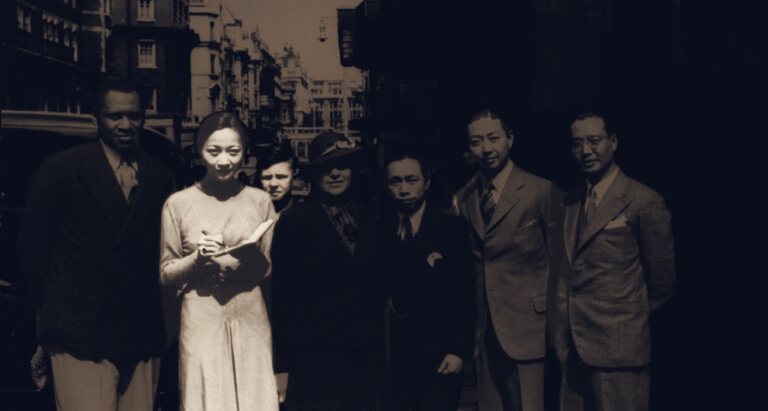
The episode around The Good Earth crystallises the industry bias she faced. MGM spent two million dollars on the production and sought authenticity, but studio notes disparaged Wong’s suitability for a sympathetic leading part. She publicly said she would seek O-lan’s role and refused the unsympathetic part of Lotus, yet her private correspondence to her friend Fania Marinoff admits she auditioned for Lotus twice, and that many urged her to take it “if there is enough money in it.” When MGM cast a non-Chinese actress instead, Wong did not withdraw into despondency. Within roughly a month of the studio rejection she set out for China, treating the trip as professional work rather than a retreat.
Wong’s career both reveals Hollywood’s exclusionary casting practices and the limits of legal citizenship in mid-century America. Her life shows how an artist negotiated prejudice by moving between markets and publics, and why her example of reinvention remains a touchstone for actors and historians confronting the industry’s racial record.