Tribeca has quickly reasserted itself as a fall destination for art, as new galleries open and five tightly curated exhibitions populate a short stretch of Broadway, Walker and White Streets. The neighbourhood’s cluster of small spaces feels purposefully programmed this September, with each show shaped around a clear story or visual conceit that rewards close viewing.
At Matthew Brown Gallery, Carroll Dunham presents the first exhibition since his move to the gallery in 2025. The new paintings swap the artist’s earlier pink wrestlers for purple figures, crows and a recurring brown dog, framing a White male sculptor who is pulled, sung to and tugged in multiple directions. The 12-foot canvas “Finished” (2019-25) stages this motif at scale. The presentation follows Dunham’s departure from Gladstone Gallery, which had represented him for 20 years.
Bortolami’s Christine Safa show operates at the opposite temperature, favouring a reduced palette of blues, oranges and greens to develop quiet meditations on motion and time. Small, intimate works of rainbows, oceans and sunflowers sit beside larger, figurative pieces, and the exhibition includes the new painting “L’offrande” (2026). The overall effect is one of slow rehearsal, moments of domestic calm that register as cumulative rather than anecdotal.
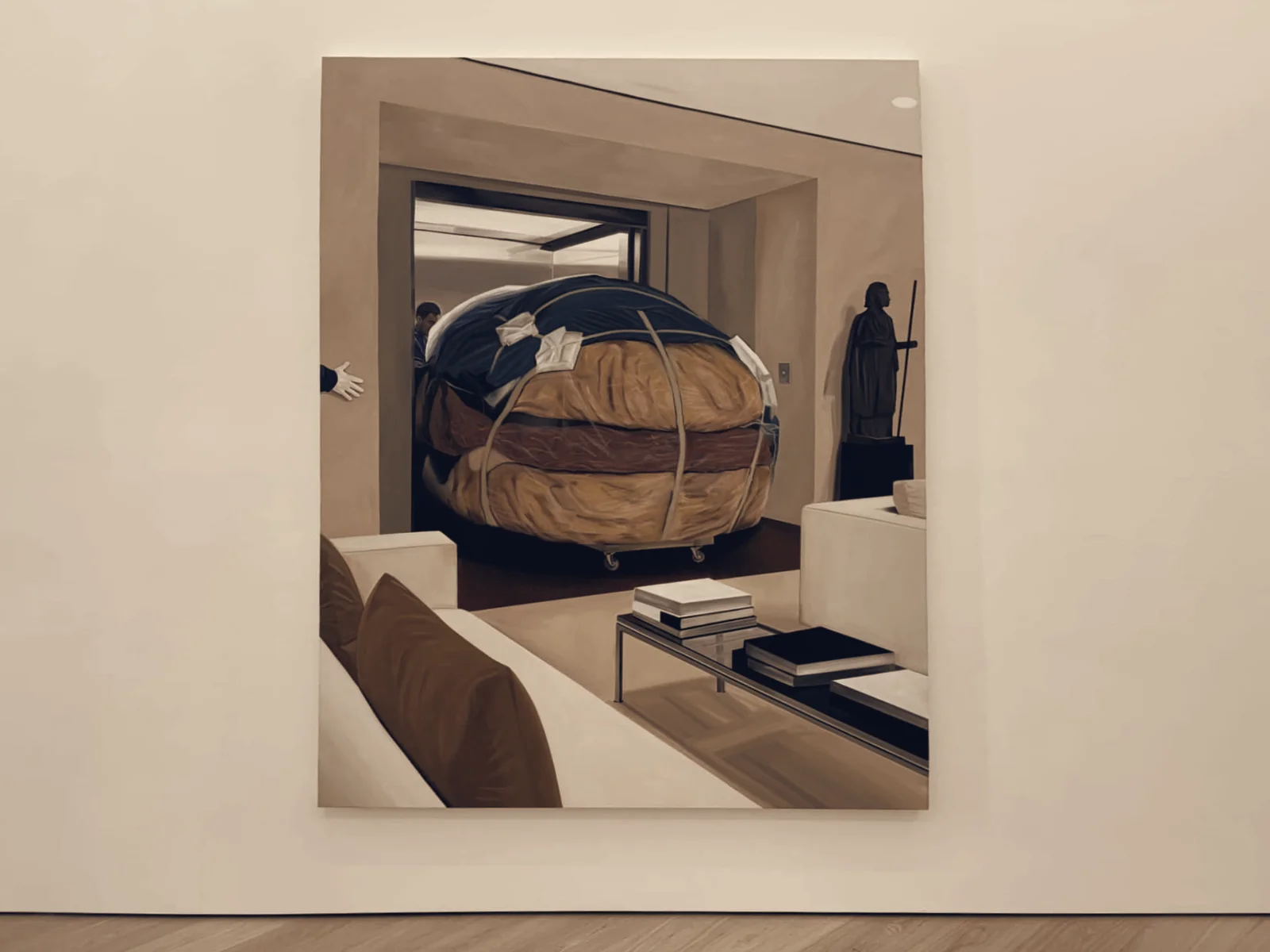
Journal Gallery’s Handle With Care by Mia Goldstein turns the handling and transport of art into subject matter. Goldstein, born in 2001, paints packed, crated and dolly-bound works, and one painting recounts a true incident in which a Magritte was delivered in the back of an SUV so a collector could see it in situ. The show balances wry art-world observation with an earnest focus on the material life of objects.
Apexart’s Weaving a Day, Mourning A Life documents funerary weaving practices among the N’ong An people of northern Vietnam. The exhibition brings together documentary photographs, a video of the village loom and a recreated textile, tracing how daily patterns of weaving are transformed into garments used in mourning and then repurposed by family members after the ritual period.
Chapter NY’s presentation of Giuseppe Francalanza marks the U.S. solo debut of the 26-year-old painter, whose five works combine thickly applied pigment and subsequent wiping to produce figures that feel both materially present and mentally distant. The press materials cite a musical tuner as an inspiration, but the paintings also elicit classical references from Da Vinci to Botticelli. Together these five shows show how Tribeca’s small galleries are staging concentrated, narrative-driven exhibitions through October, with more openings expected later in the month.