
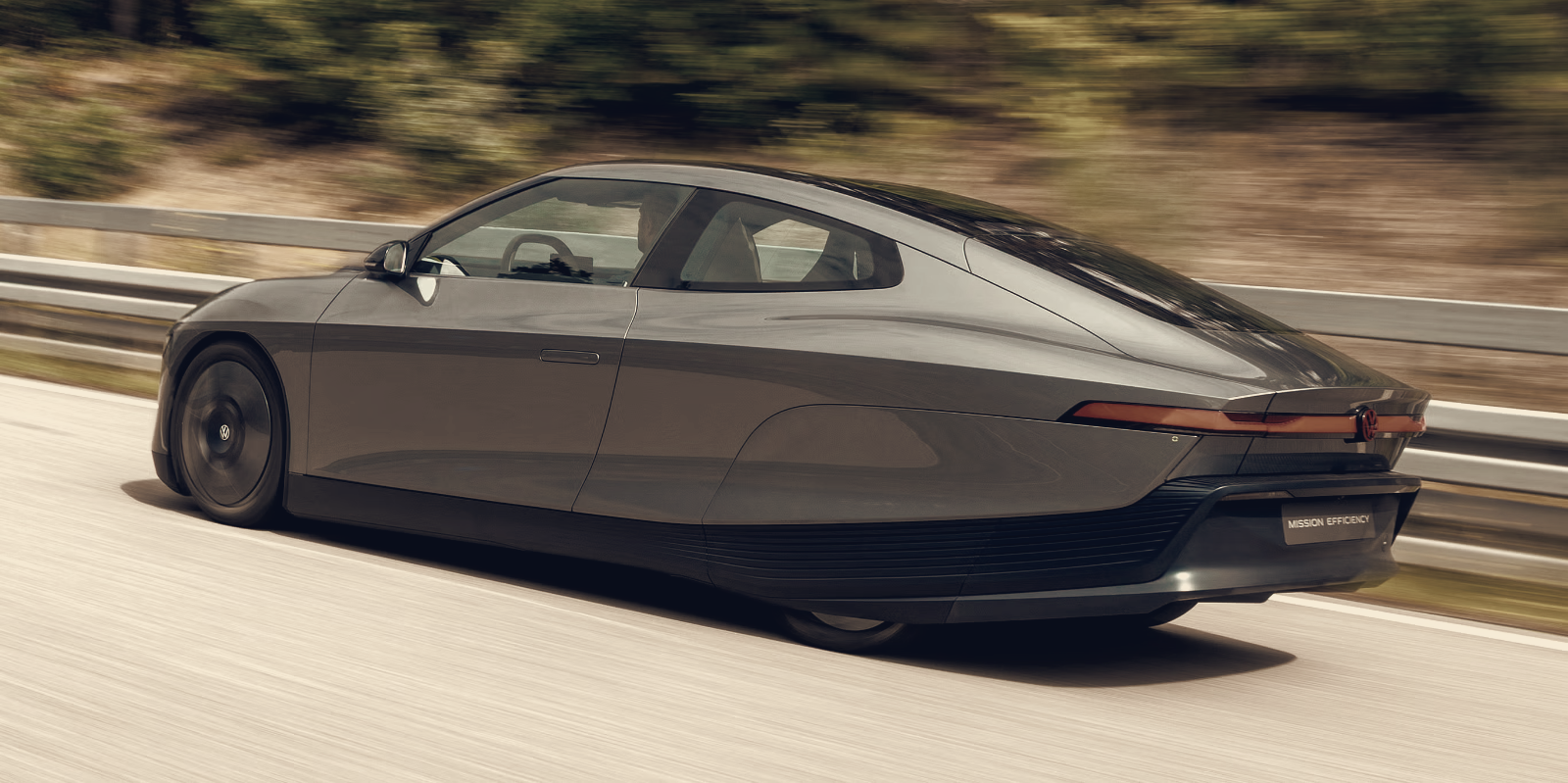
Drivers and engineers gain a clear demonstration that aerodynamic optimisation can extend electric range dramatically without a larger battery. Volkswagen's Mission Efficiency prototype, built on the underpinnings of the ID. Polo, delivered roughly 30 percent better efficiency at highway speeds than the stock Polo while retaining space for four occupants.
The Story in Pictures
The prototype uses the ID. Polo's 55-kWh battery and its 133-horsepower electric motor, but wraps that hardware in a skin designed to minimise drag. Volkswagen cites a coefficient of just 0.158, faired-in rear wheels, active cooling flaps and a teardrop silhouette as contributors to lower parasitic losses and reduced mass where possible. The interior omits an onboard touchscreen, emphasising weight and complexity reduction.
On controlled testing at a steady 42 mph without elevation changes, the Mission Efficiency produced a peak result of 9.6 miles per kilowatt-hour. On a longer validation run, Volkswagen drove the car from its Wolfsburg research centre to Vienna, covering 794 miles with a single charging stop and arriving with 102 miles of range remaining. VW reports an operational figure of 9 miles per kWh for that trip, which it rounds down to 8.3 miles per kWh after accounting for charging losses.
The car recalls the spirit of the XL1, Volkswagen's earlier ultra-efficient diesel-hybrid, which returned about 100 kilometres per litre and was produced in the low hundreds as a rolling R&D exercise. Unlike the XL1, which at one point even received a 197-horsepower Ducati engine swap as a one-off curiosity, the Mission Efficiency demonstrates how those same conservation principles translate to electrification.
Volkswagen frames the prototype as proof that packing ever-larger batteries is not the only route to impressive range figures. The company says the experiment underlines the strength of the ID. Polo powertrain and will feed data on ways to extract more range from modest-capacity packs. The Mission Efficiency is unlikely to enter showrooms, but its findings give engineers a template for making future models more efficient without increasing battery size.
The practical takeaway is blunt: refinements in aerodynamics, cooling and weight can materially alter the energy required to maintain highway speeds, and manufacturers that pursue those levers can reduce the battery capacity needed to meet everyday range expectations.