
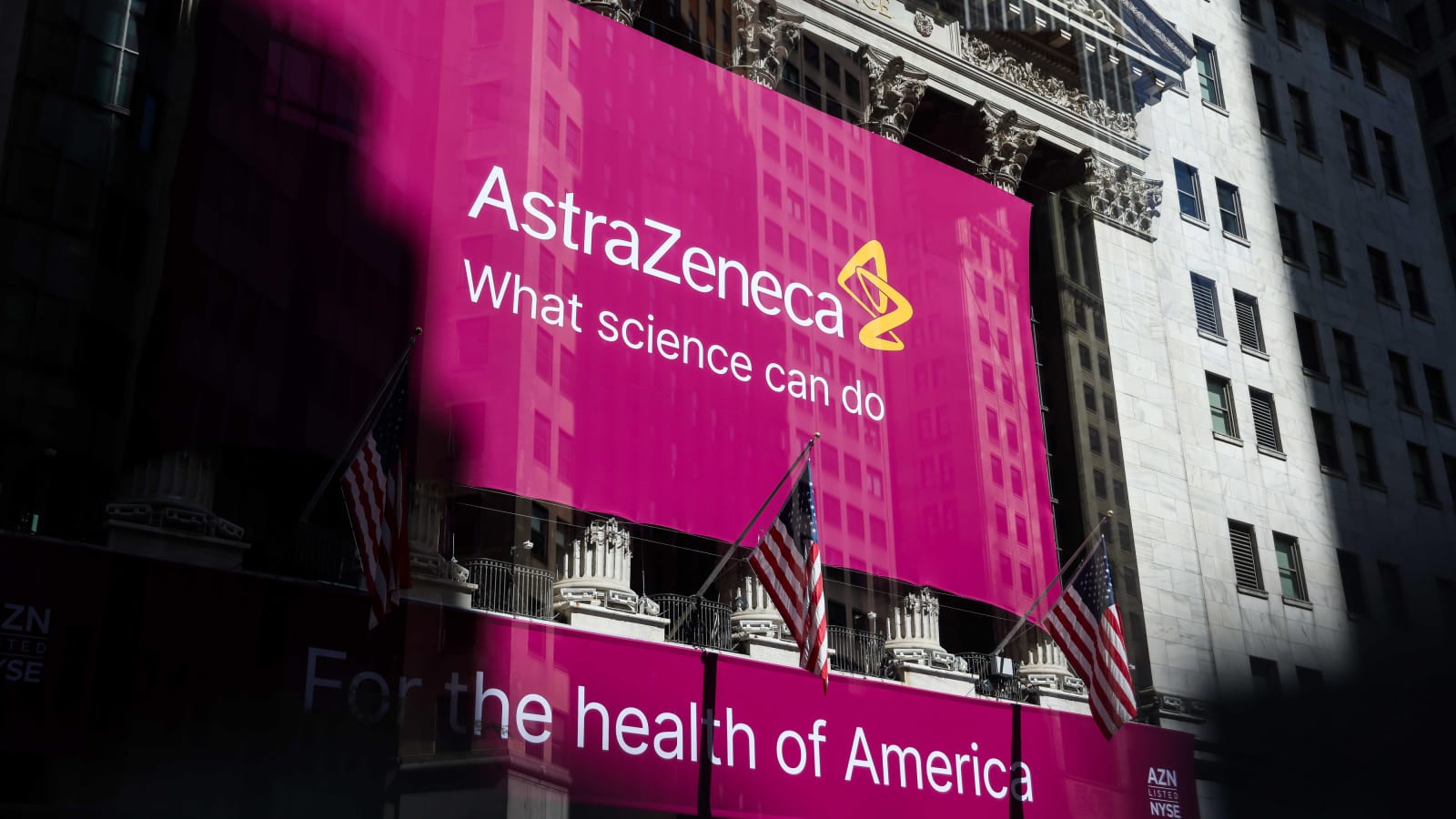
AstraZeneca shares tumbled on Monday after reports that the pharmaceutical giant had held discussions over a potential merger with Bristol Myers Squibb in a deal that could be worth nearly $400 billion.
The report, first published by the Financial Times, sparked an immediate market reaction, with AstraZeneca shares falling as much as 7% before trimming losses to around 4.7% in London trading. Bristol Myers Squibb, meanwhile, climbed about 6% in U.S. premarket trading.
Neither company confirmed the discussions. AstraZeneca declined to comment, while Bristol Myers Squibb did not immediately respond to requests for comment.
If completed, the transaction would rank among the largest pharmaceutical mergers in history, combining two of the world’s biggest drugmakers with a dominant presence in oncology, cardiovascular disease and immunology.
Analysts question the strategy
The reported talks surprised analysts given AstraZeneca’s strong performance under CEO Pascal Soriot.
Since Soriot took over in 2012, AstraZeneca has transformed into one of the industry’s fastest-growing pharmaceutical companies, growing its market value to roughly $264 billion and setting a target of $80 billion in annual revenue by 2030, up from $58.7 billion last year.
By comparison, Bristol Myers Squibb, valued at about $133 billion, is preparing for a challenging period as several blockbuster drugs—including blood thinner Eliquis and cancer treatment Opdivo—approach patent expiry and face generic competition.
Jefferies analysts described the reported discussions as puzzling.
“Given the strength of AstraZeneca’s growth and innovation profile, we are a bit perplexed,” the firm wrote, arguing that AstraZeneca is one of the few pharmaceutical companies that does not need financial engineering to support growth.
Analysts at Citi also called the reported talks a surprise, pointing to AstraZeneca’s industry-leading drug pipeline.
Why Bristol Myers?
Despite investor skepticism, analysts believe a merger could strengthen AstraZeneca’s position in the United States—the world’s largest pharmaceutical market.
Earlier this year, AstraZeneca completed a direct listing on the New York Stock Exchange, reinforcing its U.S. expansion strategy. The country accounted for 42% of the company’s sales during the first half of 2026.
For Bristol Myers Squibb, the U.S. is even more critical, generating 69% of its most recent quarterly revenue.
A combined company would create one of the world’s most powerful oncology businesses. AstraZeneca has a strong portfolio in solid tumors, while Bristol Myers is a leader in blood cancers and cell therapies, giving the companies largely complementary pipelines.
However, analysts warned that such a combination would almost certainly attract intense antitrust scrutiny because of its scale and dominance across multiple therapeutic areas.
Growth story remains intact
The merger speculation also comes shortly after AstraZeneca suffered a rare setback when a late-stage clinical trial for one of its heart disease drugs failed to meet its primary endpoint.
While the disappointing result raised questions about management’s forecasts, most analysts continue to believe the company’s long-term revenue target remains achievable, supported by one of the strongest drug development pipelines in the pharmaceutical industry.
For now, investors appear unconvinced that a transformational merger is the right path for a company widely regarded as one of pharma’s strongest independent growth stories.