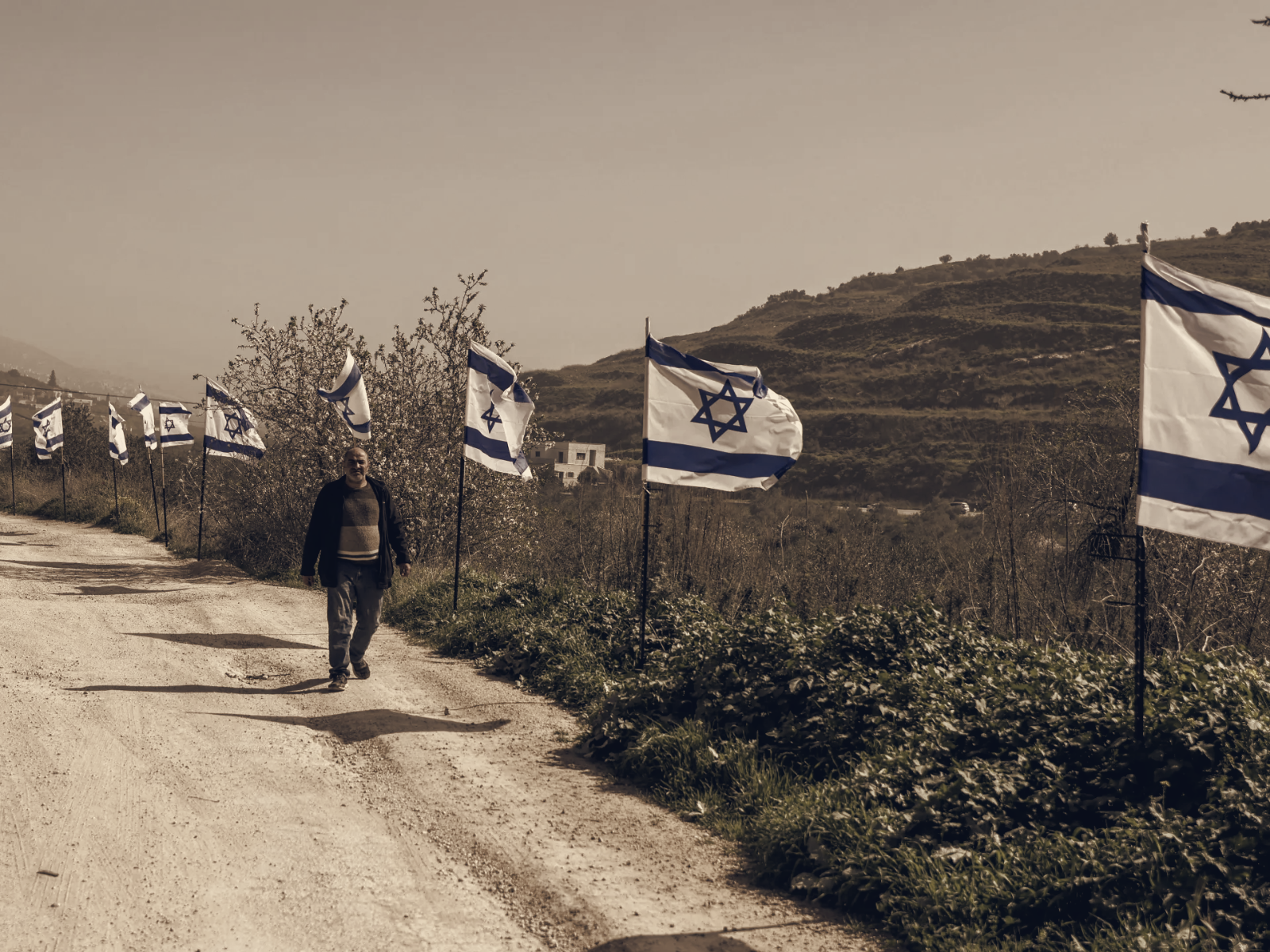

Palestinians are losing ground and a sense of belonging as Israeli settlers mount a coordinated drive of flag displays, mobile homes and new outposts across the occupied West Bank. The visual takeover is already changing daily routes and landmarks, turning stretches of road between Jenin and Nablus into corridors where banners and temporary structures confront commuters.
For 25-year-old Taghreed Yahya the flags are a persistent reminder of displacement. She travels from Kafr Ra’i to Jenin and sees the banners along the main road connecting Jenin and Nablus. "[It] makes the scene that was familiar for years change; all of this naturally leaves sadness, anger and fear, in addition to a feeling of helplessness," she said. "But at the same time, it strengthens the clinging to the land, memory and identity."
Those displays often accompany other tactics to reshape the landscape. In Arrabeh olive trees owned by Palestinians were uprooted while a nearby bypass road was decorated with Israeli flags, a pattern repeated across multiple districts of northern Jenin. Military incursions clear or secure areas, settlers erect temporary housing, and those sites expand into semi-permanent outposts.
Photographer Faten Abdel Hadi, who travels frequently between Qalqilya, Nablus, Tulkarem and Salfit, described how quickly the terrain changed between June and August. "I was hit by a lack of understanding of the geography I know, if I may say so," she said. "The major change that befell the most prominent landmarks in the streets seemed as if it went through a long time period, but it actually needed less than two months." She added that images of mobile homes, flags and settler gatherings leave no doubt in her view that "these people stole our right and our belonging."
The phenomenon accelerated after October 7, 2023, amid a wider surge in settlement expansion and military raids. B’Tselem reports Israeli forces and settlers have killed more than 1,100 Palestinians since then, and a 66th Palestinian village has been ethnically cleansed. Plans to develop E1 near Jerusalem also threaten to sever the occupied West Bank, a move analysts say would extinguish hopes for a contiguous Palestinian state.
Settlement growth often starts with small provocations by hardline groups such as the Hilltop Youth, who erect tents or graze sheep on Palestinian hills, then proceeds to larger illegal settlements built with government support. The Colonization and Wall Resistance Commission said Israeli authorities reviewed 113 structural plans to expand or establish new illegal settlements in the first half of 2026.
Khaldoun al-Barghouthi of the Palestinian Research Center said the flag campaigns aim to entrench Israeli presence. "They are meant to enforce Israel’s physical and psychological presence in Palestinian areas," he said, and to "sear the Palestinian consciousness regarding their existence on their land." Political backing is explicit. Prime Minister Benjamin Netanyahu has boasted about building 104 illegal settlements and 160 settlement farms, while far-right ministers Bezalel Smotrich and Itamar Ben-Gvir have used ministerial authority to reinforce settler expansion.
The converging tactics of flag-hanging, rapid outpost deployment and formal plan reviews suggest a stepped-up effort to normalise and extend control over Palestinian territory. If that pattern holds, Palestinians will face intensified visual and physical erasure of familiar territory and a diminished prospect for a contiguous state. Tracking the pace of construction and whether the 113 reviewed plans are implemented will show whether this campaign of visual sovereignty becomes permanent demographic and territorial change.