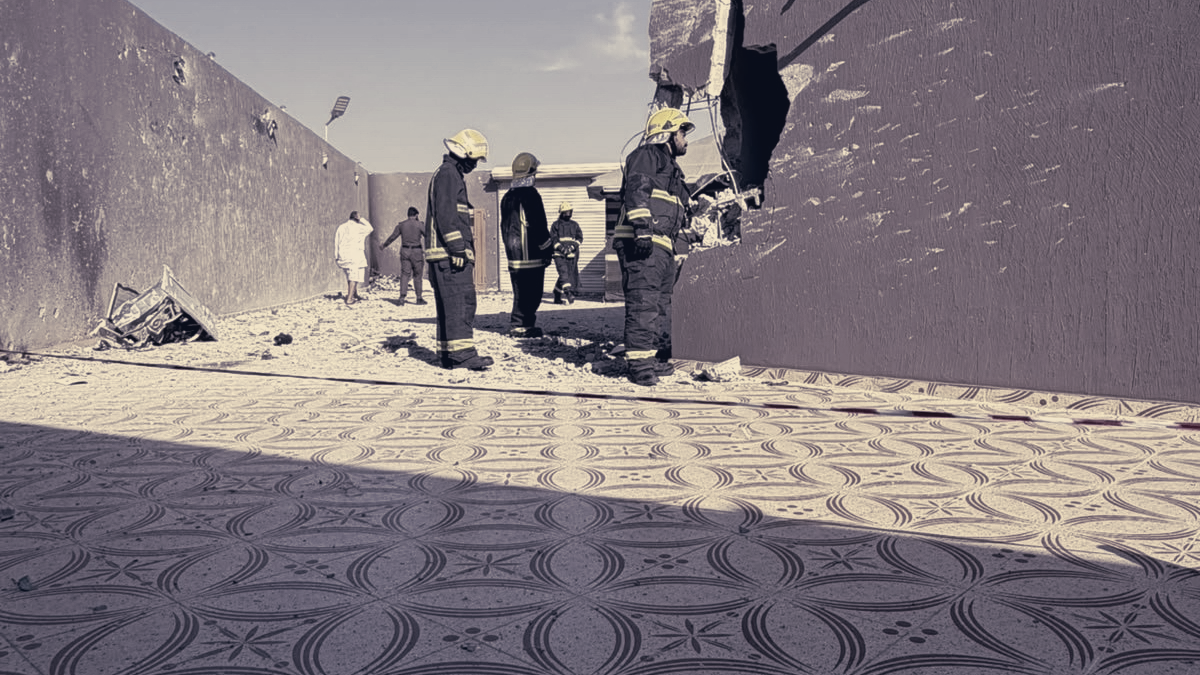
The latest exchange of strikes between Saudi Arabia and Yemen's Houthi movement has left at least five people dead, including three children, and pushed the confrontation closer to drawing in other regional actors. The violence included an intercepted Houthi drone over Taif in Saudi Arabia and multiple airstrikes inside Yemen.
Saudi civil defence officials said one Yemeni resident in the kingdom was killed and two others wounded after authorities intercepted a drone over Taif. Riyadh described the incident as the first fatality on Saudi soil this month linked to the intensified Houthi campaign.
Inside Yemen, Houthi-linked Almasirah television reported that Saudi warplanes struck three telecommunications towers in Taiz province. The channel said one civilian was killed in Taiz and another injured in strikes on the town of Abs. Houthi-aligned outlets later said three children were killed and several Yemeni nationals were wounded in strikes they attributed to forces loyal to Yemen’s internationally recognised government.
Houthi leader Abdel-Malik al-Houthi rejected Saudi claims that his movement targeted Islam’s holiest city. He said, "It's a heinous lie," calling the allegation "a great propaganda," and added that "the sanctity of Mecca is particularly important to the people of Yemen." He accused Saudi authorities of "weaponising lies" to justify their campaign and framed Houthi actions as defensive.
The dispute over the alleged Mecca-bound drone has already fuelled diplomatic contention. Iran’s foreign ministry spokesperson, Esmaeil Baghaei, said any aggression against holy sites "is a condemned act," but warned that a mere unverified claim does not suffice to pin responsibility. Chinese officials have privately urged Iranian counterparts to help restrain the Houthis after Saudi appeals to Beijing, according to anonymous Iranian sources. Beijing publicly called for restraint, dialogue and safe navigation.
Political leaders in Yemen added to the pressure. Rashad al-Alimi, head of the Saudi-backed Presidential Leadership Council, said Houthi forces were suffering significant losses across multiple fronts, listing Taiz, Marib, Lahj, al-Jawf, Hajjah, al-Bayda and al-Dhale. In a meeting with a French diplomat, al-Alimi described recent Houthi gains along the Red Sea as temporary.
Pakistan and Turkiye, recent defence partners of Saudi Arabia, have been pulled into the conversation. Pakistan’s Defence Minister Khawaja Asif said the time has come to implement the Mecca agreement signed with Saudi Arabia and Turkiye. Iran’s Foreign Minister Abbas Araghchi also discussed "regional developments" in a phone call with Pakistan’s army chief Asim Munir.
The immediate outlook is a tense mix of battlefield reprisals and diplomatic manoeuvring. Continued strikes risk further civilian casualties on both sides while prompting third parties to push for de-escalation or to solidify defence commitments with Riyadh. Expect intensified diplomacy in the coming days as regional capitals weigh how and whether to intervene.