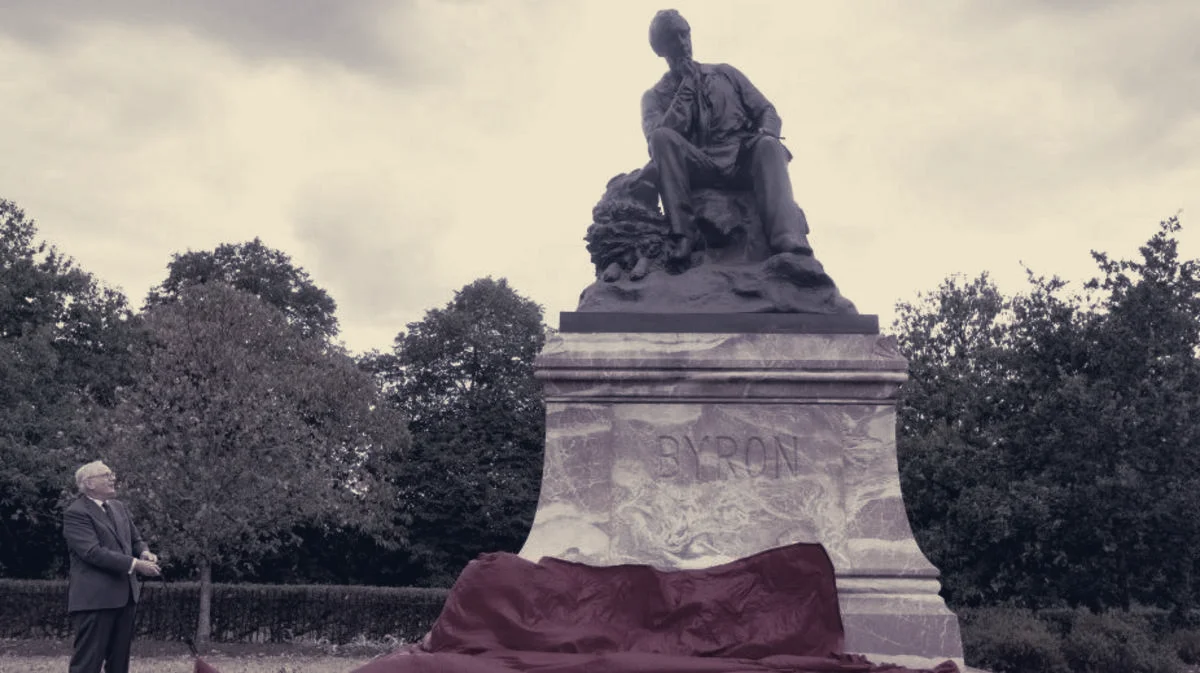
Hyde Park regains a public monument long separated from its grounds, restoring the sculpture to a park setting after decades of isolation. The Lord Byron statue had remained on a traffic island beside Park Lane following road construction in the 1960s, a placement that left it cut off from the open space it once faced. That decades-long separation has now ended with the statue's return to Hyde Park.
The relocation reverses a persistent condition created by mid-20th century roadworks, when new carriageways and junctions reshaped pedestrian routes and the presence of public art along this stretch of central London. For years the statue sat amid moving traffic rather than among parkland, a placement that changed how passers-by encountered the work. Returning the sculpture to park grounds restores its visibility to walkers and park users in a setting free from the immediate surround of traffic.
The move also alters the streetscape on Park Lane, removing a standing object from the traffic island that had long marked the roadway. That change reshapes the relationship between the city's transport infrastructure and its public monuments, reversing a decision made during the 1960s that left the work stranded from the park.
Beyond the physical shifting of one sculpture, the relocation underscores how mid-century road planning continues to influence where and how public art is experienced. The statue's presence back in Hyde Park will allow visitors to approach it within the park environment rather than viewing it from kerbside. The return closes a chapter that began with 1960s road changes and restores the sculpture to the green space it had been separated from for decades.