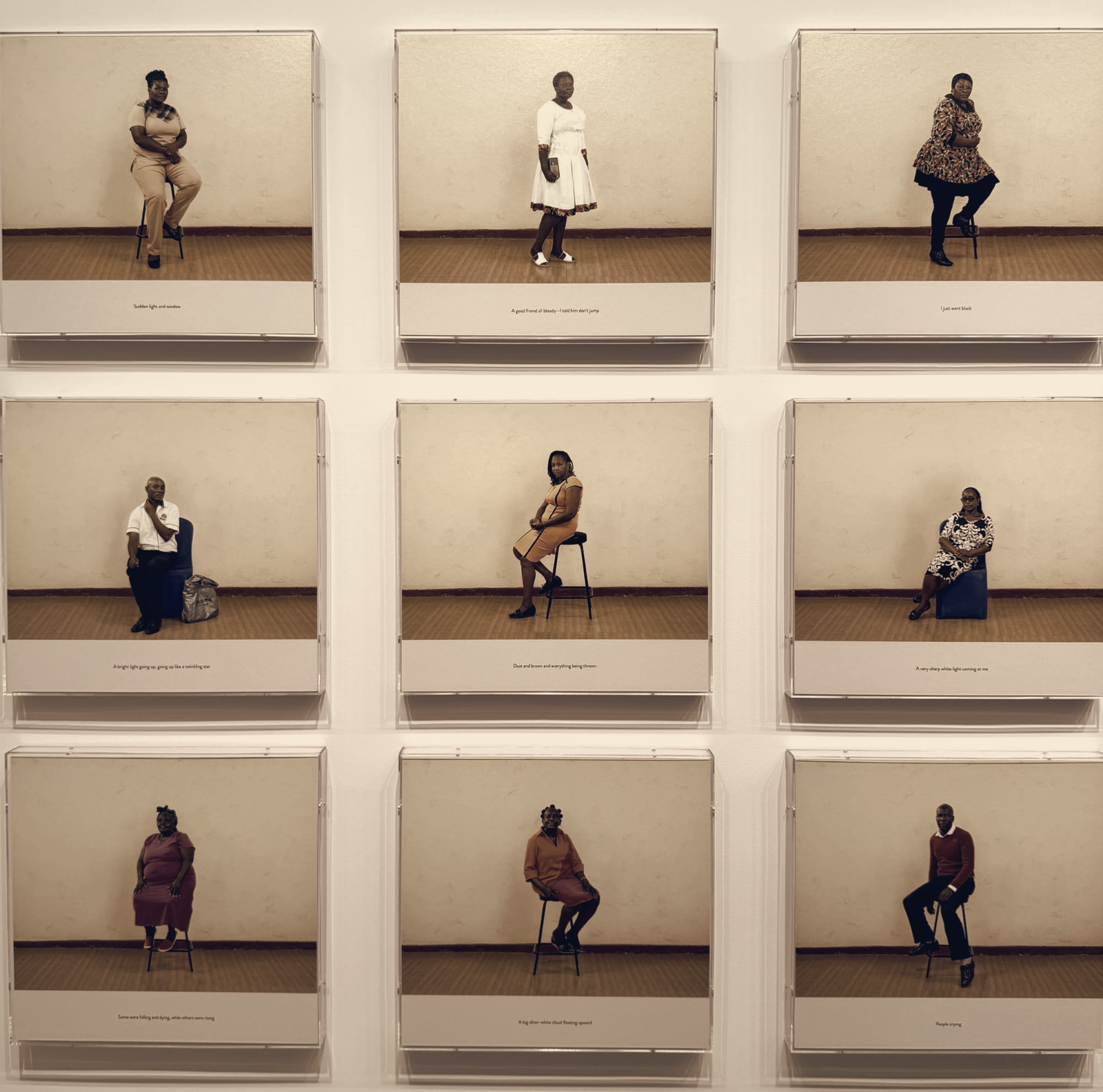
The Guggenheim’s Taryn Simon exhibition makes the central change explicit: the show treats wrongdoing as a structural phenomenon, not the result of a single villain. Father Country I Do Love You arranges documents, images, objects and a recreated domestic interior to trace crimes and mysteries across decades, but it stops short of assigning personal guilt.
Simon opens with two text panels that frame the project. One relays a story from her father about an intelligence officer in Bangkok who died under mysterious circumstances, either consumed by a tiger or abducted by the Chinese. Her father’s habit of mounting prized photographs in plexiglass box frames is described, along with the dramatic anecdotes attached to them, deliveries of cash to Cambodian generals, a yakuza threat, tea with kidnappers in Lebanon, and claims of starting the Thai stock exchange. The father’s admission, "I never got the full story," introduces a persistent uncertainty that runs through the show.
The second panel explains how Simon met a retired FBI agent a decade earlier, and how his recollections became the exhibition’s organizing character and research impetus. The agent’s career placed him near several consequential events: the 1996 explosion of TWA Flight 800, the 9/11 damage to the Pentagon, the 1998 al-Qaeda bombing of the U.S. embassy in Nairobi where he deployed with 900 other agents, the 1990 arrest of D.C. Mayor Marion Barry for which he babysat the children of the model used in the sting, and the Bill Clinton impeachment where he set up the evidence room. Simon presents these episodes alongside hundreds, perhaps thousands, of photographs, sculptures and videos.
The show’s design reinforces the method, with teak paneling replicating a replica of the Bangkok spy’s living room that Simon helped her father build in their home, bright walls and heavy drapery evoking domestic mise-en-scène. Simon stitches together improbable connections among people, events and bureaucratic structures, offering material that reads like conspiracy but is presented as documented fact. By foregrounding unverifiable family lore and the agent’s institutional archive, the exhibition keeps doubt alive and directs attention away from individual culpability toward systemic networks.
Visitors finish the galleries confronted with an archive that implicates institutions more than named actors, and are left to decide whether evidence and testimony add up to accountability or to another layer of ambiguity.