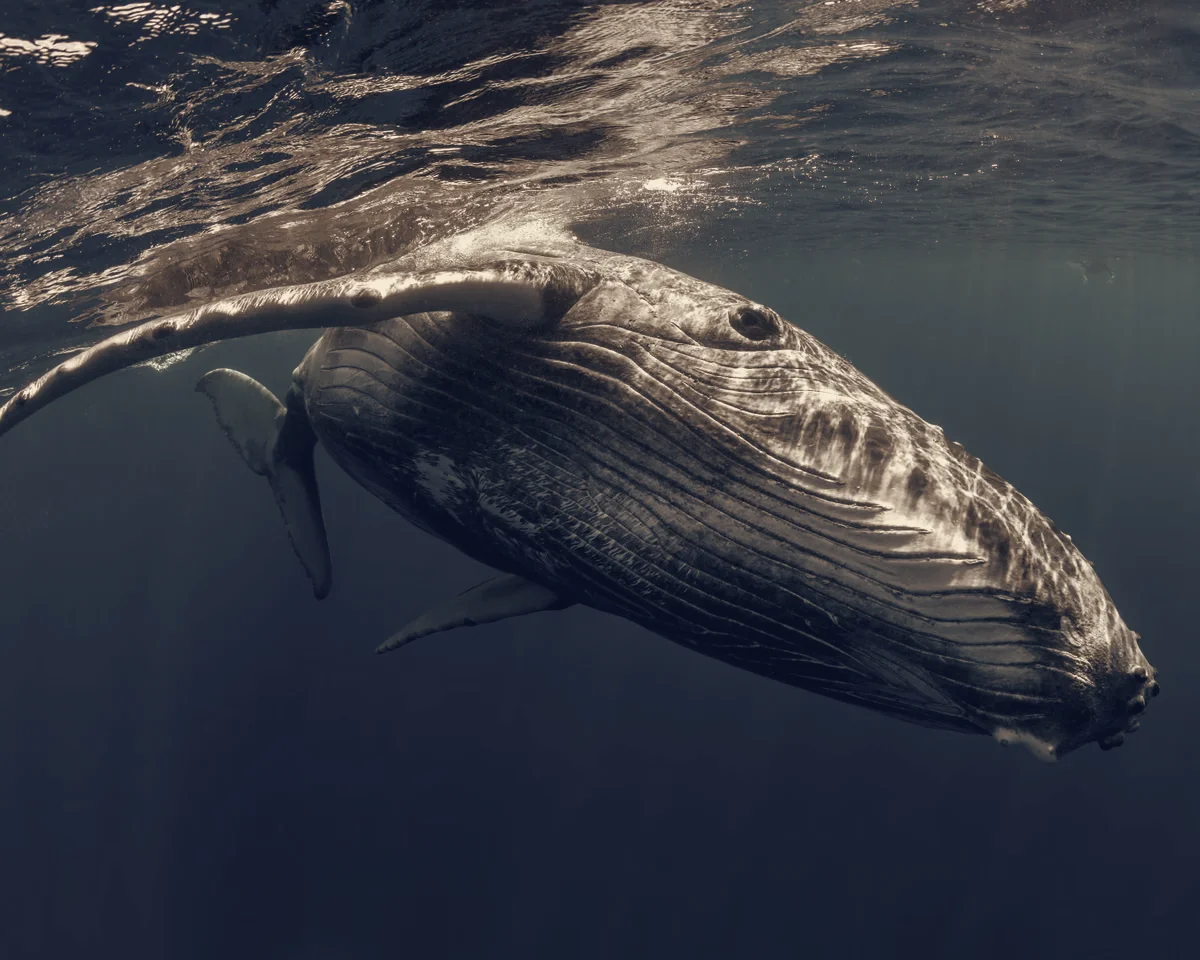
Researchers gained the first detailed evidence that a humpback whale mother tended a newborn that appeared to have been stillborn, after underwater footage captured the scene about one kilometre off Australia’s Gold Coast.
The Story in Pictures
The recording shows the calf motionless on the seafloor and the adult female returning to the same spot for more than an hour. She repeatedly touched the calf with her head and pectoral fin and rested beside it eye to eye, while a second adult, likely an escort, remained nearby. The mother released an amniotic membrane shortly after the birth, but no placenta was seen. She did not attempt to lift the calf to the surface, which the authors suggest may indicate she recognised the calf was dead or was unable to carry it from the seabed.
Members of the public later reported two adult humpbacks staying in the area for the next two days, although the research team could not confirm whether those were the same animals. The event, the authors say, is the first described case of a humpback mother caring for her deceased newborn calf and fills a gap in observations of baleen whale responses to death.
Cetaceans such as dolphins and toothed whales have long been recorded performing epimeletic behaviour, remaining close to injured or dead companions and sometimes risking their own safety to assist. The most widely reported example in recent years involved a killer whale named Tahlequah, which carried her dead calf for 17 days across more than 1,500 kilometres. Comparable documentation for baleen whales is scarce, researchers note, largely because dead newborns often sink quickly and are therefore difficult to observe.
The team emphasises limits on interpretation. The behaviours seen could represent grief, but they could also reflect maternal attachment, confusion or instinctive caregiving, and the animals’ inner states cannot be measured directly. For that reason scientists favour broader terms such as postmortem attentive behaviour rather than concluding humpbacks experience human-like grief.
Still, the footage provides a rare window into how baleen whales may respond to death and highlights the value of public video for documenting uncommon events. The authors say the observation offers crucial insight into social and maternal behaviour in humpbacks and underscores how little is known about how large, migratory whales cope with the loss of offspring.