What changes: South Park has stepped back from its recent White House storylines and returned to town-level satire, reopening Season 29 under the new name South America. The premiere, which aired on Comedy Central and streams on Paramount+, embeds the rebrand into the show’s world and leans on local plotlines rather than presidential spectacle.
Creators Trey Parker and Matt Stone announced the stunt in a Sept. 8 statement, writing, "Inspired by the bravery and patriotism of Apple and Google, we are changing the name of 'South Park' to 'SOUTH AMERICA.'" The season premiere treats that change as already accepted by residents, with the town referred to as South America without fuss, and only a single scene registering dissent.
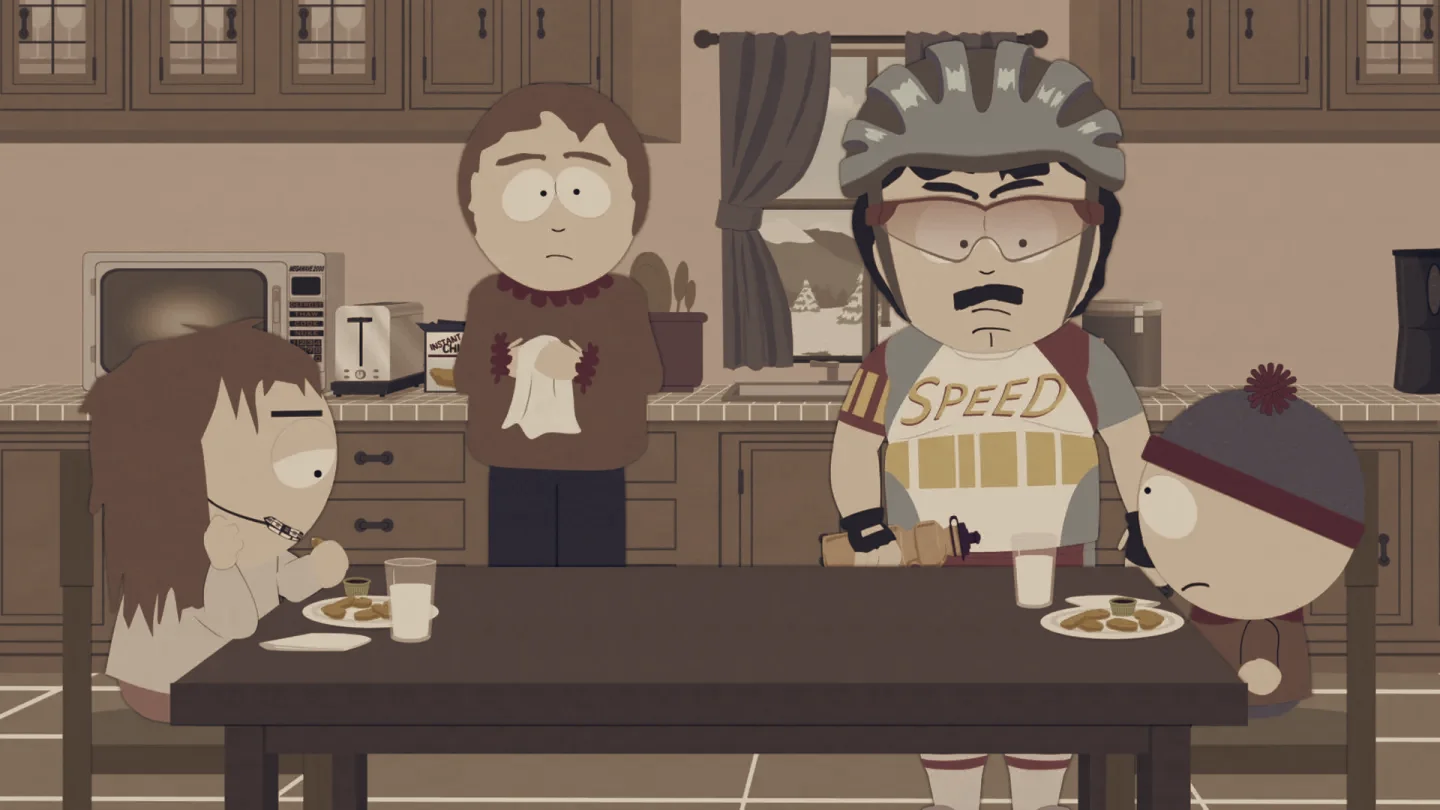
The episode returns to the series’ classic standalone format while still folding in a broader metaphor. It opens with Eric Cartman faking a bullying incident so his mother will buy him an adult-style e-bike, a device that quickly becomes a must-have for the town’s children. Cartman and other youths ride the e-bikes through town, smashing into storefronts and alarming pedestrians, an escalation the episode positions as shorthand for groups of immigrants moving into American communities.
Randy Marsh shifts into the episode’s opposing force, adopting flashy cycling gear and forming a gang of 10-speed riders who police the streets and rough up anyone in their path. The show frames that adult group as a stand-in for enforcement agencies, while parodying corporate and tech responses: characters repeatedly turn to Google to find blunt solutions to the town’s problems, from bribing officials to deploying extreme police measures.
The premiere also riffs on pop-culture anticipation by skewering excitement around the upcoming Grand Theft Auto VI release, linking the game’s November launch to hopes for political change in the fall. That pop-culture reference serves as a device for the episode to skewer both civic expectation and distraction.
Notably absent from the premiere are the recent season-long White House arcs that centered on a satirical Trump presidency and an elaborate set of supporting Washington characters. It is not yet clear whether the Trump-figure and the Washington storyline are finished for good, or if future episodes will reincorporate national-level targets.
The immediate consequence is a reset in tone: Parker and Stone have steered the show back toward townbound satire that lets them compress political commentary into single episodes. The season’s direction beyond the premiere remains uncertain, with the central question now whether the e-bike metaphor will thread through more episodes or give way to new local targets.