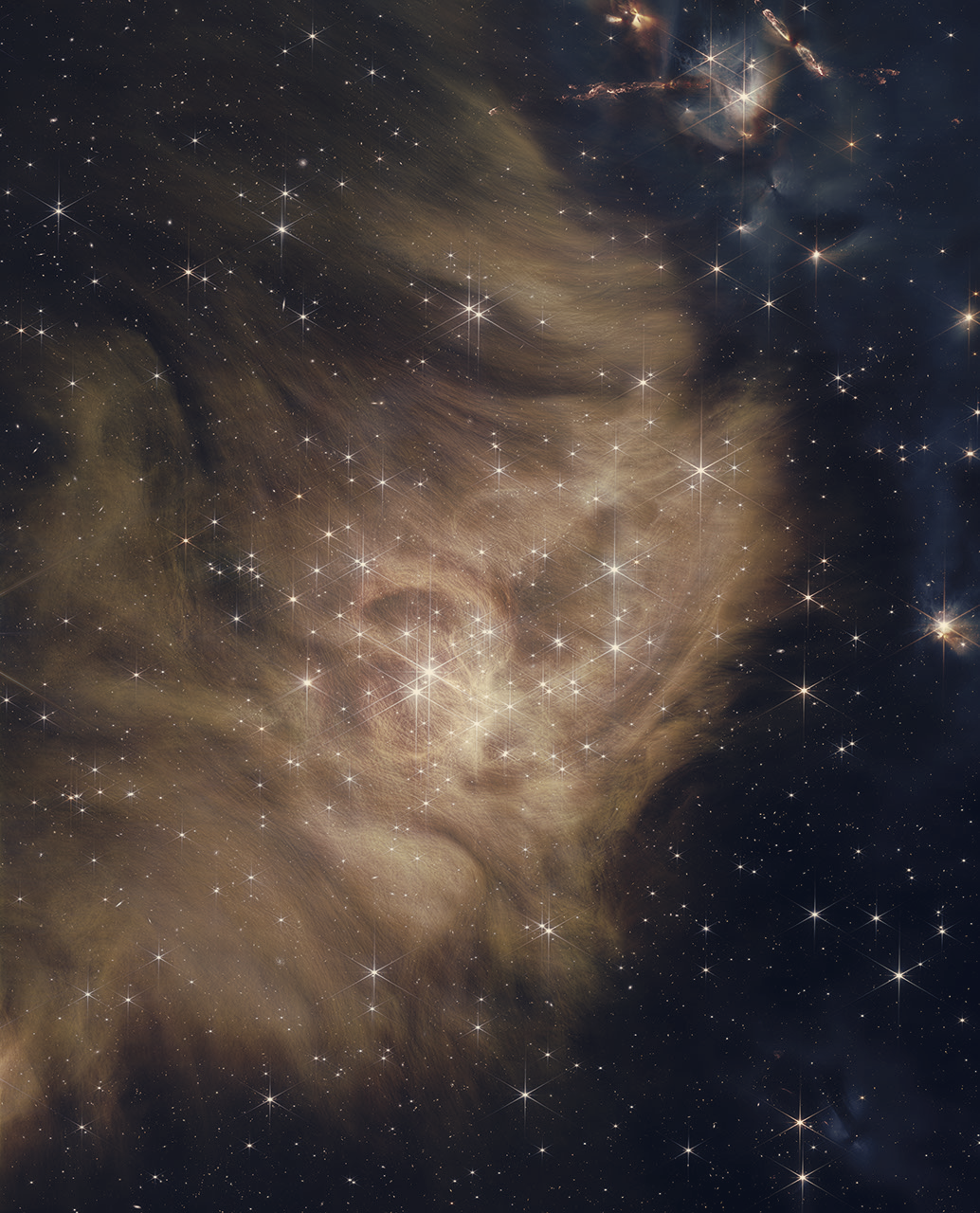
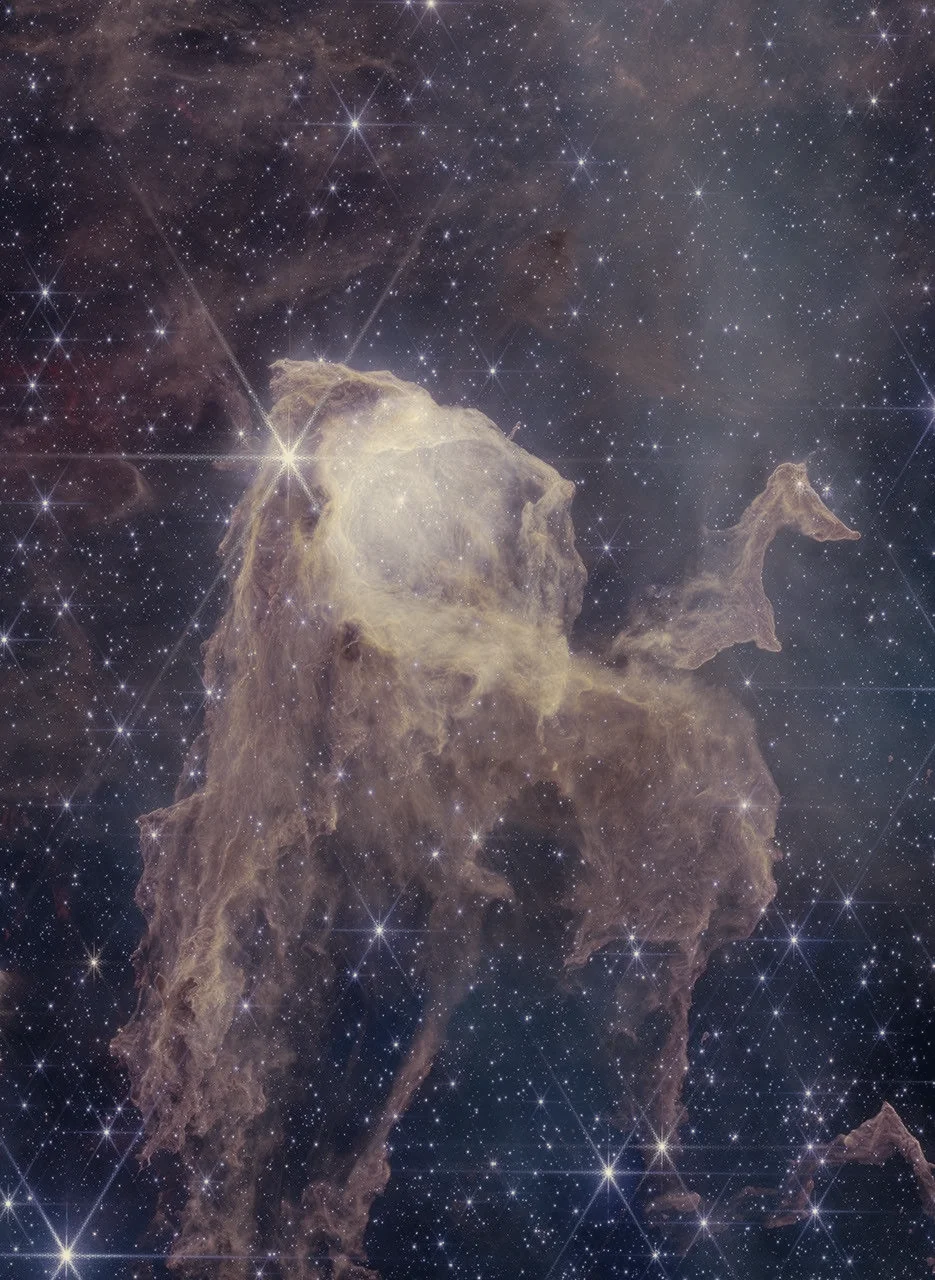
A James Webb Space Telescope image gives astronomers a close view of a dust pillar inside the Carina Nebula, roughly 7500 light-years away, revealing a compact cluster of young stars that is actively reshaping its surroundings. The pillar is a structure of interstellar gas and dust sculpted by powerful stellar winds and radiation from nearby massive stars, including the Eta Carinae system, which is more luminous than 5 million suns.
Inside the pillar, star formation has hollowed out the head of the structure, producing the visual impression of an open treasure chest. Astronomers estimate there are about 70 stars packed into the cluster, which is now thought to be only around 1.3 million years old. The collection includes a massive star approximately 19 times as massive as the Sun, illustrating that these dense, dusty environments can produce rare, rapidly evolving high-mass stars alongside lower-mass siblings.
The image and explanation are part of the Astronomy Picture of the Day series and carry the following credit: ESA / Webb, NASA & CSA, M. Reiter, with acknowledgement to M. H. Özsaraç. APOD authors and editors listed for this entry include Cecilia Chirenti, Robert Nemiroff, Jerry Bonnell and Keighley Rockcliffe. The service is provided by ASD at NASA / GSFC, NASA Science Activation and Michigan Tech. U.
The APOD entry also notes a change of web address for the main service, which is moving from apod.nasa.gov to science.nasa.gov/apod. Readers seeking the daily image and the accompanying astronomer-written explanation should follow the new location for future updates.