
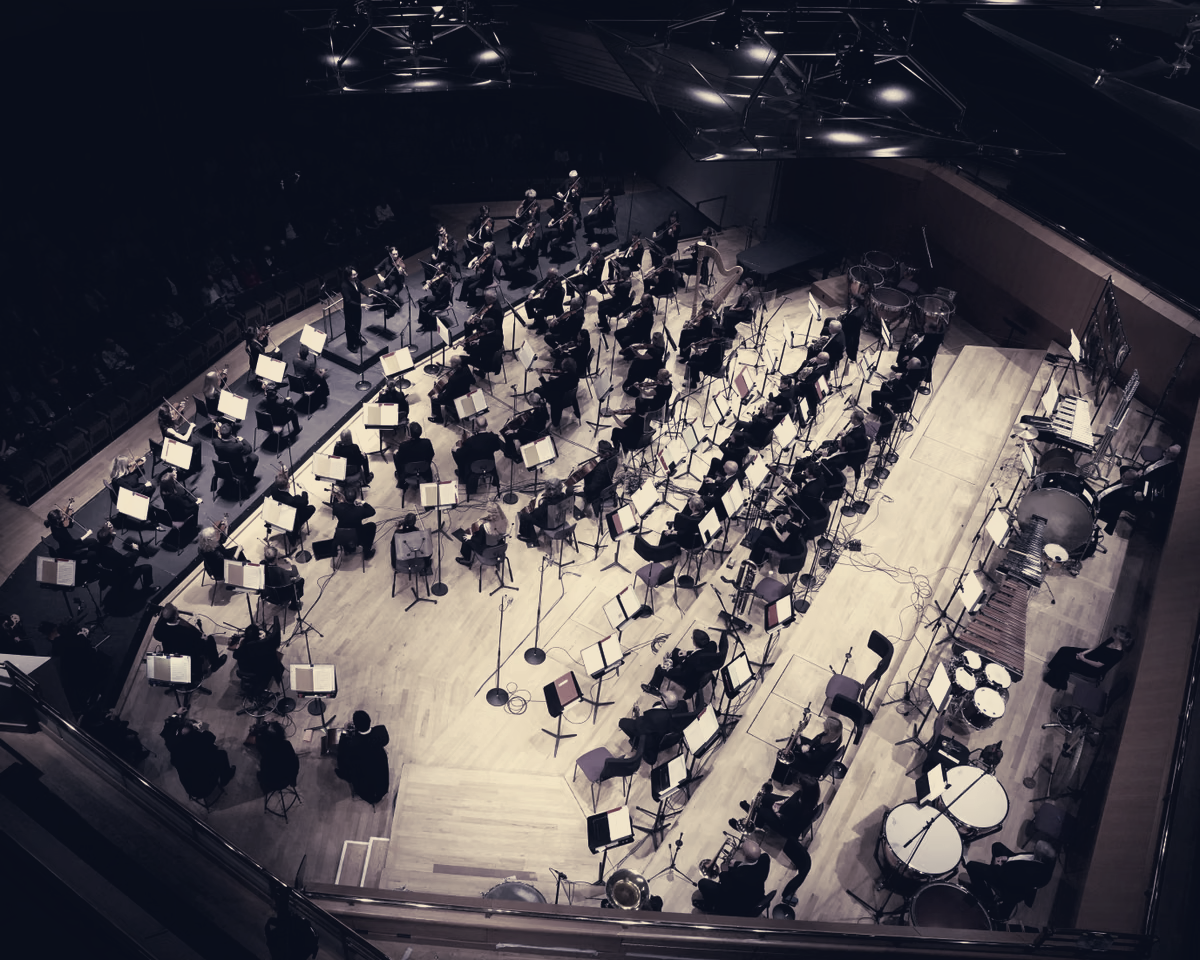
Bridgewater Hall marked its 30th year with a new orchestral centrepiece, James MacMillan’s sixth symphony, premiered by the Hallé under Kahchun Wong. The work supplied a clear focal point for the season opener, reframing the hall’s milestone as not only a celebration of past acoustics but a public moment for contemporary British composition.
The Story in Pictures
The programme framed MacMillan between a rare performance of Liszt’s Les Préludes and Beethoven’s Piano Concerto No 5, creating a narrative arc of contest and endurance. That context fed the evening’s energy. Stephen Hough delivered a more robust “Emperor” than is often heard, his opening cadenza presenting a challenge Wong and the orchestra met in a muscular exchange that ended in an exuberant, close-combat finale.
MacMillan’s sixth moves away from the choral vastness of his 2019 fifth symphony and toward a tighter, more exploratory logic. The score unfolds in four short, expositionary movements that focus on family members, then launches into a fifth movement that reshapes earlier material through deliberate textural and formal play. Listeners encountered echoes of Elgar’s Enigma Variations and Britten’s The Young Person’s Guide, but the effect was less pastiche than rework: inward remembrance feeding outward, modern orchestral craft.
Sonically the piece is mosaic-like. A pastoral trio of flutes sits alongside muted, buzzing brass; gongs, bells and bowed vibraphone add metallic shimmer; a yearning solo cello threads through the texture; and a harp‑and‑piano duet, evoking Debussy, stands apart. Low woodwind and trombones, accompanied at times by a nagging siren, suggest downward pull, while brass-gilded climaxes repeatedly assert upward thrust. Throughout, the alto flute’s restrained voice persists as a quiet corrective to the symphony’s larger tempests.
The choice to bookend the premiere with Liszt and Beethoven sharpened the programme’s themes of struggle and triumph. Les Préludes laid out Liszt’s vast rhetorical gestures, and Beethoven’s concerto, as interpreted by Hough, turned into a salute to virtuosity sustained by orchestra and soloist alike. Taken together, the evening presented the Hallé and its principal conductor as custodians of both repertory heft and living commissions.
For Bridgewater Hall, a venue often celebrated for its acoustics, the night reinforced another asset: commissioning and premiering new work. For MacMillan, the sixth symphony read as a reset, a return to chamber-like detail and structural interrogation rather than theatrical expansion. The performance suggested that the Hallé’s season will continue to balance canonical repertoire with contemporary statements.