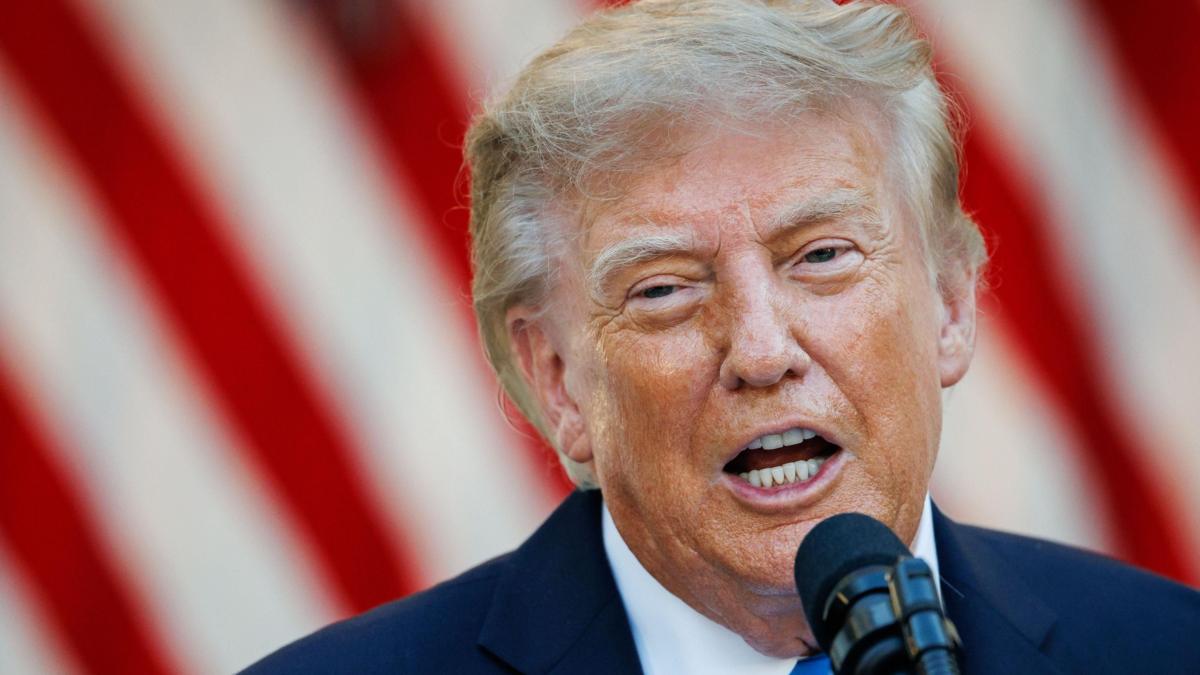

Britain risks losing automatic US military backing in any future clash over the Falkland Islands after President Donald Trump said the UK had not helped him in his war with Iran. Trump framed the omission as a reason the United States might rethink its response if Argentina renewed its claim to the islands.
Speaking in an interview with GB News, Trump recalled Britain’s recapture of the islands decades earlier, and questioned whether geographic distance should determine Washington’s willingness to intervene. He then shifted to the Middle East, saying, "Your country was not there to help me. We didn't need help, but I did ask Nato, and I asked your former leader, 'why didn't you send a couple of ships?'" He added that Nato had not provided ships, despite some member states’ exposure to oil from the Strait of Hormuz.
The president also told interviewers he had previously considered altering the long-standing US stance that takes no formal position on Falklands sovereignty if Britain did not boost defence spending. When later asked whether he was reviewing the US position on the islands, Mr Trump said, "I always review every position. That's just one of many."
Argentinian President Javier Milei is scheduled to make a televised statement on Thursday night about what he describes as his nation's "historic" claim to the islands. That announcement comes amid renewed diplomatic tension over a dispute that erupted into armed conflict in 1982, when Argentine forces landed on the Falklands and Britain mounted a task force to retake them.
The 1982 war lasted 74 days and left 255 British military personnel, three islanders and 649 Argentine military personnel dead. US administrations since then have recognised Britain’s de facto administration of the islands but have avoided formal rulings on sovereignty. London points to a 2013 referendum in which islanders voted overwhelmingly to remain a British overseas territory, with 99.8% voting in favour and three against.
The UK government said the islanders are British and have the right to determine their own future, and that the government’s commitment to them is unwavering. With Mr Milei’s statement imminent and the US president signalling he may reassess long-standing positions, diplomatic and military calculations in the South Atlantic will be under fresh scrutiny.