
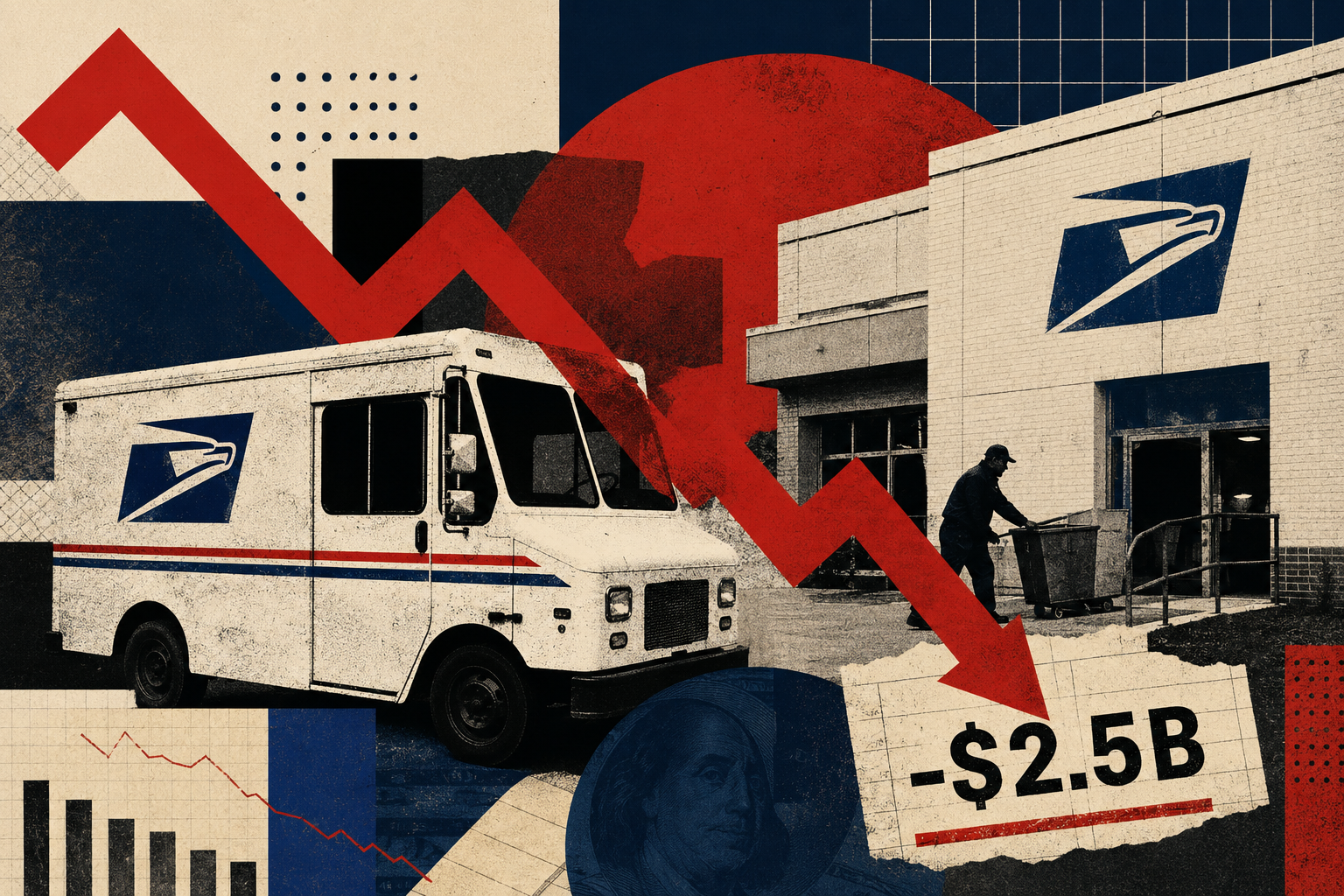
The United States Postal Service (USPS) reported a net loss of $2.5 billion for the third quarter of 2026, as the agency warned that it continues to face a severe liquidity crisis despite improved revenue and lower losses compared to a year earlier.
The latest results, released on Friday, represent an improvement from the $3.1 billion loss recorded during the same period in 2025.
USPS attributed the smaller loss to a $416 million reduction in workers' compensation costs and a $1.1 billion increase in operating revenue. However, the agency said these gains were not enough to offset its broader financial challenges.
Operating revenue for the quarter reached $19.9 billion, up 6.1 percent year-on-year, although it declined slightly from $20.2 billion recorded in the previous quarter.
"The Postal Service is today continuing to face a severe liquidity crisis, and our financial losses this quarter reflect systemic challenges inherent in our Congressionally established business model and regulatory framework," Postmaster General David Steiner said in a statement.
Steiner has previously warned that USPS is expected to exhaust its cash reserves by early 2027 unless additional measures are taken.
The postal agency currently operates under a $15 billion federal borrowing limit, established in 1990, leaving it increasingly dependent on operating revenue to cover rising costs.
During a congressional hearing in March, Steiner proposed increasing the price of a First-Class stamp from 90 cents to 95 cents, arguing that the move would significantly reduce the agency's controllable losses.
He has also opposed bipartisan proposals to introduce more than 70 new ZIP codes, warning in a December 2025 letter to Senator Rand Paul that the expansion would cost USPS approximately $800 million.
In April, USPS temporarily suspended employer contributions to federal pension programmes and approved higher postage rates, including a 4-cent increase in the price of a First-Class Mail Forever Stamp that took effect in July.
Steiner said the agency will continue implementing cash conservation measures while urging lawmakers to adopt reforms that would place USPS on a more sustainable financial footing.
"We are taking responsible steps to conserve cash to extend our operating window, but we require thoughtful legislative and other actions to establish a financially sustainable Postal Service capable of serving the American public far into the future," he said.