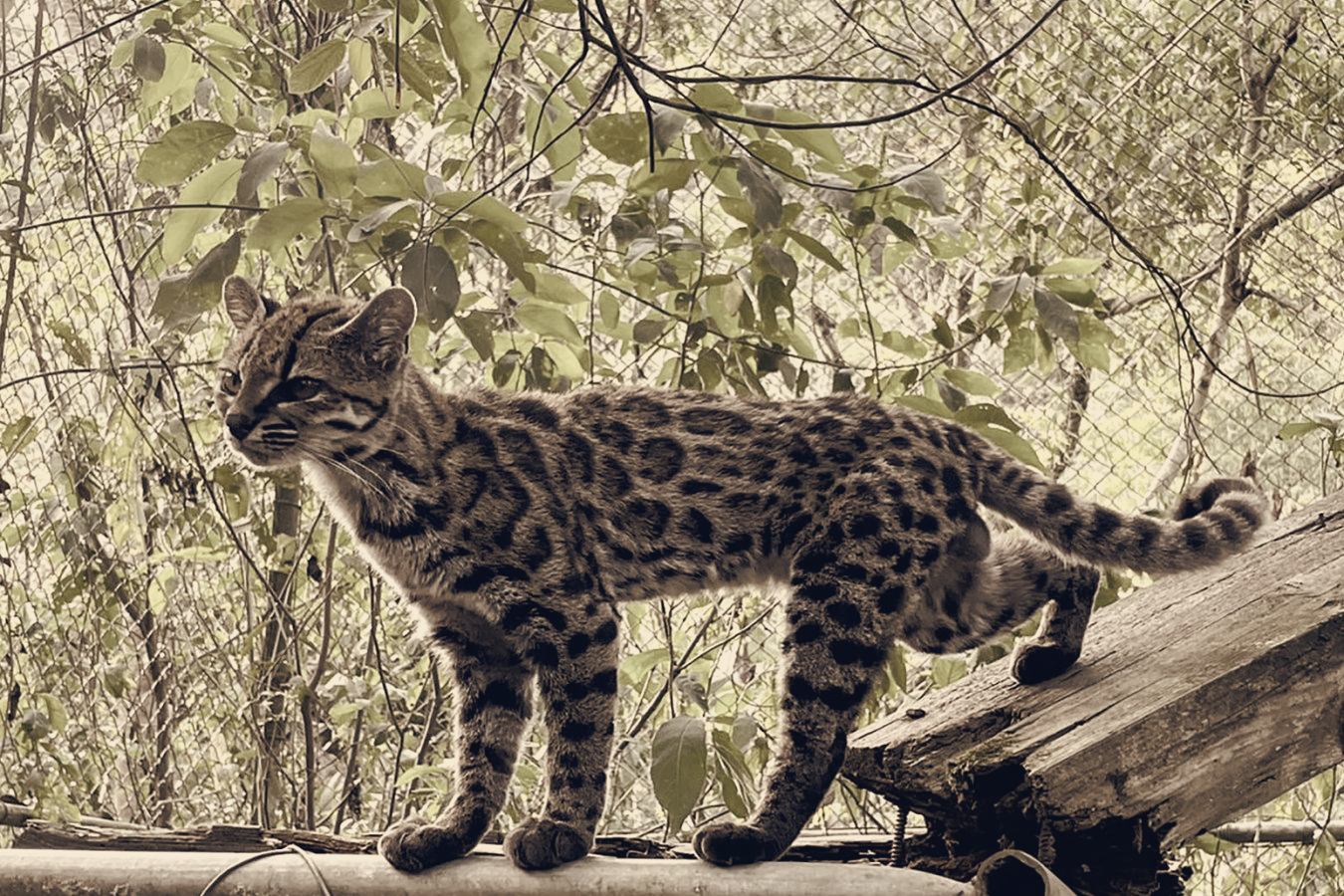
The recognised roster of tiger cat species has expanded to five after researchers described a new, small spotted cat from Bolivia as Leopardus tilcayo, a change that forces a reassessment of conservation units across Andean forests.
Eduardo Eizirik and colleagues at the Pontifical Catholic University of Rio Grande do Sul sequenced whole genomes from 38 individuals in the Leopardus genus, including 26 tiger cats sampled across their range. The genomic data separated a distinct lineage in the Bolivian Yungas on the eastern slopes of the Andes, which the team names L. tilcayo. The genomes show this lineage split from the branch containing L. tigrinus and L. pardinoides around 1.4 million years ago, providing a deep evolutionary signal that supports species status.
Physically the tilcayo is small, with a combined head and body length of about 42 to 50 centimetres and a mass between 1.5 and 2 kilograms, making it similar in size to other tiger cats. The researchers selected the species name to reflect the local term for the animal. Team member Jonas Lescroart emphasises the difficulty of separating these cats by appearance, noting, “The five tiger cat species are all cryptic species. They’re morphologically very similar.”
The study also identifies a distinct group of cats in the Peruvian Yungas on the western Andean slope, which the authors describe as a novel subspecies, Leopardus tigrinus antisuyo. The genetic splits follow geographic barriers such as mountains and rivers that can isolate small populations across South America, raising the possibility that additional, unrecognised lineages remain to be found.
Lead author Eizirik places the discovery in historical context, saying, “We’ve discovered a new species of cat that had not been scientifically named before,” and noting that this is the first such naming in a century. Leslie Lyons at the University of California, Davis adds, “There are more cat species. Who can’t love that?” and points to how harder-to-find nocturnal animals often reveal taxonomic surprises once genomic tools are applied.
The change matters for conservation. L. tigrinus is already listed as vulnerable by the IUCN Red List, and the new species and subspecies must be evaluated and managed as separate units, the authors say, especially because the Yungas forests they inhabit are shrinking as agriculture expands. The team’s results appear in Current Biology, DOI: 10.1016/j.cub.2026.08.059, and will prompt field surveys and formal conservation assessments next.