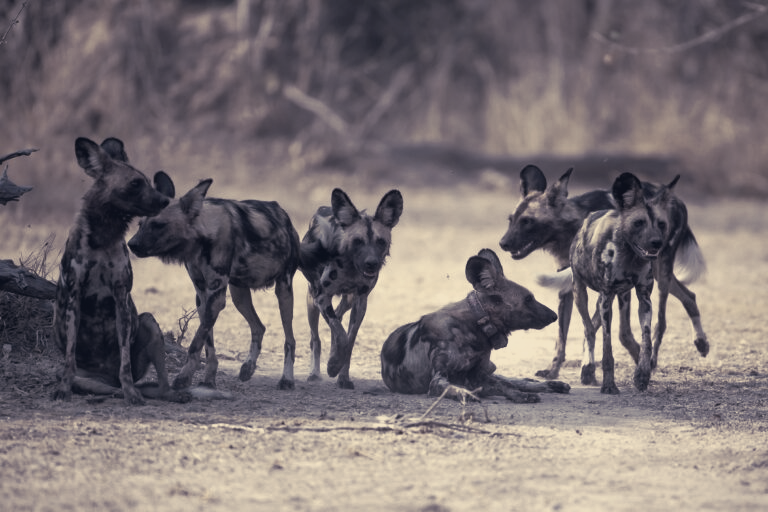
Three male African wild dogs have created a physical connection between distant carnivore populations in southern Zambia by travelling 4,126 km over nine months, a movement that alters assumptions about how individual dispersal can shape landscape-level connectivity.
The trio, litter mates nicknamed the Mayukuyuku males, left their natal pack in Kafue National Park in mid-2025 and arrived in April 2026 in a partially protected game management area between South Luangwa and Lower Zambezi. The route took them east from Kafue, north toward the industrial centres of Kitwe and Ndola, then back east into the Luangwa River Valley region, which holds about a 400-or-so-strong wild dog population.
The researchers logged the distance as 4,126 km, or 2,564 miles, and described the nine-month odyssey as roughly half the distance between Cairo and Cape Town. The study team framed the movement as exceptional for Lycaon pictus, and Matt Becker, chief executive of the Zambian Carnivore Programme and a study co-author, said, “It’s the longest African mammal movement on record, and the longest [recorded] wild dog dispersal.”
The Mayukuyuku males were one of 19 wild dog groups monitored by the research programme using GPS collars fitted to individuals. The tracking dataset recorded varied outcomes for dispersal attempts, with some failing or ending in tragedy, underscoring the hazards these animals face while crossing human-influenced landscapes and the uneven success rate of such long-range moves.
Field teams believe the males may have established a territorial range at the destination, but confirmation remains pending. “We think they’ve actually established a [territorial] range, but we haven’t quantified who they’re with and how many dogs there are,” Becker said, signalling that local pack composition and numbers are still being determined.
The record movement highlights two planning implications: single dispersal events can link otherwise separated populations, and game management areas and buffer zones can play a pivotal role in that process. The researchers argue the finding reinforces the value of long-term GPS monitoring for understanding dispersal pathways, habitat use and the capacity of managed landscapes to facilitate connectivity, information that carries weight for regional conservation planning.