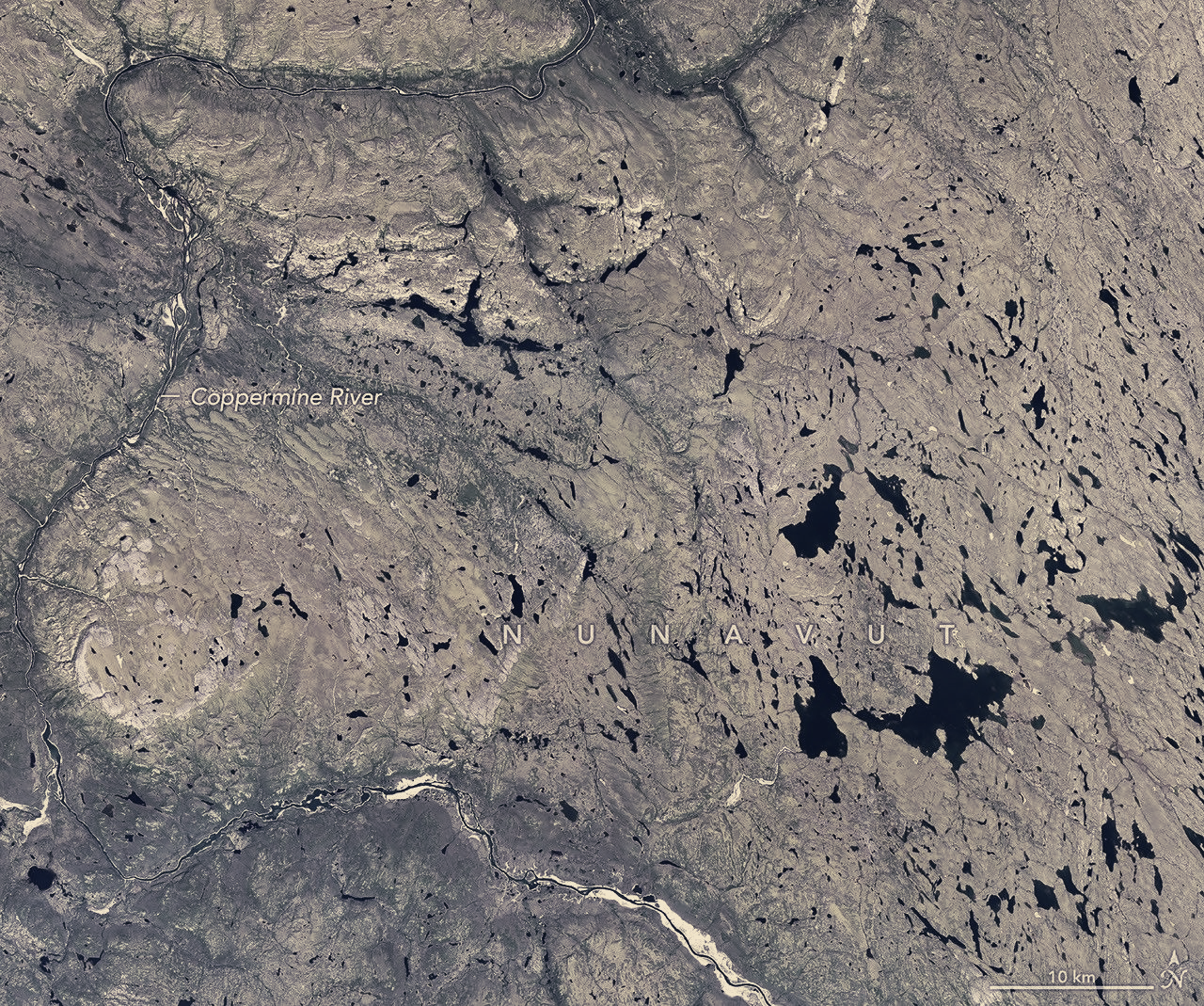
Fall color has arrived in Nunavut, shrinking the period of peak leaf display to only days in some places and narrowing the window for both casual viewers and scientists. An image pair from the Operational Land Imager on Landsat 9 shows the Coppermine River valley upriver of Kugluktuk as green on July 27, 2026, then flushed with reds, oranges and yellows by September 6, 2026.
The vegetation that produces those hues includes willow and birch shrubs, blueberries, bearberries and other low-growing tundra plants. A joint analysis by NASA and South Dakota State University that used seven years of satellite observations found foliage in this part of northern Canada begins to change in early September and generally peaks in mid-September, making the region one of the earliest on the North American continent to transition to autumn color. The same analysis showed that very northern areas often experience unusually brief intervals of peak color, sometimes lasting a week or less, compared with longer displays at lower latitudes.
The color shift follows the familiar physiology of leaves. As daylight shortens and temperatures fall, plants reduce chlorophyll production. Chlorophyll absorbs red and blue portions of sunlight and gives leaves their green appearance. When chlorophyll declines, carotenoid pigments that reflect yellow become visible, and anthocyanin pigments that reflect red and purple take on a greater role in leaf color.
All of this is unfolding against a summer of notable heat across North America. Landsat imagery and long-term satellite records help scientists track timing and duration of seasonal cycles that may respond to changing climate conditions. Because peaks in the far north can be brief, timely remote sensing must be paired with field observations to capture the full progression of color.
Civilian observers are invited to contribute. The GLOBE North American Phenology Campaign asks volunteers to record leaf color changes during spring and fall to support long-term environmental databases and improve understanding of plant responses to environmental shifts. The Landsat 9 images were processed for NASA Earth Observatory by Michala Garrison using U.S. Geological Survey data.