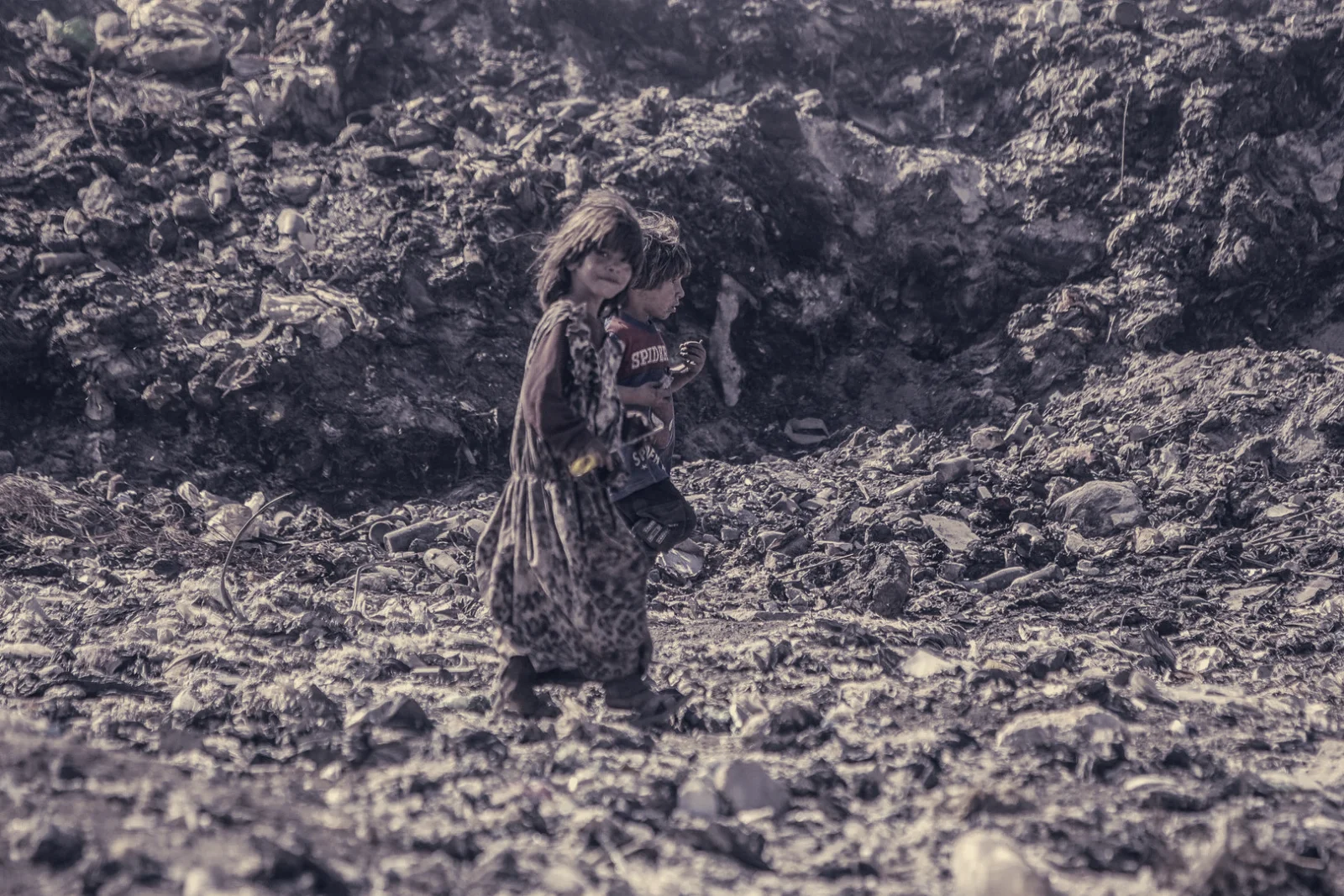
Displaced Syrians near al-Bab are now scavenging through burning piles of waste to earn a living, a sign of how prolonged conflict has eroded formal incomes and access to food. Residents and families cleared by years of fighting are searching landfill-like hills for recyclable material to sell, turning garbage into the primary means of survival.
The scene unfolds on the outskirts of al-Bab in northern Aleppo, where smouldering heaps of domestic and industrial refuse offer both opportunity and danger. People pick through ash and debris for plastics, metal and other items that can be exchanged for cash. The work is informal, low-paying and exposes those involved to fire, smoke and contaminated materials.
These livelihoods reflect broader strain across Syria. After more than 13 years of conflict, economic collapse and disrupted markets have left millions across the country struggling to secure enough food. For many displaced households, recycling discarded material has replaced regular employment or humanitarian assistance as a source of income.
The rise in waste-picking underscores a shift in how displaced populations try to survive in areas with little economic opportunity. Where formal work and stable aid are scarce, informal scavenging functions as a stopgap but offers no safety net or labour protections. The extraction and sale of recyclables can generate some cash, but it does not address basic needs at scale.
The images from al-Bab amount to more than a local story; they point to persistent humanitarian risks for internally displaced people across Syria. The combination of damaged infrastructure, limited market access and protracted displacement is forcing more people into hazardous informal work.
What happens next will depend on whether displaced communities regain access to steady income, safer livelihoods and sufficient food assistance. For now, scavenging through burning refuse remains a visible, hazardous survival strategy for those displaced by a conflict that has lasted for over a decade.