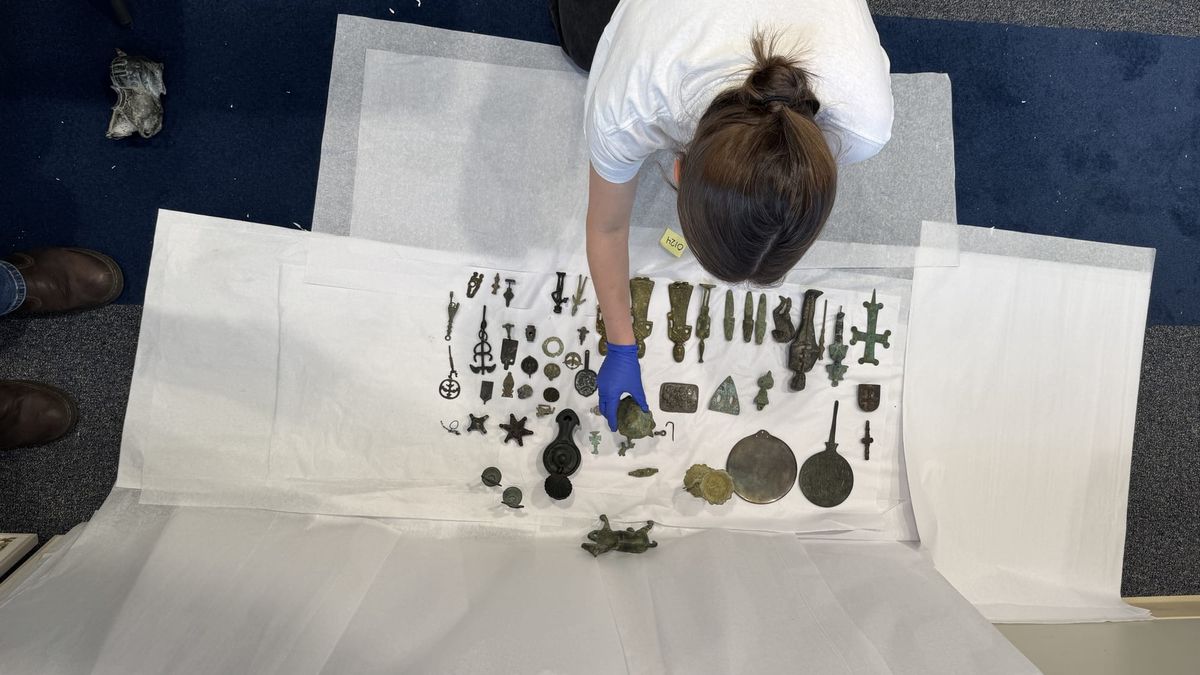

Federal agents removed more than 22,000 ancient objects from circulation last month, handing custody to specialists for authentication and conservation.
The haul includes Greco-Roman coins, terracotta and glass vessels, jewelry and mosaic frames. Investigators say the objects date between 1,000 and 5,000 years old and originated from sites across Europe and the Eastern Mediterranean, Africa and the Levant.
Tampa Homeland Security Investigations (HSI) led the operation, which ICE describes as the largest object recovery in the department's ongoing probe into antiquities smuggling in the state. HSI partnered with archaeological specialists and researchers at the University of South Florida and the University of Pennsylvania to authenticate, contextualize and conserve the material.
The seizure marks a sharp enforcement moment in a long-running investigation into illicit trade in cultural property. Moving such a volume of items into specialist care removes a large cache from potential sale and creates a record that can support provenance research and future legal steps.
The action arrives amid broader scrutiny of the Department of Homeland Security. Earlier this year a Customs and Border Protection crew erecting Donald Trump's border wall “inadvertently disturbed” the millennium-old Las Playas Intaglio in Arizona, and heavy machinery damaged roughly a quarter of the Native American archaeological site. In July, DHS waived a majority of environmental, public health and historical preservation barriers to accelerate construction of border barriers from the Big Bend region to Amistad Reservoir, Texas, a move officials said would affect more than 400 archaeological sites.
The Tampa HSI seizure and the university partnerships underline a dual role for federal enforcement: disrupting smuggling networks and transferring recovered objects to experts for study and conservation. The department’s investigation in Florida continues, and the newly catalogued collection will enter an extended process of authentication and contextual research before officials disclose next legal or curatorial steps.