
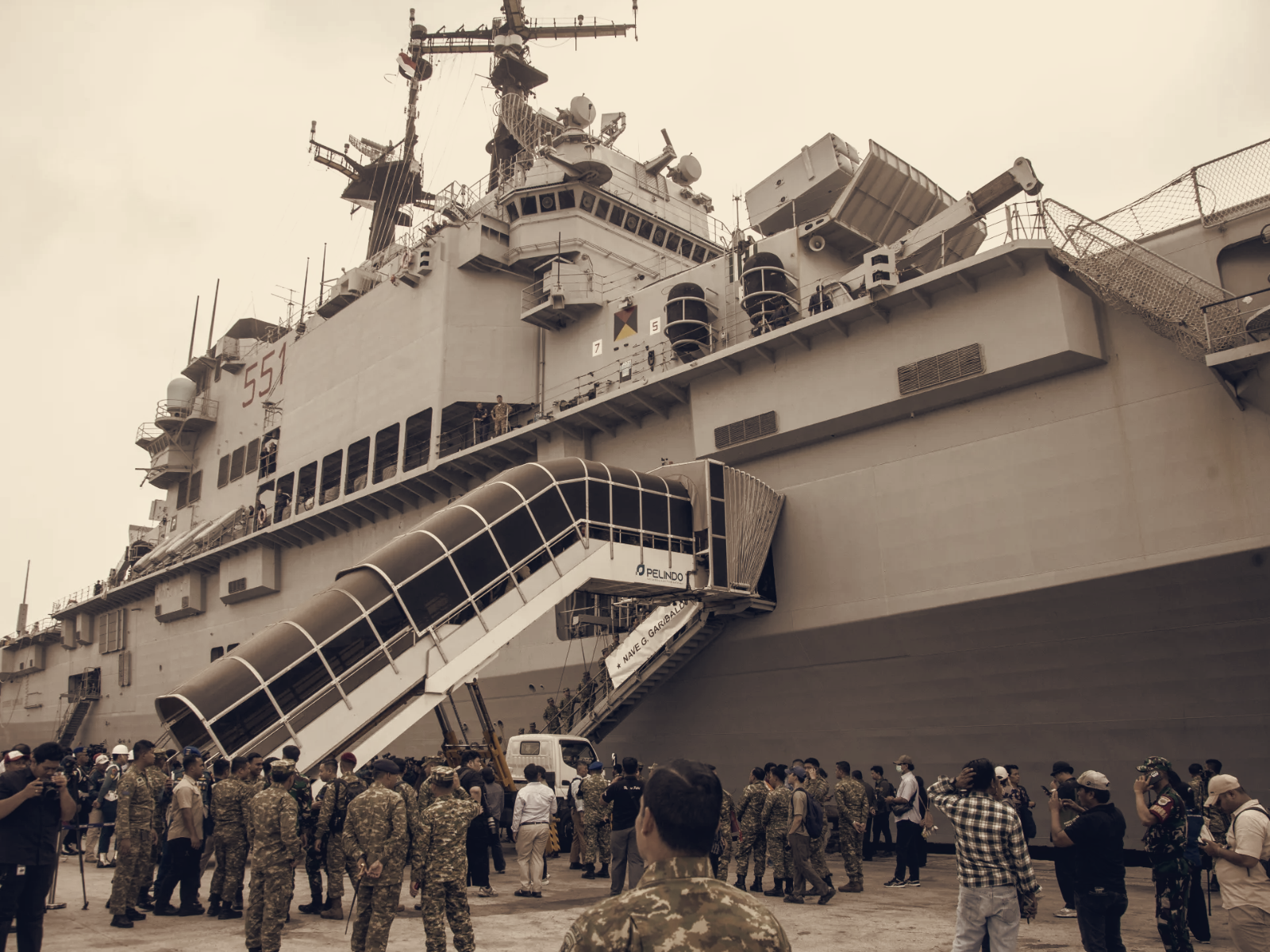
Indonesia has taken delivery of a large sea platform that immediately expands its capacity to move helicopters and personnel for crisis response across the archipelago. The former Italian carrier Giuseppe Garibaldi, described by Indonesian officials as a 41-year-old vessel, docked at North Jakarta’s Tanjung Priok seaport on September 18 where navy officers held a handover ceremony. The ship will be renamed KRI Sriwijaya, invoking the historic Srivijaya maritime kingdom.
At 180 metres long, the carrier can carry up to 18 helicopters and accommodate up to 830 personnel, the navy said. Navy Chief of Staff Muhammad Ali framed the vessel principally as a logistics platform for emergencies, saying, "There are many disasters in this country. So we really need a vessel or platform that could carry many helicopters, because the helicopters can drop logistics quickly to remote areas." He also warned the ship could "be deployed for combat missions if necessary," underscoring a dual-use role.
Italy agreed to transfer the vessel in March, the navy said, after it was retired from Italian service in 2014 and originally commissioned in 1985. Jakarta approved $450m in financing for the aircraft carrier programme in 2025, although opposition politicians have warned the final bill could be substantially larger. Indonesian officials say the ship's condition is sound and expect it to remain useful for another 15 to 20 years.
The delivery arrives amid President Prabowo Subianto’s wider push to modernise the armed forces. Under his previous tenure as defence minister, Jakarta signed an $8.1bn deal in 2022 for 42 Rafale fighters. This year India confirmed it will supply long-range missiles to Indonesia, which has also agreed a Major Defence Cooperation Partnership with the United States and a security treaty with Australia. The carrier therefore adds a visible, sea-based asset to a string of recent defence acquisitions and partnerships.
Practical questions now dominate: integrating the ship into fleet operations, establishing maintenance routines and funding any upgrades required to meet both humanitarian and security demands. How Jakarta balances the carrier’s relief role with potential combat use, and how opposition concerns over cost affect future defence spending, will shape whether KRI Sriwijaya becomes a long-term operational asset for Indonesia.