
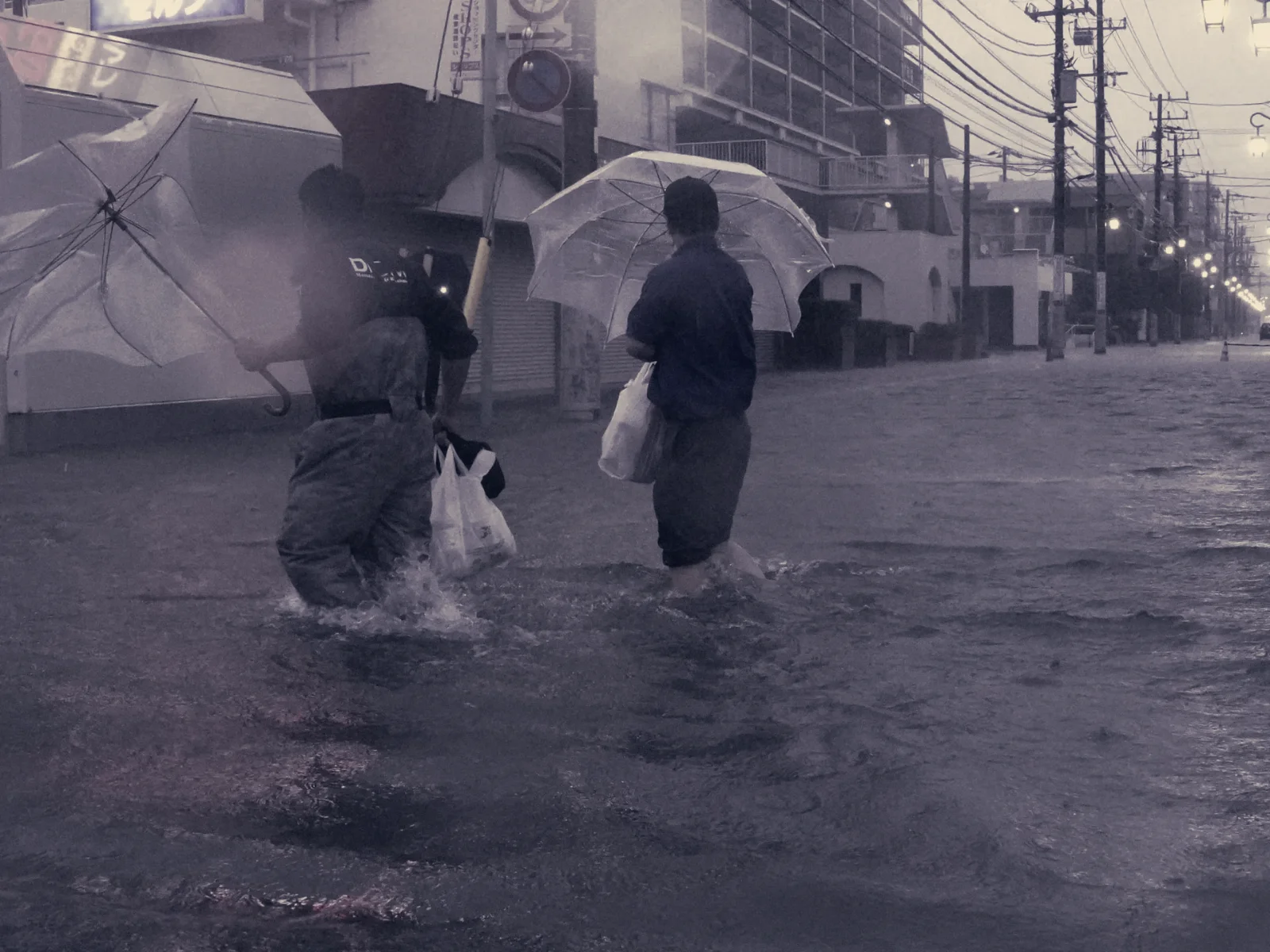
Coastal and low-lying communities around Tokyo face ongoing flood and travel disruption after Typhoon Dujuan killed two people and prompted evacuation advisories for more than 1.6 million residents. Local officials reported widespread power outages, flooded streets and landslides, and repeatedly urged people to move to safer ground as rain and runoff continued to threaten populated areas.
At its most intense near the capital, Dujuan produced winds of about 144 kilometres per hour while it lay roughly 130km south of Katsuura. By early Tuesday the system had shifted away from Japan’s eastern coast and was heading northeast into the Pacific toward the Aleutian Islands, the Japan Meteorological Agency said, noting a slight weakening of winds but warning of persistent heavy rain.
JMA forecaster Takuya Hosomi warned, “there’s a risk the rain will continue as the typhoon moves north.” The agency also cautioned that “The total rainfall through Tuesday could exceed the average monthly rainfall for September, resulting in record-breaking heavy rain,” underscoring a continued threat of flash floods and landslides even as the storm’s centre moves offshore.
Transport hubs suffered major disruption on Monday. Japan Airlines cancelled 135 flights and All Nippon Airways scrapped 140, leaving many passengers stranded at airports. Rail services were also affected, with Japan Railways suspending some lines, including bullet train services that link Tokyo and Osaka and sever a crucial national corridor.
Images circulating online showed waterlogged streets around Kamakura station and other urban centres. Kamakura Mayor Takashi Matsuo said, “There is flooding in various parts of the city, so travelling by car is dangerous.” Floodwaters also inundated parts of Ichikawa east of Tokyo, and organisers closed the final day of the Tokyo Game Show early while cancelling a major outdoor music festival and a baseball match in Chiba.
Dujuan is the 25th typhoon to affect Japan this year. Authorities cautioned that, although the storm’s centre is moving out to sea, heavy rain and residual hazards will continue to endanger coastal and inland communities over the coming days, keeping emergency teams and transport operators on alert as recovery and inspections begin.