Prime Minister Andy Burnham will press the United States to back a new UK‑US AI and Autonomy partnership aimed at protecting critical national infrastructure, as he travels to New York for the United Nations General Assembly and a first in‑person meeting with President Donald Trump.
Downing Street framed the announcement as the diplomatic priority for the trip. Burnham said the initiative will focus on deploying artificial intelligence and autonomy to defend assets that underpin daily life and commerce. He described the move as part of a broader push for international cooperation on AI, alongside diplomatic efforts on the wars in Ukraine and the Middle East.
Burnham told reporters on his flight to the US that he expected to "find common ground" with Mr Trump after two telephone conversations since taking office in July. "We've found a connection. So, I will go with where I feel it's right, to meet him where he is at, and search for that common ground, which I'm sure we'll find," he said, adding, "I'm looking forward to it."
The prime minister said he will use his UN address to argue for closer global collaboration on AI and on conflict resolution. "I will be making the case for closer international co‑operation on AI, a just and lasting peace in Ukraine, and renewed efforts to bring an end to the conflict in the Middle East because what happens abroad impacts each and every one of us at home," he said.
Alongside the policy announcement, Downing Street disclosed a recent defence milestone: UK and US forces tested an American torpedo fired from a British uncrewed undersea drone in UK waters. The weapon was launched from a 12‑metre Excalibur vessel built in Plymouth, the first time either country has fired a torpedo from an uncrewed underwater platform rather than from a crewed submarine. Officials described the trial as an advance in protecting undersea infrastructure such as data cables.
The proposed partnership links that kind of military and technical cooperation to civilian protection of networks and other critical systems. The plan has already drawn criticism from the Liberal Democrats. Sir Ed Davey, due to speak on the final day of his party's conference, will say the initiative "doesn't come close to meeting the scale of the threat" and that it "only risks making us more dependent on a Trump administration in the pocket of the tech bros." He will call for a global pause on superintelligent AI and propose a new International AI Safety Agency.
Burnham was also asked about the paused plan to transfer the Chagos Islands to Mauritius while retaining a lease for Diego Garcia, which officials say stalled after Mr Trump withdrew support. After speaking with Mauritius's prime minister, Burnham said he had assured them he would work toward a resolution. "I said that we remain determined to secure the long‑term operation of the base, which is crucial to our security and that of our allies," he told reporters.
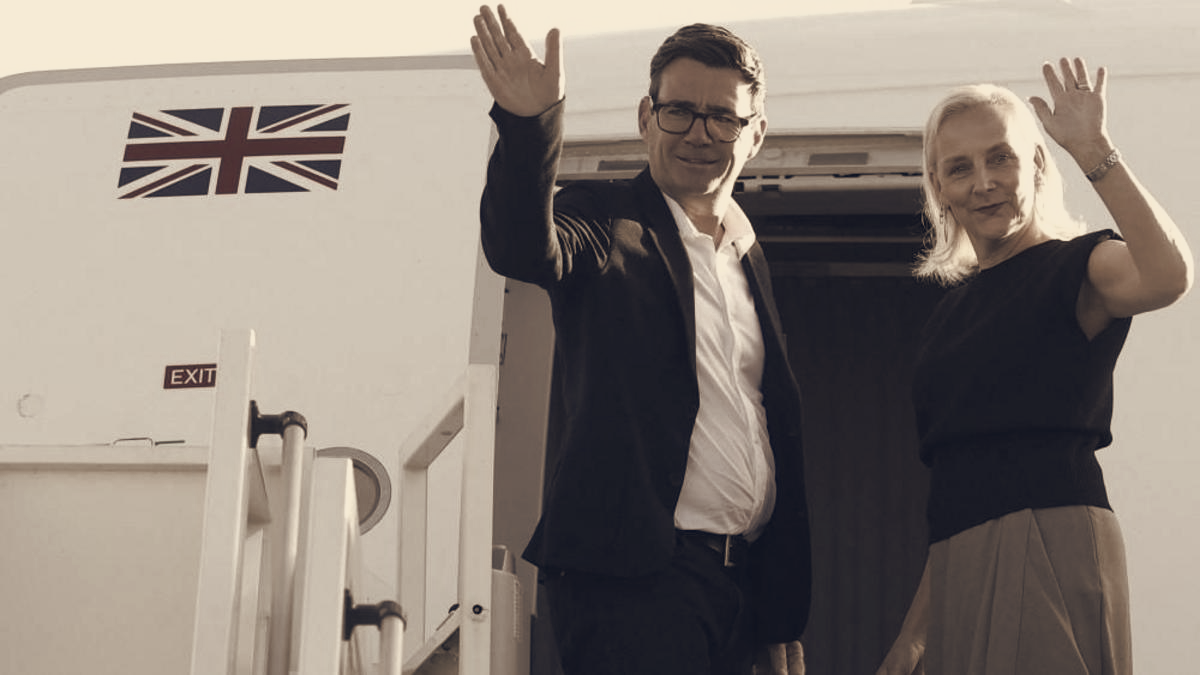
Travelling with his wife, Marie‑France van Heel, the prime minister faces immediate tests in New York. His meeting with Mr Trump and his UN address will determine whether the new partnership and his diplomatic priorities secure US backing and how quickly the UK can convert the announcement into operational cooperation.