
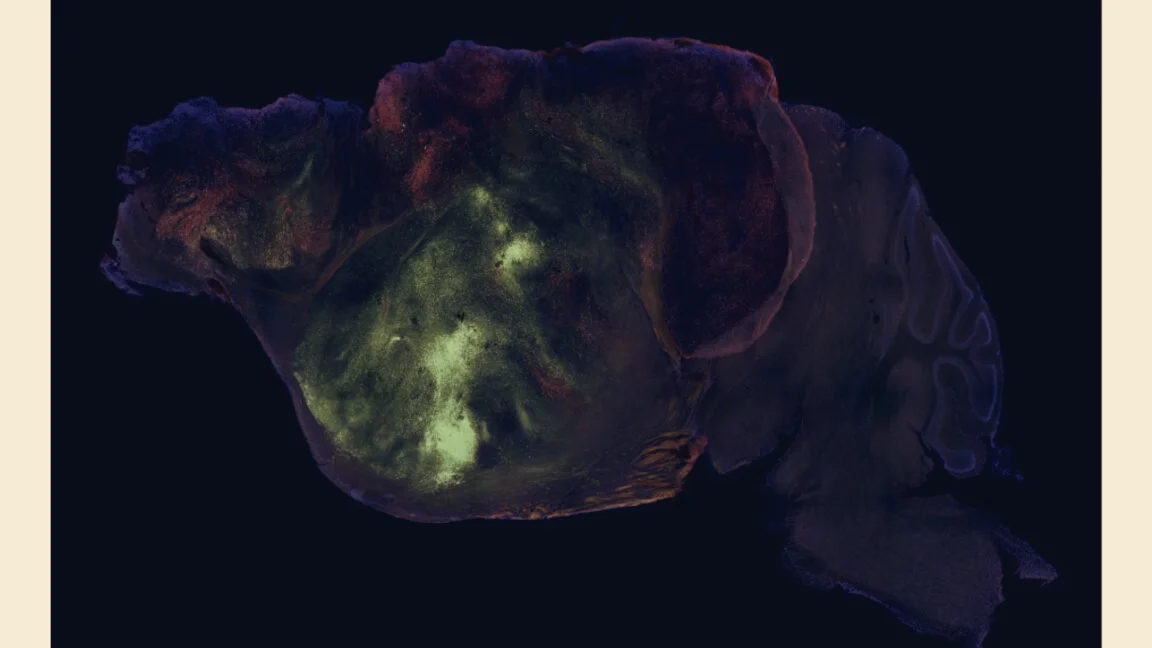
The experiment changes how researchers can put human brain tissue into a living mammal, but it does not yet restore normal cortical function. On Wednesday a Stanford team reported that they genetically eliminated a large portion of a mouse brain and populated the damaged cortex with cells derived from human brain organoids, creating an in vivo setting to observe the tissue.
Organoids are small three-dimensional patches grown from stem cells that recreate multiple specialized cell types and some of the architecture seen in real organs. Because they hold different cell types together in a tissue-like arrangement, organoids can model diseases that depend on interactions among those cells better than isolated cells on a dish can. That promise has driven growing interest in using organoids to study human disease biology.
But the Stanford paper underlines persistent limits. Brain organoids do not form the full set of connections with other specialised brain structures that intact cortex needs to function. They also lack integrated systems present in a living body, including a circulatory network to carry metabolites and immune cells that patrol tissue. Those absences constrain what organoids can reproduce even when transplanted into an animal host.
In the described approach, researchers removed a substantial swath of mouse cortical tissue and introduced human organoid-derived cells into the space. The replacement provided a more natural environment than a culture dish, allowing the human cells to exist within a living brain. Still, the outcomes were modest: the implanted tissue showed only slight improvements compared with the effects of missing the structure entirely.
The work offers a practical route to study human brain tissue inside a mammalian brain rather than in isolation, which could refine models of diseases that hinge on complex cellular interactions. It also highlights how far organoid-derived tissue remains from reconstituting the networked physiology of an intact cortex. The experiment therefore extends experimental options for neuroscience while underscoring the biological and technical gaps that must be closed before such implants approach normal brain function.