
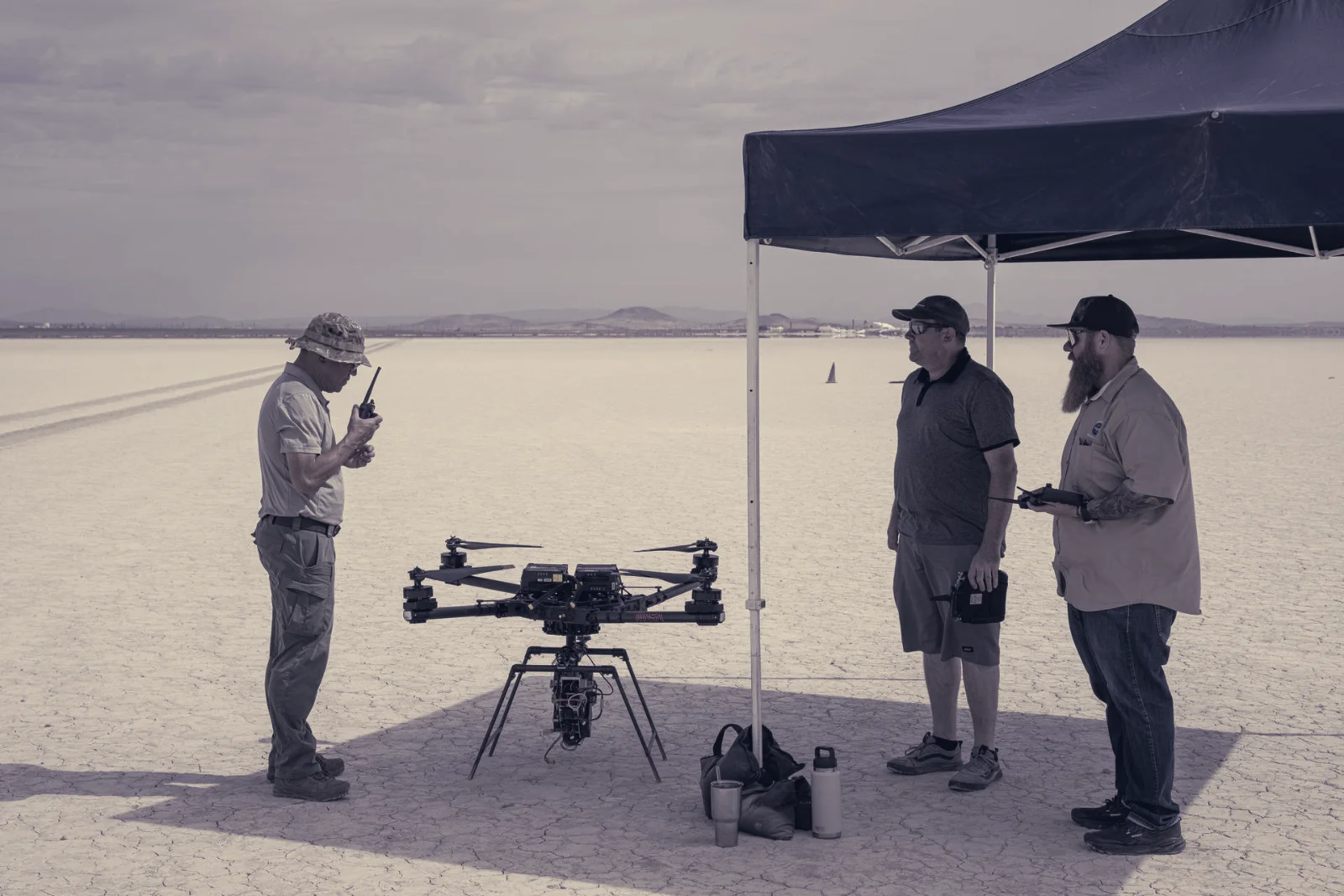
NASA’s Dale Reed Subscale Flight Research Laboratory is turning decades of model‑building and garage tinkering into flight tests that validate precision landing and hazard‑avoidance technologies for lunar and Martian missions. On Aug. 27, 2026, laboratory chief engineer Derek Abramson requested air‑traffic approval to fly the Alta‑X unmanned aircraft near Armstrong Flight Research Center while chief pilot Justin Hall and drone pilot Justin Link waited for clearance.
The Alta‑X carries the Safe and Precise Landing, Integrated Capabilities Evolution, known as the SPLICE experiment, developed at NASA’s Johnson Space Center in Houston. SPLICE is designed to help spacecraft land precisely and to detect and avoid potential hazards, capabilities the agency says are critical for missions to the Moon and to Mars.
Abramson, Hall and Link occupy distinct operational roles at the subscale lab, and each brings a hands‑on background in radio‑controlled aircraft. Abramson is the laboratory’s chief engineer; his career includes service in the U.S. Navy as an avionics technician working on the EA‑6B and the F‑18, support for B‑1 and CV‑22 Osprey flight tests, and an internship at Armstrong focused on remotely piloted and autonomous aircraft. Hall serves as chief pilot and earned a reputation flying hobby and model aircraft at public events, a history that led to an offer to fly subscale research vehicles for NASA. Link is a drone pilot with more than 11 years working with large drones and experience in research and development and composite materials.
The laboratory’s small remotely piloted and autonomous aircraft give engineers a way to explore concepts that would be risky or costly to try at full scale. The team integrates emerging technologies with the fleet and, when necessary, designs and builds aircraft or flight experiments to test new ideas. Outside work hours the three often continue that work in garages and hangars, building models, attending trade events and flying at hobby gatherings.
Those hands‑on habits feed the lab’s mission-focused testing cycle. With SPLICE installed on platforms such as the Alta‑X, the lab expects to continue flight evaluations that refine navigation, landing precision and obstacle detection for future human and robotic missions to the Moon and Mars.